
What is Taste?

20 October 2020
Taste

We know from research conducted by the World Food Travel Association that food-loving travelers are adventurous and curious. They actively seek out new ways to indulge in genuine cuisine and to learn about the terroir of a specific product. Powerful memories can be created with the taste of a place. The World Food Travel Association defines food tourism as “the act of travelling for a taste of place in order to get a sense of place”. We gathered our thoughts and some interesting facts about taste and made them part of a series that we call “The Taste of a Place”. This first chapter explores the concept of taste on the very surface, and the meaning of the taste of a place.


Have you not ever wondered why food sometimes just tastes so unbelievably good? Or why certain food combinations such as salt and sweet, for instance, or Serrano ham and melon or blue cheese and gingerbread cookies (trust me on this one), go so well together like yin and yang, Batman & Robin, or Ben & Jerry? I have always felt like there must be a reason that food tastes so good, and why some foods match so well together. I am constantly amazed about the fact that we eat so differently in different countries. Growing up in Sweden, I used to wonder; if people do not eat #falukorv or moose outside Sweden, what do they eat abroad? Surely anyone would strive to make the best of what nature has provided; there is just too little time in life to eat bad or tasteless food. It made me think about taste, how taste connects us, and how meaningful taste is when travelling. 

Historically and biologically , the purpose of taste has merely been that of function, more specifically the assessment of edible supplies in nature. As early humans, we needed to be able to identify which foods were good for us and which were poisonous or even potentially fatal. Likewise, our sense of taste helped us to identify the most nutritious items and avoid the ones that are less nourishing, thereby preventing the waste of precious energy. One could say that the sense of taste developed to prevent us from making bad eating decisions. Through evolution, some animals have lost many of their taste receptors simply because they have no use for them anymore. In contrast, humans have kept their taste receptors, undoubtedly because we still have a need for taste.

Scientifically , taste is a sensory modality, i.e. how we perceive the experience of a liquid or substance in our mouths. Many of us know that the basic tastes that we can perceive are salt, sweet, bitter, sour and umami. Recent research also suggests that there might even exist a sixth taste, that of fat. Flavour on the other hand, is a combination of taste with auditory features (fizzes, crunches), tactile sensations such as texture and temperature (chewy, crunchy, dry, tender), and most importantly, what we smell. Molecules are detected by receptors in the mouth and nose, and the information is then interpreted by the brain that lets us know what we are eating or drinking. One can describe a food item as “salty” or “sweet” but when saying that it tastes like honey, or the wine reminds you of blackberries, we are evaluating the entire flavour with the smell from our nasal cavities inside our mouths, as well as the memories from our previous eating experiences. All five of our human senses are actively stimulated when eating. Signals are sent between neurons in the brain and trigger a nervous response in the parts of the brain that are responsible for our emotions. The whole experience comes together and creates an enjoyable event, and this is seemingly why happiness sometimes comes through a tasty meal.

Culturally , taste is related to eating patterns and preferences, what we choose to eat, and these preferences are influenced by countless features depending on location, traditions, personal choices and sometimes religion. When individuals are raised within a particular environment, a certain awareness of quality develops, and we begin analyzing the sensations. We are aware of what we are tasting, and we use words to describe it. We do not always create a deep analysis or conduct an investigation of all the elaborate tastes and flavours that we are detecting, but your perceptions are almost always biased by our own experiences, education and upbringing. Our five senses are powerful motors when it comes to remembering and reminiscing about a past event. Do you recall your first kiss or first special moment with a loved one when smelling a familiar fragrance? Or when eating your grandmother’s meatballs for the fiftieth time, does it not take you back to your childhood dinners? But when does a culture become a taste?

And how can taste create a sense of a place?

A culture becomes the taste of a distinctive place when you identify not only region-specific products and local dishes, but also the techniques that are used when cooking or preparing food in that particular place. Boiling, grilling, steaming, smoking, underground cooking, frying, curing are a few of the cooking methods that many of us know and love. Many times, a technique has developed out of necessity, for example to be able to preserve food for parts of the year when the weather is less optimal for growing. History has played a huge role in defining the culinary identity of a place. Wars, colonisation, border changes, relocation, travelling and globalisation have all affected culinary identities. Let’s not forget the way that we eat, i.e. with our fingers, knife and fork or chopsticks, early or late, eat it all or leave a bit on the plate. What we eat, and how we eat it, is an expression of our cultural identity. This is us. This is what we eat. This is our world. This is what we associate with the taste of a place today.

For a cultural and sometimes social activity, we do not always appreciate the values and history transferred to us through food. Taste may be primarily a pleasure for the senses but may also satisfy your mind and heart if you dive a little deeper. 

Destination marketers working on food and beverage tourism can benefit from a culinary placemaking strategy. he**@wo************.org">Get in touch with us today to discuss how we can leverage culinary placemaking in your COVID tourism recovery planning.

Authored by Rosanna Olsson.
Promotion for culinary capitals an innovative destination certification and development program for unknown destinations
Taste of place podcast listen to our culinary travel and culture podcast with erik wolf
Food
A membership page with a picture of pancakes on a plate.
11 January 2026
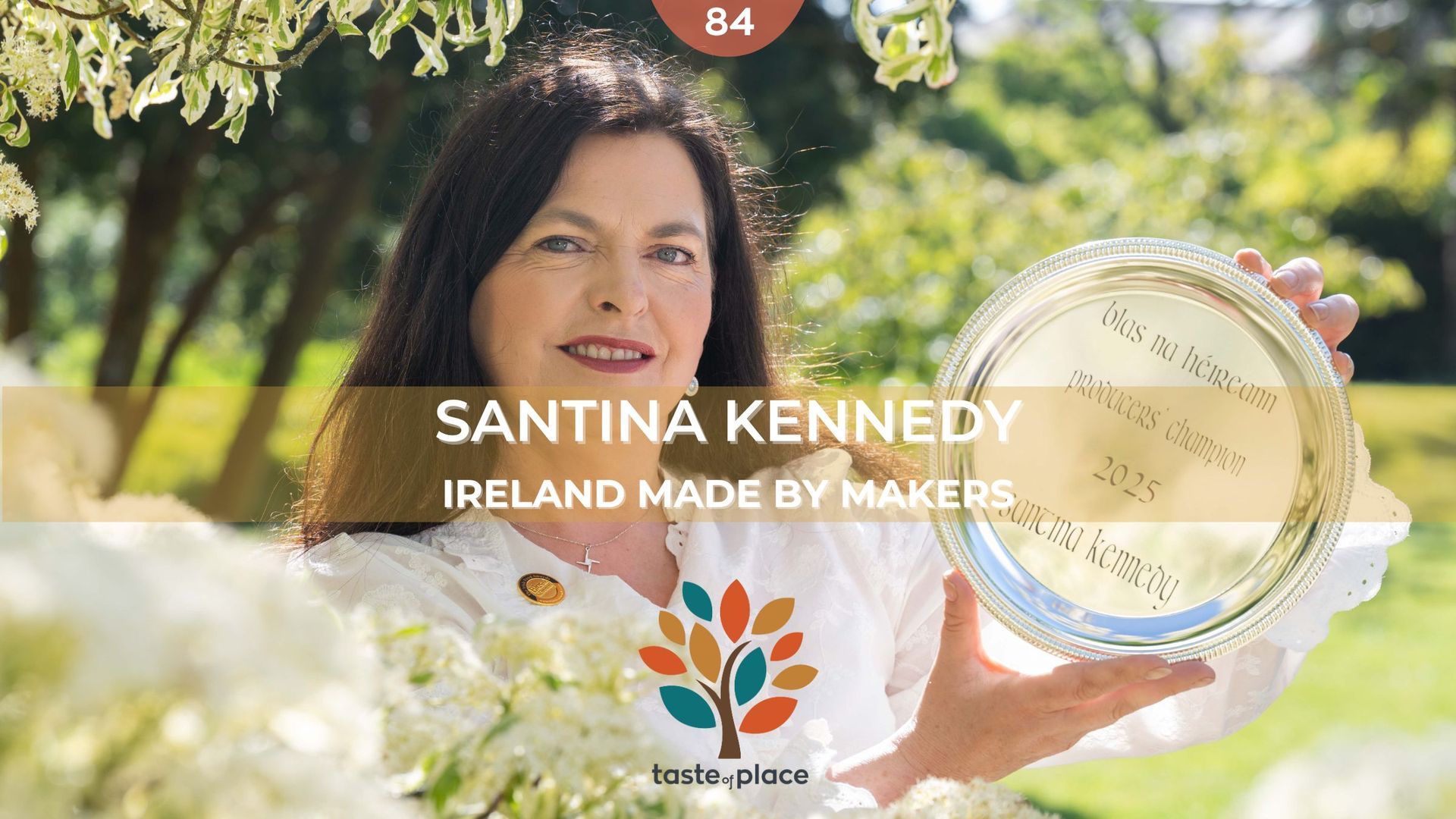
In this episode, Erik Wolf speaks with Santina Kennedy, an award-winning Irish food consultant, producer champion, and storyteller whose work bridges food history, culture, and contemporary experience design. Santina shares her unconventional journey from banking to café ownership, and ultimately to a vocation that did not exist when she was young: interpreting Irish food culture through storytelling, events, and strategic collaborations. She reflects candidly on delayed purpose, entrepreneurship without capital, and why genuine hospitality matters more than polish or scale. The conversation explores Ireland’s overlooked food narratives - from tenant farmers and kitchen workers to everyday staples like potatoes, butter, and bread - and how these stories can be brought to life through immersive experiences in galleries, estates, and public institutions. Santina also dives deeply into Irish whiskey, explaining how history, resilience, terroir, and innovation are expressed in mash bills, grains, and pairing traditions. A standout theme is Santina’s advocacy for St. Brigid as Ireland’s original food and hospitality patron, and her work elevating Brigid’s legacy through food, drink, poetry, and craft. The episode concludes with a thoughtful discussion on regional food networks, particularly County Wicklow, and why Ireland must first teach its own people to value their food culture before expecting visitors to understand it. This is a rich, reflective conversation about identity, resilience, and the power of food to tell the true story of a place. You can learn more about Santina here . The Taste of Place podcast is sponsored by the World Food Travel Association’s Taste of Place movement. Taste of Place is a global initiative that celebrates culinary culture, food heritage, and the makers behind them. Through the movement, travelers and consumers are encouraged to connect more deeply with destinations and products through their unique flavors and traditions. Learn more at JoinTasteofPlace.org . 🎙️ Available now on Spotify, iTunes & your favorite podcast platforms (Search for "Taste of Place") 📺 Prefer video? Watch it now on our YouTube channel . Or listen here now:
5 January 2026
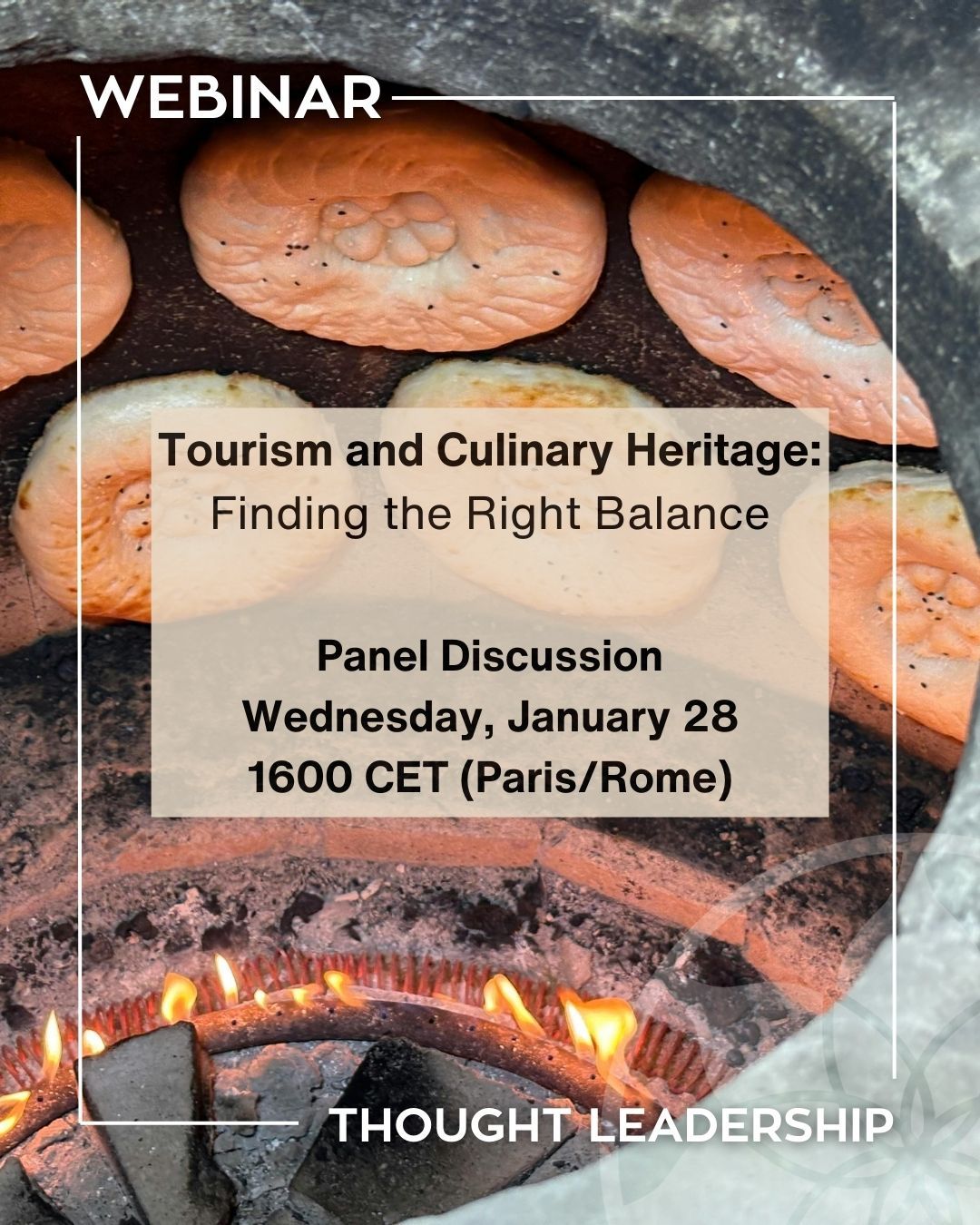
REGISTER NOW As interest in local food cultures continues to grow, destinations face increasingly complex choices. Tourism can support culinary heritage by strengthening local economies and raising awareness of food traditions. At the same time, poorly managed promotion can simplify, commodify, or distort cultural practices. This webinar brings together perspectives from across the system to examine how tourism and culinary heritage can coexist more responsibly. Panelists: - Janice Ruddock, Executive Director, Ontario Craft Brewers Association - Sean O’Rourke, President, Eat & Walkabout Tours - Niclas Fjellström, Executive Director, Culinary Heritage Network - Erik Wolf, Executive Director, World Food Travel Association The discussion will be moderated by Marc Checkley, a Lausanne-based storyteller, journalist, and experienced event host with a background in food, wine, travel, and cultural programming. Topics include: Recognizing culinary heritage as living culture rather than a static product Understanding how tourism and markets influence tradition over time Identifying where destinations most often struggle to find balance Applying practical principles for responsible promotion and stewardship This session is relevant for destination marketers, tourism offices, policymakers, producer associations, educators, and anyone working at the intersection of food, culture, and place. There is no cost to attend. REGISTER NOW
by Erik Wolf 1 January 2026
In 2025, the World Food Travel Association focused on strengthening culinary culture as living heritage, supporting the people and practices that sustain it, and building informed global collaboration rooted in values rather than prestige. Advanced the Taste of Place Movement and Alliance We clarified and communicated the purpose of the Taste of Place Movement — a global effort dedicated to safeguarding culinary heritage and empowering the keepers of food culture in alignment with the Declaration for the Preservation of Culinary Heritage . The Taste of Place Alliance framework was defined to support destinations, organizations, and practitioners who share these values. We also invite those who support this mission to join the Movement through philanthropic contributions. Do you represent a destination? Please contact us to learn how your destination can participate. Delivered Strategic Advisory and Destination Engagement Work We conducted destination-level analysis and advisory engagement in diverse regions, including the Bothnian Bay area of Sweden and Finland and with Saudi Arabia’s Culinary Arts Commission , to help partners explore how food culture, regional identity, and cooperation can contribute to responsible cultural and economic resilience. Updated Professional Training Programs All certification and training programs were updated with current research, terminology, and real-world cases. Regular refresh cycles ensure that practitioners receive instruction that reflects the most accurate and relevant information available. Built Relationships Through Targeted Engagement We engaged directly with destinations, stakeholders, and partners through site visits and industry events, including exploratory meetings in Umbria, Italy and participation in World Travel Market , to listen, assess alignment, and foster partnerships grounded in cultural integrity. Expanded and Recognized Leadership Within Our Global Network In 2025 we welcomed new Ambassadors from diverse regions, including Chef Dela Acolatse ( Ghana ) and Gerald Kock ( Aruba ), and named Mabel Esther Vega Montaño ( Colombia ) as our first Taste of Place Guardian, recognizing her lifelong commitment to ancestral knowledge and rural food culture. These appointments reinforce our values as articulated in the Declaration for the Preservation of Culinary Heritage. Interested in becoming an Ambassador or Guardian in your area? If you share our values and commitment, please get in touch . Honored Outstanding Contributions to the Field We awarded the 2025 Lifetime Achievement Award to Francesc Fusté-Forné (Girona, Spain) in recognition of his distinguished career advancing food tourism research, education, and understanding of culinary culture. We also invited the community to nominate other individuals whose work has made enduring contributions to our field. Provided Global Advocacy Through Editorial and Media Platforms We continued to interpret and elevate global developments in newsletters and digital content, and through the Taste of Place Podcast , which released 11 episodes in 2025 featuring inspiring leaders. Notable episodes included “Peace Through Food” with Paula Mohammed, “The Sweet Taste of Ethics” featuring Veronica Peralta on ethical chocolate, and “From Tunisia With Flavor” with Jamie Furniss on repositioning Tunisian cuisine for travelers. By sharing these conversations, we reinforced food as cultural heritage and connected listeners with makers and culture bearers.
31 December 2025
🎧 New Podcast Episode Alert! Episode 83: “Why Artisanal Still Matters” featuring Heike Winter What happens when you completely reinvent your life at 50—and return to the culinary traditions that shaped you? In Episode 82, host Erik Wolf speaks with Daniela Sfara, the Canadian-Italian chef, cultural ambassador, and founder of ITALUS whose mission is to preserve the disappearing regional foodways of Italy. Daniela shares her extraordinary personal transformation from a 20-year jewellery career to becoming a respected voice in culinary culture, hospitality excellence, and immersive food experiences across Italy, Dubai, Europe, and North America. Daniela’s story is one of resilience, reinvention, and deep cultural stewardship. Whether you work in food, tourism, hospitality, or simply love Italian cuisine, this is an inspiring reminder that food is identity, and preserving culinary heritage is an act of service to future generations. 🎙️ Available now on Spotify, iTunes & your favorite podcast platforms (Search for "Taste of Place") 📺 Prefer video? Watch it now on our YouTube channel. Or listen here now:
Road stretching towards the setting sun. Golden sky, open fields.
31 December 2025
ARUBA (Gerald Kock) Savaneta Seafood Festival: A Model for Community-Led Food Touri sm in Aruba The inaugural Savaneta Seafood Festival, held on September 28, 2025, by Fundación Savaneta Prome Capital, marked a significant moment in Aruba’s culinary and cultural calendar. In the island’s first capital, seaside streets were transformed into a pedestrian-only celebration where food, music, and heritage came together as a powerful expression of local identity. Attracting an estimated 6,000 visitors, the festival demonstrated strong demand for authentic, community-driven experiences among both residents and travelers. Central to the event was an “Ocean-to-Plate” revival. Twenty-four local vendors showcased seafood such as snails, conch, shrimp, and lobster, prepared using traditional family recipes and fresh local herbs. The festival also revived a local fishing tournament for the first time in 40 years. Approximately 30 boats and 100 fishermen landed a collective catch of 880 kg, reinforcing the connection between sea, community, and tradition. Part of the catch was donated and grilled on-site by local chefs, allowing visitors to experience the full journey from ocean to plate - a powerful symbol of sustainability, generosity, and shared pride. Beyond gastronomy, the festival elevated local culture and entrepreneurship through art, crafts, and music, positioning Savaneta as a living example of how cultural heritage and economic opportunity can thrive together. From the perspective of Food Tourism Ambassadors for the World Food Travel Association, the festival offers a replicable framework for Aruba’s future: a model in which each district expresses its distinct identity through food, storytelling, and place-based experiences. The Savaneta Seafood Festival stands as proof that culinary heritage can strengthen community resilience and support sustainable tourism. More than a single event, it presents a compelling vision of how small places can achieve meaningful global impact through food.
14 December 2025
🎧 New Podcast Episode Alert! Episode 82: “Cooking by Heart, Not by Recipe” featuring Daniela Sfara What happens when you completely reinvent your life at 50—and return to the culinary traditions that shaped you? In Episode 82, host Erik Wolf speaks with Daniela Sfara, the Canadian-Italian chef, cultural ambassador, and founder of ITALUS whose mission is to preserve the disappearing regional foodways of Italy. Daniela shares her extraordinary personal transformation from a 20-year jewellery career to becoming a respected voice in culinary culture, hospitality excellence, and immersive food experiences across Italy, Dubai, Europe, and North America. Daniela’s story is one of resilience, reinvention, and deep cultural stewardship. Whether you work in food, tourism, hospitality, or simply love Italian cuisine, this is an inspiring reminder that food is identity, and preserving culinary heritage is an act of service to future generations. 🎙️ Available now on Spotify, iTunes & your favorite podcast platforms (Search for "Taste of Place") 📺 Prefer video? Watch it now on our YouTube channel. Or listen here now:
More posts