Why Governments Need Outside Expertise to Grow Culinary Tourism: The Case of Andalucía
4 August 2021
olive oil tourism

Part 1 in Power of Food Tourism, a new thought leadership series about the tremendous and undeniable power of food and beverage tourism.

Food is a cornerstone that sustains all living beings and connects people across the globe. As society has advanced, food has grown to become an item of admiration as well as of sustenance. In many destinations where tourism has flourished for decades, foods and beverages have taken on an even larger role in attracting people to visit. Culinary tourism, or food and beverage tourism, provides citizens a proper reflection of their culture as well as a tool to sustain and grow their economy. Destinations with a rich food culture have too often been held back from taking advantage of this due to management failure and resistance toward consulting outside specialists in food and beverage tourism. 

Case Study: Andalucia, Spain

The example of the Spanish province of Andalucia provides key insights into what happens when a destination does not develop gastronomy tourism to its fullest potential.

In Andalucia, 80% of tourism historically has been beach tourism. People tended to visit only for the good weather rather than the plentiful food products that show off Andalucia’s rich culture. For many decades, the Andalucian government focused on maximizing accommodation reservations only along the coast. Then in recent years, Andalucia’s wines began to gain international attention. Andalucia produces a large percentage of Spain’s wine, which ranks third overall in the world, producing 13% of the world’s wine. As a result, Andalucia receives 3 million wine tourists annually. 

While Andalucia is a large wine-producing region, it also produces another product that should be the source of more international tourism – olive oil. Olive oil tourism ( oleoturismo in Spanish) could be a significant source of pride and income for Andalusians. Olive oil has been produced in Andalucia since the Roman times and has been central to Andalucia’s economic prosperity, its cuisine and culture. Olive oil is incorporated into almost every typical Andalusian dish, including dishes such as gazpacho, salmorejo, and berenjena frita.

Today, Andalucia, a region the size of the island of Ireland , produces 85% of Spain’s olive oil and 32% of the world’s total supply of olive oil. Despite the fact that Andalucia’s olive oil production dwarfs its wine production in terms of relative scale, only 200,000 olive oil tourists visit annually. Even more unfortunate, 72.4% of the 200,000 olive oil tourists are local Andalusians , meaning they don’t stay overnight. Long-distance gastronomic tourists generally spend more per day (between €65 and €100 [sic] per day) than the average tourist in Andalucia (only €68 per day ). Therefore, the failure to promote olive oil tourism is an enormous missed opportunity for the region. Andalucia is clearly capable of attracting wine and beach tourists and earning money that way. It seems that destination marketers missed the opportunities available with olive oil tourism.

While there are many factors to consider in Andalucia, much of the missed opportunities have stemmed from a lack of understanding of the difference between the demand coming from local tourists and that coming from foreign tourists. A study from the University of Jaén (a university based in the Andalusian region of Jaén) revealed that there are four distinct profiles of olive oil tourists. Of these four profiles, two consistently spend more money and stay overnight in the locality, and both of these types of tourists desire to learn about and experience the properties of olive oil. Throughout much of the history of oleoturismo of Andalucia, many of the oleoturismo plantations have not allowed for close contact with the production site.  

Recently, for reasons that are not entirely clear, although we surmise that the above research was an important contributing factor, the oleoturismo industry in Andalucia has been improving. Now many olive oil production sites combine their offer with tapas tastings and full factory tours. The Andalusian tourism office even opened a website with a searchable map for all olive oil tourism sites in the province. Since the tourism office began to understand Andalucia’s visitors, they have begun to package better their tourism offers and provide closer contact with the olive oil production process, which has led to a rise in tourism that could have happened long ago.

The case of Andalucia provides insights into how specific industry expertise can be leveraged to develop food and beverage tourism. Andalucia initially approached oil tourism as a tertiary concern, and one that was only of interest to local tourists. Its olive oil tourism industry was largely left out of tourism marketing because Andalucia made less effort to attract international travelers and they did not properly analyze their visitor profiles. External research showed the value proposition and olive oil tourism was born! Olive oil tourism in Andalucia seems to be growing, although largely still with local tourists, due to current pandemic travel restrictions.

THE ROLE OF EXTERNAL EXPERTISE IN FOOD AND BEVERAGE TOURISM

To many governments engaged in destination marketing, purchasing research or hiring experts to help with the specific development of food and beverage tourism is often seen as an unnecessary or even frivolous expense. However, external food and beverage tourism expertise can create enormous new opportunities for the entire tourist destination, as it did for Andalucia.

Destination governments need food and beverage tourism expertise to help connect value chains. Such expertise can benefit everyone from farmers to restaurant managers. Experts in food and beverage tourism management analyze ratings, recommendations, and average spending in order to determine which food and beverage tourism operations need more or less investment. In total, tourists spend 25% of their budget on food and drink. Some destinations like Ireland have seen tourists spend as much as 36% of tourism expenditures on food. This can lead to increased employment, along with other local benefits. For example, Canada (a country of 38 million) employs more than 400 thousand individuals because of food and beverage tourism.

Experts in food and beverage tourism management also promote cultural understanding with food and beverage tourism products to the growing food and beverage tourism market. As food and beverage tourism continues to expand globally, more food- and beverage-loving travelers will enter the market, and a wider variety of culinary profiles are emerging. Currently, the World Food Travel Association identifies 13 distinct food lover personas , called PsychoCulinary profiles. Such expertise can help destinations to analyze inbound culinary travelers, understand their different preferences, and laser-target specific food and beverage tourism opportunities toward each of those profiles who will best appreciate the different facets of the culture.

Perhaps most importantly, food and beverage tourism experts who are well-connected can help to spread the word with media, early adopters and other influencers. The ultimate goal for governments should be to have visitors return and encourage their friends and family to visit too through positive word-of-mouth. Gaining a deeper understanding of culinary traveler motivations is essential. For example, a study on the Extremadura (region of Spain) city of Cáceres found that more than 50% said they visited the city to try the cuisine. It was the second most common reason for visit , but it was associated with a strong positive correlation to the most common reason to visit: to understand the culture better. Ultimately, tourism in Cáceres is growing because of repeat visitors. The World Food Travel Association’s recent Food Travel Monitor discusses culinary traveler motivation and the customer journey process in great detail.

Food and beverage tourism specialists can help identify and preempt potential pitfalls in destination management, like with food safety, food quality, missed export opportunities and innovation opportunities. Specialists can help destinations to avoid mistakes, and help identify often overlooked issues in stakeholder management.

CONCLUSION

The case of Andalucia reflects the importance and power of food and beverage tourism expertise. Andalucia’s early failure was caused by a lack of understanding which products they could or should promote. Instead of focusing more of their efforts on one of their unique value propositions of Andalucia (olive oil), Andalucia instead focused its efforts on a product many other regions also have in abundance, namely beaches. With most European countries offering beaches, Andalucia’s beach offering is hardly unique.  Food and beverage tourism expertise, which in this case was third-party research, helped Andalucia recognize what it was missing.  

Destinations need food and beverage tourism experts to help them to make the right decisions. These experts have access to specialized research, creative thinkers, and other experts, all of which can combine for a destination to realize its full potential with food and beverage tourism. Pre-pandemic, more people than ever (fully 53% of travelers) chose their destination based on its gastronomy offering. It stands to reason then that developing food and beverage tourism deserves extra attention and planning to yield its full economic and community potentials.

Written by Ben Palmer. Edited by Erik Wolf.
Promotion for culinary capitals an innovative destination certification and development program for unknown destinations
Taste of place podcast listen to our culinary travel and culture podcast with erik wolf
Food
A membership page with a picture of pancakes on a plate.
11 January 2026
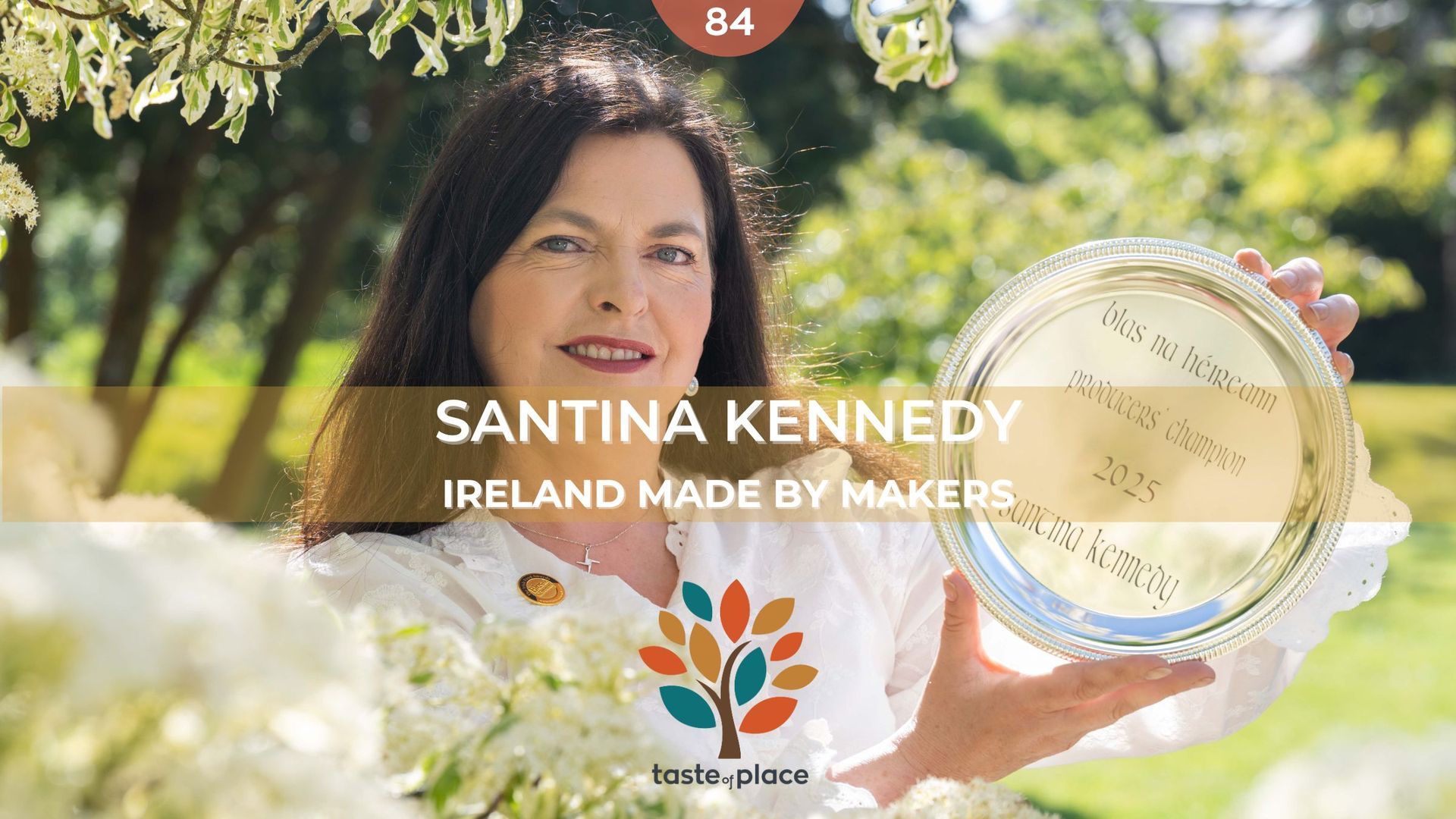
In this episode, Erik Wolf speaks with Santina Kennedy, an award-winning Irish food consultant, producer champion, and storyteller whose work bridges food history, culture, and contemporary experience design. Santina shares her unconventional journey from banking to café ownership, and ultimately to a vocation that did not exist when she was young: interpreting Irish food culture through storytelling, events, and strategic collaborations. She reflects candidly on delayed purpose, entrepreneurship without capital, and why genuine hospitality matters more than polish or scale. The conversation explores Ireland’s overlooked food narratives - from tenant farmers and kitchen workers to everyday staples like potatoes, butter, and bread - and how these stories can be brought to life through immersive experiences in galleries, estates, and public institutions. Santina also dives deeply into Irish whiskey, explaining how history, resilience, terroir, and innovation are expressed in mash bills, grains, and pairing traditions. A standout theme is Santina’s advocacy for St. Brigid as Ireland’s original food and hospitality patron, and her work elevating Brigid’s legacy through food, drink, poetry, and craft. The episode concludes with a thoughtful discussion on regional food networks, particularly County Wicklow, and why Ireland must first teach its own people to value their food culture before expecting visitors to understand it. This is a rich, reflective conversation about identity, resilience, and the power of food to tell the true story of a place. You can learn more about Santina here . The Taste of Place podcast is sponsored by the World Food Travel Association’s Taste of Place movement. Taste of Place is a global initiative that celebrates culinary culture, food heritage, and the makers behind them. Through the movement, travelers and consumers are encouraged to connect more deeply with destinations and products through their unique flavors and traditions. Learn more at JoinTasteofPlace.org . 🎙️ Available now on Spotify, iTunes & your favorite podcast platforms (Search for "Taste of Place") 📺 Prefer video? Watch it now on our YouTube channel . Or listen here now:
5 January 2026
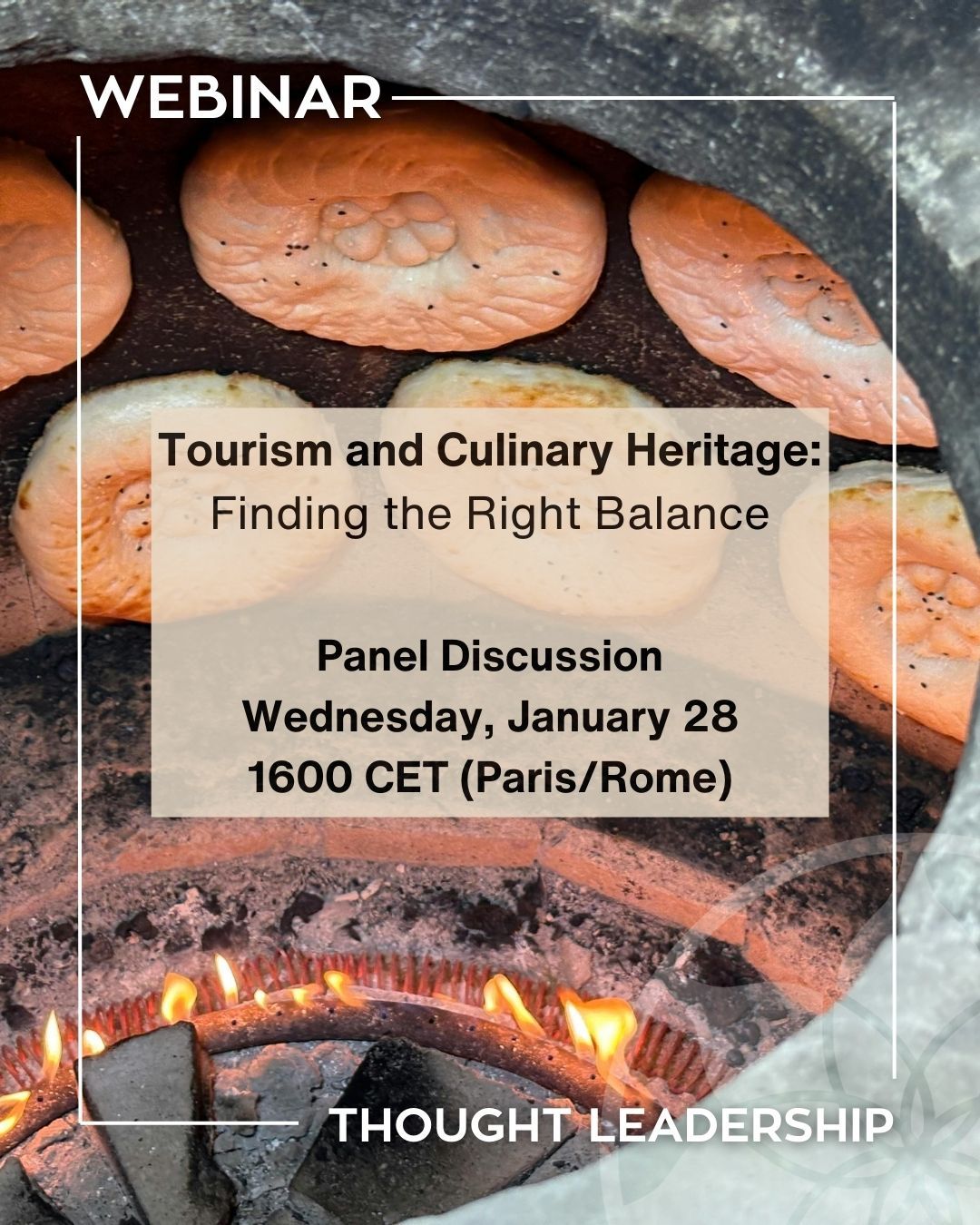
REGISTER NOW As interest in local food cultures continues to grow, destinations face increasingly complex choices. Tourism can support culinary heritage by strengthening local economies and raising awareness of food traditions. At the same time, poorly managed promotion can simplify, commodify, or distort cultural practices. This webinar brings together perspectives from across the system to examine how tourism and culinary heritage can coexist more responsibly. Panelists: - Janice Ruddock, Executive Director, Ontario Craft Brewers Association - Sean O’Rourke, President, Eat & Walkabout Tours - Niclas Fjellström, Executive Director, Culinary Heritage Network - Erik Wolf, Executive Director, World Food Travel Association The discussion will be moderated by Marc Checkley, a Lausanne-based storyteller, journalist, and experienced event host with a background in food, wine, travel, and cultural programming. Topics include: Recognizing culinary heritage as living culture rather than a static product Understanding how tourism and markets influence tradition over time Identifying where destinations most often struggle to find balance Applying practical principles for responsible promotion and stewardship This session is relevant for destination marketers, tourism offices, policymakers, producer associations, educators, and anyone working at the intersection of food, culture, and place. There is no cost to attend. REGISTER NOW
by Erik Wolf 1 January 2026
In 2025, the World Food Travel Association focused on strengthening culinary culture as living heritage, supporting the people and practices that sustain it, and building informed global collaboration rooted in values rather than prestige. Advanced the Taste of Place Movement and Alliance We clarified and communicated the purpose of the Taste of Place Movement — a global effort dedicated to safeguarding culinary heritage and empowering the keepers of food culture in alignment with the Declaration for the Preservation of Culinary Heritage . The Taste of Place Alliance framework was defined to support destinations, organizations, and practitioners who share these values. We also invite those who support this mission to join the Movement through philanthropic contributions. Do you represent a destination? Please contact us to learn how your destination can participate. Delivered Strategic Advisory and Destination Engagement Work We conducted destination-level analysis and advisory engagement in diverse regions, including the Bothnian Bay area of Sweden and Finland and with Saudi Arabia’s Culinary Arts Commission , to help partners explore how food culture, regional identity, and cooperation can contribute to responsible cultural and economic resilience. Updated Professional Training Programs All certification and training programs were updated with current research, terminology, and real-world cases. Regular refresh cycles ensure that practitioners receive instruction that reflects the most accurate and relevant information available. Built Relationships Through Targeted Engagement We engaged directly with destinations, stakeholders, and partners through site visits and industry events, including exploratory meetings in Umbria, Italy and participation in World Travel Market , to listen, assess alignment, and foster partnerships grounded in cultural integrity. Expanded and Recognized Leadership Within Our Global Network In 2025 we welcomed new Ambassadors from diverse regions, including Chef Dela Acolatse ( Ghana ) and Gerald Kock ( Aruba ), and named Mabel Esther Vega Montaño ( Colombia ) as our first Taste of Place Guardian, recognizing her lifelong commitment to ancestral knowledge and rural food culture. These appointments reinforce our values as articulated in the Declaration for the Preservation of Culinary Heritage. Interested in becoming an Ambassador or Guardian in your area? If you share our values and commitment, please get in touch . Honored Outstanding Contributions to the Field We awarded the 2025 Lifetime Achievement Award to Francesc Fusté-Forné (Girona, Spain) in recognition of his distinguished career advancing food tourism research, education, and understanding of culinary culture. We also invited the community to nominate other individuals whose work has made enduring contributions to our field. Provided Global Advocacy Through Editorial and Media Platforms We continued to interpret and elevate global developments in newsletters and digital content, and through the Taste of Place Podcast , which released 11 episodes in 2025 featuring inspiring leaders. Notable episodes included “Peace Through Food” with Paula Mohammed, “The Sweet Taste of Ethics” featuring Veronica Peralta on ethical chocolate, and “From Tunisia With Flavor” with Jamie Furniss on repositioning Tunisian cuisine for travelers. By sharing these conversations, we reinforced food as cultural heritage and connected listeners with makers and culture bearers.
31 December 2025
🎧 New Podcast Episode Alert! Episode 83: “Why Artisanal Still Matters” featuring Heike Winter What happens when you completely reinvent your life at 50—and return to the culinary traditions that shaped you? In Episode 82, host Erik Wolf speaks with Daniela Sfara, the Canadian-Italian chef, cultural ambassador, and founder of ITALUS whose mission is to preserve the disappearing regional foodways of Italy. Daniela shares her extraordinary personal transformation from a 20-year jewellery career to becoming a respected voice in culinary culture, hospitality excellence, and immersive food experiences across Italy, Dubai, Europe, and North America. Daniela’s story is one of resilience, reinvention, and deep cultural stewardship. Whether you work in food, tourism, hospitality, or simply love Italian cuisine, this is an inspiring reminder that food is identity, and preserving culinary heritage is an act of service to future generations. 🎙️ Available now on Spotify, iTunes & your favorite podcast platforms (Search for "Taste of Place") 📺 Prefer video? Watch it now on our YouTube channel. Or listen here now:
Road stretching towards the setting sun. Golden sky, open fields.
31 December 2025
ARUBA (Gerald Kock) Savaneta Seafood Festival: A Model for Community-Led Food Touri sm in Aruba The inaugural Savaneta Seafood Festival, held on September 28, 2025, by Fundación Savaneta Prome Capital, marked a significant moment in Aruba’s culinary and cultural calendar. In the island’s first capital, seaside streets were transformed into a pedestrian-only celebration where food, music, and heritage came together as a powerful expression of local identity. Attracting an estimated 6,000 visitors, the festival demonstrated strong demand for authentic, community-driven experiences among both residents and travelers. Central to the event was an “Ocean-to-Plate” revival. Twenty-four local vendors showcased seafood such as snails, conch, shrimp, and lobster, prepared using traditional family recipes and fresh local herbs. The festival also revived a local fishing tournament for the first time in 40 years. Approximately 30 boats and 100 fishermen landed a collective catch of 880 kg, reinforcing the connection between sea, community, and tradition. Part of the catch was donated and grilled on-site by local chefs, allowing visitors to experience the full journey from ocean to plate - a powerful symbol of sustainability, generosity, and shared pride. Beyond gastronomy, the festival elevated local culture and entrepreneurship through art, crafts, and music, positioning Savaneta as a living example of how cultural heritage and economic opportunity can thrive together. From the perspective of Food Tourism Ambassadors for the World Food Travel Association, the festival offers a replicable framework for Aruba’s future: a model in which each district expresses its distinct identity through food, storytelling, and place-based experiences. The Savaneta Seafood Festival stands as proof that culinary heritage can strengthen community resilience and support sustainable tourism. More than a single event, it presents a compelling vision of how small places can achieve meaningful global impact through food.
14 December 2025
🎧 New Podcast Episode Alert! Episode 82: “Cooking by Heart, Not by Recipe” featuring Daniela Sfara What happens when you completely reinvent your life at 50—and return to the culinary traditions that shaped you? In Episode 82, host Erik Wolf speaks with Daniela Sfara, the Canadian-Italian chef, cultural ambassador, and founder of ITALUS whose mission is to preserve the disappearing regional foodways of Italy. Daniela shares her extraordinary personal transformation from a 20-year jewellery career to becoming a respected voice in culinary culture, hospitality excellence, and immersive food experiences across Italy, Dubai, Europe, and North America. Daniela’s story is one of resilience, reinvention, and deep cultural stewardship. Whether you work in food, tourism, hospitality, or simply love Italian cuisine, this is an inspiring reminder that food is identity, and preserving culinary heritage is an act of service to future generations. 🎙️ Available now on Spotify, iTunes & your favorite podcast platforms (Search for "Taste of Place") 📺 Prefer video? Watch it now on our YouTube channel. Or listen here now:
More posts