Making Sense of Peru’s Gourmet Positioning
Part 2 in The Power of Food Tourism , a new thought leadership series about the tremendous and undeniable power of food and beverage tourism.
In today’s global society, food provides a connection to the lifestyles that all human beings have lived over the centuries. As society has progressed, food has grown to become an item of admiration, as well as of sustenance. Food and beverage tourism (a.k.a. culinary tourism and gastronomy tourism) has become a means that reflects each destination’s culture, history, local ingredients, and innovation. However far too often, destinations focus on promoting a select few highly successful restaurants, which renders their “cuisine” inaccessible to the majority of travelers. This is not the best approach, because the value of culinary tourism lies in the sum of its parts, not in cherry-picking a few choice gastronomic offers.
Case Study: Peru
Let us take a look at Peru to help us to understand what happens when a destination focuses too much on high-end culinary experiences to represent the country’s overall culinary image.
Just in the past ten years, Lima, Peru has burst onto the world’s culinary scene. In what many have called a “culinary creative awakening” , Lima has seen the rise of several Michelin star restaurants like Central, which certainly attract a small market of gourmet lovers. At Central, the focus is on dishes that literally rise in elevation; the first dish begins with cuisine from the sea at “10 meters below sea level.” The elevations gradually rise as the courses continue, to eventually reach dishes of the Andes mountains at 4100 meters above sea level . Currently ranked as the 6th best restaurant in the world , Central in Lima represents the rapid success in notoriety that Peruvian cuisine has achieved. Restaurants like Central have rightly put Lima on the world map for its cuisine, and even though the experience there is positively memorable, they do not represent the wide range of Peruvian cuisine from a destination marketing perspective. However, restaurants that enjoy such fame also represent the growing inaccessibility and lack of representation of the destination’s cuisine overall.
Beginning in the late 2000s, PromPeru, the country’s tourism marketing agency, looked to grow its image as a culinary destination, promoting images of Central and another famous Michelin starred restaurant, Astrid y Gastón (the restaurant of prized Peruvian chef Gastón Acurio). By 2012, they launched a campaign known as “Recordarás Perú” ( “You Will Remember Peru” ), which sought to promote the image of Peruvian cuisine in Washington DC (USA) and Barcelona, Spain. By 2013, both Central and Astrid y Gastón appeared in the list of the World’s 50 Best Restaurants. In 2015, Peru presented at the Madrid fair “La Pandilla Leche de Tigre” (“Tiger Milk Gang”), bringing ambassadors to its cuisine: Gastón Acurio, Virgilio Martinez, and Mistuharu Tsumura, among others. In 2015, Peru began promoting its Peru, Mucho Gusto campaign presenting its top culinary delights in a media and marketing campaign to the world to attract food and beverage tourism to Peru. By 2016, Lima proudly hosted the UNWTO Second World Forum on Gastronomy Tourism. In the eyes of PromPeru, the country had finally arrived on the stage, literally and figuratively, of global cuisine.
Despite the many deserving awards, there are some challenges with this approach. The main promotional positioning for Peru’s food and beverage experiences was to elevate the visibility of a few of the country’s celebrity chefs and expensive Michelin star restaurants. Food is the country’s pride; 39% of Peruvians say it is the principal draw, ahead of even Machu Picchu (36%). But how many Peruvians, or for that matter international tourists, regularly go to restaurants where tasting menus cost over US$100 per person ?
PromPeru’s fundamental flaw at the time was promoting gourmet experiences in Lima. And while PromPeru has now diversified its messaging to include other corners of the country, gourmet imagery still takes center place in its gastronomy messaging for the country.
While it is good to be proud of your best restaurants, destination marketers need to keep in mind that the economic impact of gourmet travelers is actually quite small. Currently, tourists spend an average of only 1.33 days and eat 4 meals in Lima, opting instead to explore other parts of the country, including the vibrant food and beverage cultures further afield that do not seem to be promoted by the government with the same gusto with which the country’s gourmet offerings are promoted. Peru promotes “gourmet” tourism ( an enjoyment of fine, often expensive cuisine ), instead of the country’s regional cuisines that are already represented in the capital Lima and various regions. To help illustrate our point of the limited impact of gourmet destination positioning, we are working on an economic impact model that will be published in a future article. In our preliminary analysis, we found that the three Michelin-star restaurants in Lima, Peru only represented a direct economic impact of less than 0.01% of revenue from international gastronomic tourism in Peru. Of course, one could argue about the indirect economic impact and editorial value of coverage received, but we think such an imbalanced impact would necessarily raise a few eyebrows in any discussion about marketing ROI.
Judging solely based on the three restaurants that Lima has promoted during the past decade at numerous fairs, in the press, at World Travel Market and at the 2016 UNWTO World Forum on Gastronomy Tourism, no tourist would think they are getting such a small sample of Peruvian cuisine. While these three restaurants, Central, Astrid y Gastón, and Maido, purport to be inclusive of all of Peru’s cuisines, they only represent unattainable artistic depictions of the cuisine (we would call this an Innovative PsychoCulinary profile according to the World Food Travel Association’s own research on the preferences of food-lovers when making dining decisions). Tourists often arrive in Lima and expect an abundance of this artistic but unrepresentative form of cuisine. In reality, Lima’s gastronomic scene has so much more to offer that is not adequately marketed, namely regional, fusion, and street cuisines and of course, the world-renowned Mistura festival, which has arguably done a better job of positioning Peruvian culinary culture in general than the country’s official government offices have done.
In Peru, many of the national and internationally recognized dishes, such as ceviche, pisco sour, anticuchos, and chicha morada are most commonly found and served in Lima. However, the international cuisine of Lima represents only a small portion of everything that Peru has to offer. In the Puno region, you can find the endemic kaniwa grain, resembling larger chia seeds. In the southern, arid Tacna region, they utilize their special local and briny olives to produce olive oil and other olive products which according to olive connoisseurs, are some of the best olives on Earth due to their high acid content. In the eastern Incayali region, one can find the delicious dish, Incachali , which contains chicken, corn, peanuts, cassava and other ingredients. In the Amazonian city of Iquitos, you will find a traditional river fish dish called patarashca. Peru also has a vibrant street food culture, with dishes such as rachi, butifarra, and picarones found throughout the country.
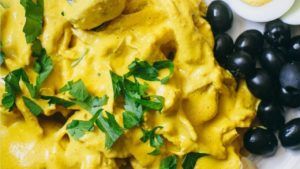
Peruvian cuisine extends beyond local, regional, and street foods. Peru is a haven for fusion cuisine. Peru has taken French influence in adopting the French mille feuille pastry, as a common dessert product. Peru has adopted a Catalan dessert dish, manjar blanco catalan, added local ingredients like aji amarillo peppers, and created a new chicken stew, aji de gallina. In recent years, Asian-Peruvian cuisine has grown immensely. Chifa cuisine (Chinese-Peruvian) takes dishes like fried rice and adapts them to local ingredients to make dishes such as arroz chaufa. And last but not least, we must give a nod to the considerable number of Japanese immigrants, who have made an indelible and positive impression on the country’s food. Nikkei cuisine has adopted the Japanese culture of raw, sashimi preparation of fish, and combined it with local ingredients and traditions to create dishes like tiraditos.
As Peru’s capital, Lima has such an immense opportunity to represent all of these vibrant and diverse cuisines of the country. Instead, visitors are programmed to seek and find modernist interpretations of these dishes, along with lofty price tags. Fortunately, in the past few years, PromPeru has tried to shift its focus to showcase more regional cuisines, including those of Tacna and Moquegua. However, the first images one sees on their websites is haute cuisine, namely Michelin star restaurants and their chef’s interpretations of Peru’s native and fusion cuisines.
In a world in which 53% of people now travel based on food and drink
, it is shortsighted for a country to focus its efforts on seeking notoriety from a handful of small, expensive restaurants in the capital city. The focus of food and beverage tourism should be to connect the country’s many diverse cultures and communities, to show the faces behind the places (the artisanal makers and producers without whom there would be no cuisine. These people also show how the country’s chefs and foodservice industry support modern consumer demands, such as sustainability, recycling and vegan and vegetarian dining. After all, visitors take their values and preferences with us when we travel. Therefore food lovers are often quite literally shocked to see extravagant food waste or excessive product packaging, which will only end up in landfills.
The Role of External Expertise in Food and Beverage Tourism
To many governments engaged in destination marketing, seeking expertise to help with the specific development of food and beverage tourism is often seen as an unnecessary or even frivolous expense. However, expertise in food and beverage tourism can create enormous opportunities for the entire destination, both urban and rural, as it should in Peru.
Destination marketers, namely tourism offices and governments alike, need food and beverage tourism expertise to help connect value chains for maximum benefit to the destination. This expertise helps restaurant managers, farmers, entrepreneurs, rural regions, towns, and everything in-between. Connecting rural and local to urban is frequently overlooked. For example, several years ago, the South Korean government spent the equivalent of millions of US dollars to promote food and beverage tourism to cities such as Jeonju. Most of these efforts were promoted to Korean nationals. As a result, 30% of the total 10 million annual tourists were from the Seoul region alone. Efforts have been made more recently to promote Korea’s food and beverage products and experiences to a more international crowd. For now, unique food and beverage products and experiences remain largely disconnected from the majority of international food and beverage tourism offers in the bigger Korean cities.
In this case, Korea’s disconnect is with its food and beverage value chain. Experts in food and beverage tourism management analyze ratings, recommendations, and economic impact to determine how to properly invest in each step of the food and beverage tourism development process.
Food tourism experts can also help to integrate cultural interpretation of food and beverage tourism products and experiences with the growing food and beverage tourism market. As we mentioned in the first part of this thought leadership series , in Andalusia, Spain, much tourism focus has been on beach tourism on coasts, with just a little wine tourism as well. However, wine culture is present in nearly every Mediterranean country. And while wine is an important attraction for visitors to Andalusia, most international tourists are oblivious to the province’s olive oil industry and opportunities to visit olive oil producers. In fact, Andalusia produces 32% of the world’s supply of olive oil. To us, visiting Andalusia without tasting some of the world’s best olive oils seems like an opportunity missed.
Perhaps most importantly, food and beverage tourism experts can help to spread the word with media, early adopters and other influencers. One of the best examples of food and beverage tourism marketing success lies in Japan. According to a study by the Japanese Tourism Agency, 70.5% of tourists list “eat Japanese food” as something they “wanted to do before (they come to) Japan.” This perception of Japanese food was not built out of thin air. The Japanese government and local experts have been building up the image of Japanese food for years. On social media and smartphone applications, we see collaboration. ByFood recently collaborated with the Best Ever Food Review Show on YouTube to produce a video showing the best ramen in Tokyo at three different price points. Outside of Tokyo too, the government designates and promotes individual small towns and regions as meibutsu, or “famous item.” It is important for destinations like Japan to use culinary expertise to promote all facets of its food and beverage tourism industry. Recent results have shown the efforts to be successful.
Food and beverage tourism experts can help identify and preempt potential pitfalls in destination management, for example with regard to food safety, food quality, missed export opportunities and opportunities in innovation and training. Experts can help destinations to avoid mistakes, and help identify often overlooked issues in stakeholder management. Ultimately, it is the small details that make the largest impact on food and beverage tourism. Therefore, a concerted focus with expert collaboration is required for the greatest chance of success.
Conclusion
The case of Peru reflects the need for outside food and beverage tourism expertise. The country has incredible potential in food and beverage tourism, and in recent years, it has been cashing in. However, instead of focusing on the local traditions, dishes, cultures, and fusion that are uniquely Peruvian, the country’s destination marketers focus mostly instead on interpretations of these cuisines at expensive Michelin restaurants. Perhaps they are reflecting their own personal dining preferences in their marketing decisions; we will never know. Not only is this approach economically inefficient, but it also alienates the overwhelming majority of other visitors who wish to fully experience all of the different types of food and beverages that Peru has to offer. Remember, less than 18% of travelers express “gourmet” as their primary PsychoCulinary profile, according to the World Food Travel Association. “Gourmet” is near the bottom of the list of 13 available profiles. Only destinations that can offer a sufficient asset inventory of gourmet resources should position themselves as such.
Food and beverage tourism experts can guide destinations to make the right decisions. Such experts have access to specialized research, creative thinkers, and other resources, all of which can combine for a destination to realize its full potential with food and beverage tourism. Countries like Peru can benefit from this expertise to connect the cuisines from their local communities to their capital or gateway cities. They would be better served promoting restaurants and experiences from different price points to the right type of traveler (according to the right PsychoCulinary profiles) in order to get tourists to stay more nights and properly appreciate all levels of the local cuisine. Pre-pandemic, more people than ever (fully 53% of travelers) chose their destination based on its gastronomy. It stands to reason then that developing food and beverage tourism deserves extra attention and planning to yield its full economic and community potential.
Written by Ben Palmer. Edited by Erik Wolf.