The Dynamic Culinary Cultures of India’s Tamil Nadu
16 February 2021
Tamil Nadu

Many culinary masterpieces disappeared over time, as there is no means of creating exposure to the communities except passing the skills from generation to generation. My father grew up in a small village. He used to talk about various foods which he used to be able to eat but not ordinarily available anywhere at present. One of the foods that created awe in me was a sweet prepared from a flower called Sambu poo (a local flower). Its pollen is isolated, rinsed, dried and blended with jaggery (unrefined palm or cane sugar) and cardamom, and shaped into a solid ball. He exclaimed the way it melts like a cloud when placed in your mouth. This food was unknown to me until my father spoke about it. Time does not make the food disappear but the lack of exposure or the lack sharing knowledge does. In this manner, sadly, many foods disappeared from Tamil Nadu’s food culture.

Even those who live nearby lost sight of how far the loss extends. Tamil Nadu, being in the Southernmost part of India, with 38 districts, where almost all of them have something to boast about in their culinary expertise and multitude of diverse taste and techniques. According to the oldest Tamil Literatures Purananooru , the regions in the past were categorized into Kurunji (mountain region), Mullai (forest region), Marutham (Agricultural area), Neithal (Seaside), Palai (Drought region). These segregations are related to the diversified cuisine that survives today. The local foods sourced from these regions have been the staple ingredients for years and years, leading to a diverse culinary culture. A part of its authenticity was neglected and then changed. Due to cultural pluralism, some foods don’t even have a name of their own.

Tamil Nadu’s food culture has been popularly misunderstood for years as tasteless and solely vegetarian. Whenever people came through this way, a large variety of the area’s foods were left unexplored. The taste of Tamil Nadu is kind of hidden in a big box of other nested boxes. When you try to open one box, you realize there are multiple boxes inside, each having their zest and cooking styles which can’t easily be compared. The local community of Tamil Nadu shows its love for food without partiality i.e. it places vegetarians at one side of the coin, and meat lovers on the other side. A coin does not work with just one side. So talking about one side without the other doesn’t portray the real taste of Tamil Nadu.

I thought very deeply in order to project the taste of Tamil Nadu without choosing sides. That’s when the common denominator of vegetarians and meat lovers appeared in front of me while having my lunch. Rice! It is rice which mediates both dimensions of the diverging tastes enjoyed in Tamil Nadu. To be precise, rice is the king of the kitchen. Whereas the unique flavours are provided through the spices, herbs and cooking techniques placing it in the altar. They used to uplift the blandness of the rice and break the limitations of vegetables and meat flavours. The most prominent spices kept in the “ Anjarai Petti ” (a type of container) and the tamarind that set forward the tanginess and the unique sweetening master such as jaggery is more than just a taste inducer; they are also highly medicinal.

In 2019, The Hindu Group conducted “Our State, Our Taste,” a cookery competition which opened up the plethora of culinary recipes that even the locals never knew. The Hindu’s news article reported on the experience (while judging) of the top culinary expert of Tamil Nadu Chef K Damodaran unveiled the fact on how much the state of Tamil Nadu has to offer when it comes to varieties from Chutneys, Sambars, Rasams to Dosas. Even the most popular vegetarian dessert such as payasam has hundreds of variations from Semiya (Vermicelli) payasam, Paruppu (lentil) payasam to Thengai (tender coconut) payasam. Tamil Nadu cuisines don’t end with just the overt presence of vegetarian meals with dishes such as Kootu, Poriyal and Avial , curd, papads, pickles spread out with rice and stew based on vegetable, lentils and ghee, are spread out on top of a banana leaf. Sweets, snacks and savouries like Muruku, Adhirasam, Thattai, Seedai, Somas and more, also offers so many memories through taste as the entire family sits together for few days before the Diwali celebrationm and prepare to share their happiness with the friends and neighbours through food.

Tamil Nadu’s meat-based food platter is dominated by chicken, goat meat (mutton), fish and prawns. One of the most well-known cuisines is the Chettinadu Cuisine in the Karaikudi, Pudukottai, Kanadukathan and Devakottai Districts. These districts boast various country chicken and mutton-based foods which let out the spicy flavour through black pepper, chillies and other spices which are ground in the mortar and pestle and then cooked and roasted in cold-pressed sesame or coconut oil. This cuisine gives out a lip-smacking and authentic flavour that stays on your tastebuds.

Kongunadu cuisine is not as popular as that of Chettinad, but is prevalent in the Coimbatore and its surrounding districts. It is little contradictory to the former in that it uses fresh flavours and soft textures by blending coconut milk, ground cashew nut and almond nut for a luxurious taste. Then the right amount of ground black pepper is added to make the spice level a little milder and give the perfect, heart-warming taste.

Nanjil Nadu cuisine Kanyakumari and Ramanathapuram and other districts on the sea such as Tuticorin, boast on being experts in seafood. Each has their speciality of fish, prawns and oysters, which are roasted in coconut oil to give a reddish brown colour which indicates its flavour. The dried fish called Karuvad are very popular among these regions and there are plenty of fans who stock up on these in their kitchen.

Districts such as Madurai, Tirunelveli, Dindugal, Theni and Virudhunagar offer immense meat platters to those who constantly wish to encounter dishes featuring flavours they have never tasted before. The Jigardanda , a unique cold dessert and Ayira Meen Kulambu (Spined Loach gravy) for which the loaches are rinsed in milk before cooking, are the real heritage of Madurai. It tastes best only when you have it there. Similarly, the village-style meat feast in Theni and Dindugal where mutton rules everything. It is cooked in a clay pot. Their cuisine is enriched with various additions ranging from millets, vegetables and legumes that offer an authenticity that would be impossible to find outside this region. Poricha Parotta in Virudhunagar, Border Parotta in Thirunelveli and Kothu Parotta with Kaadai Gravy (Quail) in Tuticorin are the comfort food of the people in Tamil Nadu. These parottas own authentic taste because of the flavour of the cooking water.

The taste of Tamil Nadu is so intense and diverse, and trying to explain it in a written article is quite complex. For every culinary enthusiast, the entire state of Tamil Nadu is like a treasure hunt. Those who go beyond the beaten track and traverse through the far stretched lands and villages can attain an experience that lets all the senses go beyond the perceptions of food, and enjoy the friendly and expert storytellers from the local communities.

Get the Tamil language version of this article.

Written by Nivethitha Bharathi. Edited by Erik Wolf.
Promotion for culinary capitals an innovative destination certification and development program for unknown destinations
Taste of place podcast listen to our culinary travel and culture podcast with erik wolf
Food
A membership page with a picture of pancakes on a plate.
11 January 2026
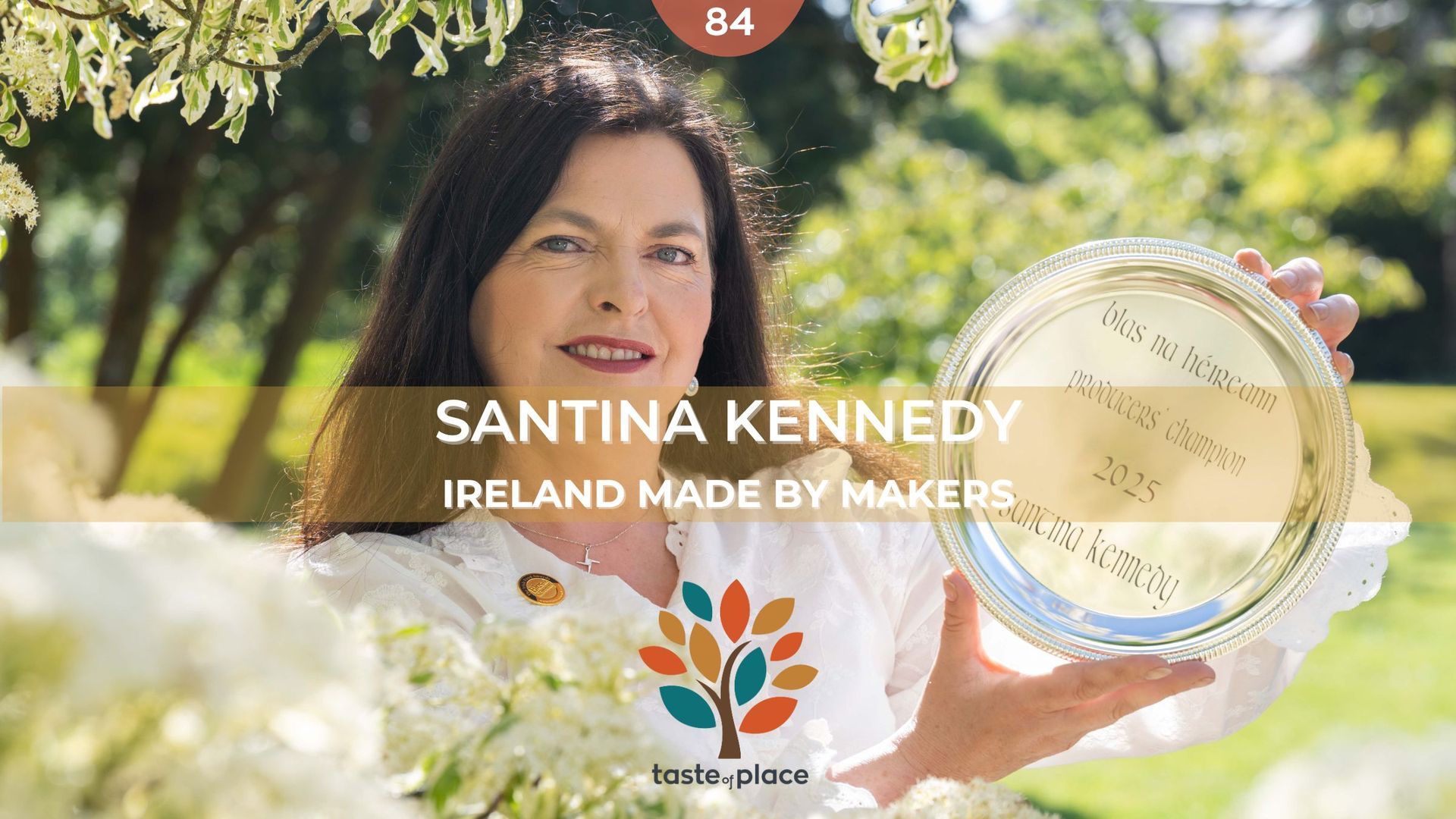
In this episode, Erik Wolf speaks with Santina Kennedy, an award-winning Irish food consultant, producer champion, and storyteller whose work bridges food history, culture, and contemporary experience design. Santina shares her unconventional journey from banking to café ownership, and ultimately to a vocation that did not exist when she was young: interpreting Irish food culture through storytelling, events, and strategic collaborations. She reflects candidly on delayed purpose, entrepreneurship without capital, and why genuine hospitality matters more than polish or scale. The conversation explores Ireland’s overlooked food narratives - from tenant farmers and kitchen workers to everyday staples like potatoes, butter, and bread - and how these stories can be brought to life through immersive experiences in galleries, estates, and public institutions. Santina also dives deeply into Irish whiskey, explaining how history, resilience, terroir, and innovation are expressed in mash bills, grains, and pairing traditions. A standout theme is Santina’s advocacy for St. Brigid as Ireland’s original food and hospitality patron, and her work elevating Brigid’s legacy through food, drink, poetry, and craft. The episode concludes with a thoughtful discussion on regional food networks, particularly County Wicklow, and why Ireland must first teach its own people to value their food culture before expecting visitors to understand it. This is a rich, reflective conversation about identity, resilience, and the power of food to tell the true story of a place. You can learn more about Santina here . The Taste of Place podcast is sponsored by the World Food Travel Association’s Taste of Place movement. Taste of Place is a global initiative that celebrates culinary culture, food heritage, and the makers behind them. Through the movement, travelers and consumers are encouraged to connect more deeply with destinations and products through their unique flavors and traditions. Learn more at JoinTasteofPlace.org . 🎙️ Available now on Spotify, iTunes & your favorite podcast platforms (Search for "Taste of Place") 📺 Prefer video? Watch it now on our YouTube channel . Or listen here now:
5 January 2026
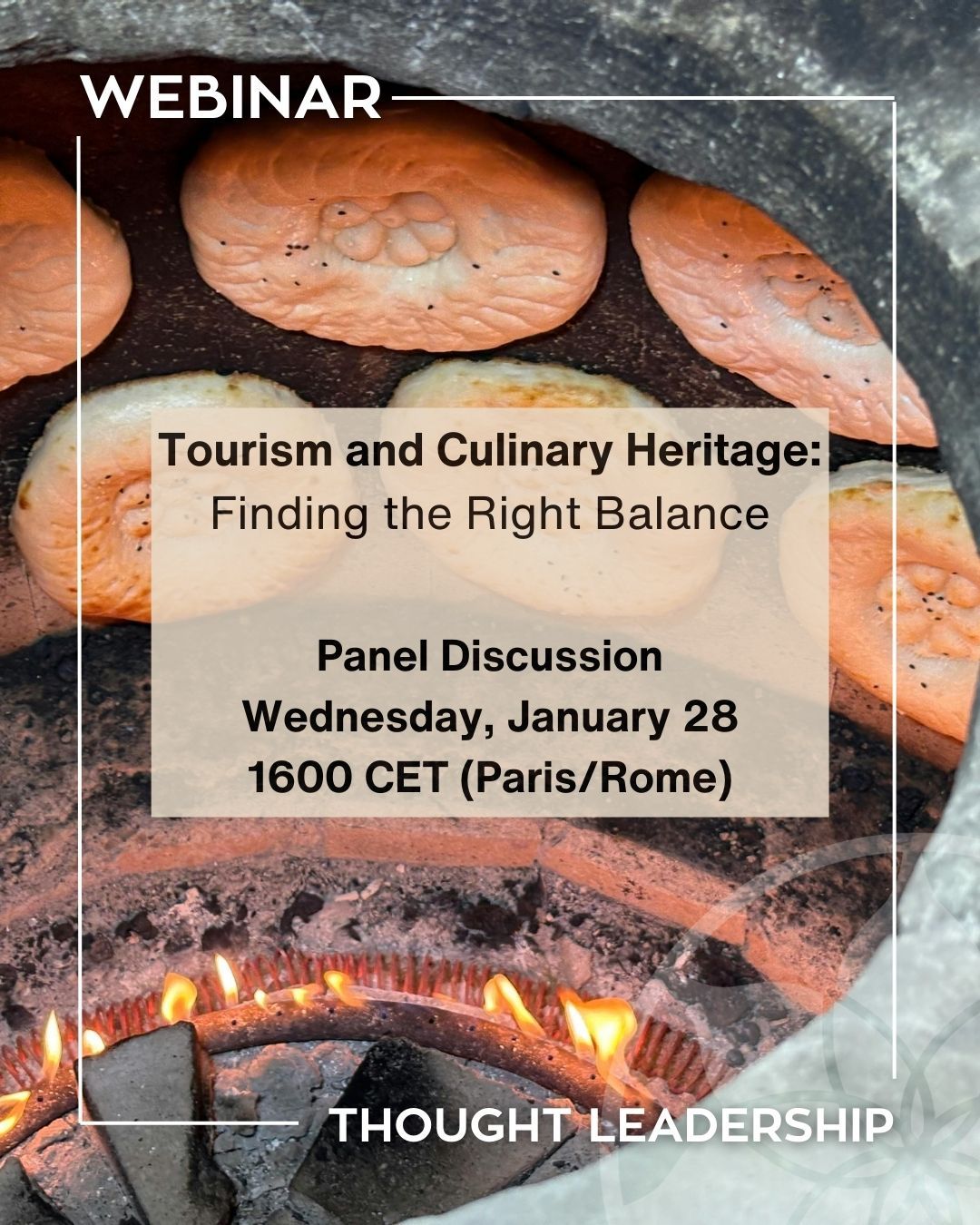
REGISTER NOW As interest in local food cultures continues to grow, destinations face increasingly complex choices. Tourism can support culinary heritage by strengthening local economies and raising awareness of food traditions. At the same time, poorly managed promotion can simplify, commodify, or distort cultural practices. This webinar brings together perspectives from across the system to examine how tourism and culinary heritage can coexist more responsibly. Panelists: - Janice Ruddock, Executive Director, Ontario Craft Brewers Association - Sean O’Rourke, President, Eat & Walkabout Tours - Niclas Fjellström, Executive Director, Culinary Heritage Network - Erik Wolf, Executive Director, World Food Travel Association The discussion will be moderated by Marc Checkley, a Lausanne-based storyteller, journalist, and experienced event host with a background in food, wine, travel, and cultural programming. Topics include: Recognizing culinary heritage as living culture rather than a static product Understanding how tourism and markets influence tradition over time Identifying where destinations most often struggle to find balance Applying practical principles for responsible promotion and stewardship This session is relevant for destination marketers, tourism offices, policymakers, producer associations, educators, and anyone working at the intersection of food, culture, and place. There is no cost to attend. REGISTER NOW
by Erik Wolf 1 January 2026
In 2025, the World Food Travel Association focused on strengthening culinary culture as living heritage, supporting the people and practices that sustain it, and building informed global collaboration rooted in values rather than prestige. Advanced the Taste of Place Movement and Alliance We clarified and communicated the purpose of the Taste of Place Movement — a global effort dedicated to safeguarding culinary heritage and empowering the keepers of food culture in alignment with the Declaration for the Preservation of Culinary Heritage . The Taste of Place Alliance framework was defined to support destinations, organizations, and practitioners who share these values. We also invite those who support this mission to join the Movement through philanthropic contributions. Do you represent a destination? Please contact us to learn how your destination can participate. Delivered Strategic Advisory and Destination Engagement Work We conducted destination-level analysis and advisory engagement in diverse regions, including the Bothnian Bay area of Sweden and Finland and with Saudi Arabia’s Culinary Arts Commission , to help partners explore how food culture, regional identity, and cooperation can contribute to responsible cultural and economic resilience. Updated Professional Training Programs All certification and training programs were updated with current research, terminology, and real-world cases. Regular refresh cycles ensure that practitioners receive instruction that reflects the most accurate and relevant information available. Built Relationships Through Targeted Engagement We engaged directly with destinations, stakeholders, and partners through site visits and industry events, including exploratory meetings in Umbria, Italy and participation in World Travel Market , to listen, assess alignment, and foster partnerships grounded in cultural integrity. Expanded and Recognized Leadership Within Our Global Network In 2025 we welcomed new Ambassadors from diverse regions, including Chef Dela Acolatse ( Ghana ) and Gerald Kock ( Aruba ), and named Mabel Esther Vega Montaño ( Colombia ) as our first Taste of Place Guardian, recognizing her lifelong commitment to ancestral knowledge and rural food culture. These appointments reinforce our values as articulated in the Declaration for the Preservation of Culinary Heritage. Interested in becoming an Ambassador or Guardian in your area? If you share our values and commitment, please get in touch . Honored Outstanding Contributions to the Field We awarded the 2025 Lifetime Achievement Award to Francesc Fusté-Forné (Girona, Spain) in recognition of his distinguished career advancing food tourism research, education, and understanding of culinary culture. We also invited the community to nominate other individuals whose work has made enduring contributions to our field. Provided Global Advocacy Through Editorial and Media Platforms We continued to interpret and elevate global developments in newsletters and digital content, and through the Taste of Place Podcast , which released 11 episodes in 2025 featuring inspiring leaders. Notable episodes included “Peace Through Food” with Paula Mohammed, “The Sweet Taste of Ethics” featuring Veronica Peralta on ethical chocolate, and “From Tunisia With Flavor” with Jamie Furniss on repositioning Tunisian cuisine for travelers. By sharing these conversations, we reinforced food as cultural heritage and connected listeners with makers and culture bearers.
31 December 2025
🎧 New Podcast Episode Alert! Episode 83: “Why Artisanal Still Matters” featuring Heike Winter What happens when you completely reinvent your life at 50—and return to the culinary traditions that shaped you? In Episode 82, host Erik Wolf speaks with Daniela Sfara, the Canadian-Italian chef, cultural ambassador, and founder of ITALUS whose mission is to preserve the disappearing regional foodways of Italy. Daniela shares her extraordinary personal transformation from a 20-year jewellery career to becoming a respected voice in culinary culture, hospitality excellence, and immersive food experiences across Italy, Dubai, Europe, and North America. Daniela’s story is one of resilience, reinvention, and deep cultural stewardship. Whether you work in food, tourism, hospitality, or simply love Italian cuisine, this is an inspiring reminder that food is identity, and preserving culinary heritage is an act of service to future generations. 🎙️ Available now on Spotify, iTunes & your favorite podcast platforms (Search for "Taste of Place") 📺 Prefer video? Watch it now on our YouTube channel. Or listen here now:
Road stretching towards the setting sun. Golden sky, open fields.
31 December 2025
ARUBA (Gerald Kock) Savaneta Seafood Festival: A Model for Community-Led Food Touri sm in Aruba The inaugural Savaneta Seafood Festival, held on September 28, 2025, by Fundación Savaneta Prome Capital, marked a significant moment in Aruba’s culinary and cultural calendar. In the island’s first capital, seaside streets were transformed into a pedestrian-only celebration where food, music, and heritage came together as a powerful expression of local identity. Attracting an estimated 6,000 visitors, the festival demonstrated strong demand for authentic, community-driven experiences among both residents and travelers. Central to the event was an “Ocean-to-Plate” revival. Twenty-four local vendors showcased seafood such as snails, conch, shrimp, and lobster, prepared using traditional family recipes and fresh local herbs. The festival also revived a local fishing tournament for the first time in 40 years. Approximately 30 boats and 100 fishermen landed a collective catch of 880 kg, reinforcing the connection between sea, community, and tradition. Part of the catch was donated and grilled on-site by local chefs, allowing visitors to experience the full journey from ocean to plate - a powerful symbol of sustainability, generosity, and shared pride. Beyond gastronomy, the festival elevated local culture and entrepreneurship through art, crafts, and music, positioning Savaneta as a living example of how cultural heritage and economic opportunity can thrive together. From the perspective of Food Tourism Ambassadors for the World Food Travel Association, the festival offers a replicable framework for Aruba’s future: a model in which each district expresses its distinct identity through food, storytelling, and place-based experiences. The Savaneta Seafood Festival stands as proof that culinary heritage can strengthen community resilience and support sustainable tourism. More than a single event, it presents a compelling vision of how small places can achieve meaningful global impact through food.
14 December 2025
🎧 New Podcast Episode Alert! Episode 82: “Cooking by Heart, Not by Recipe” featuring Daniela Sfara What happens when you completely reinvent your life at 50—and return to the culinary traditions that shaped you? In Episode 82, host Erik Wolf speaks with Daniela Sfara, the Canadian-Italian chef, cultural ambassador, and founder of ITALUS whose mission is to preserve the disappearing regional foodways of Italy. Daniela shares her extraordinary personal transformation from a 20-year jewellery career to becoming a respected voice in culinary culture, hospitality excellence, and immersive food experiences across Italy, Dubai, Europe, and North America. Daniela’s story is one of resilience, reinvention, and deep cultural stewardship. Whether you work in food, tourism, hospitality, or simply love Italian cuisine, this is an inspiring reminder that food is identity, and preserving culinary heritage is an act of service to future generations. 🎙️ Available now on Spotify, iTunes & your favorite podcast platforms (Search for "Taste of Place") 📺 Prefer video? Watch it now on our YouTube channel. Or listen here now:
More posts