Smaken av Sverige [del ett]

7 December 2020
news - taste of sweden

Att ha bott en stor del av mitt vuxna liv utanför Sverige har gett mig en annorlunda bild av vad som är “svenskt”. Jag valde tidigt att prova vingarna utomlands delvis för att jag längtade efter att upptäcka andra delar av världen. Samtidigt har jag alltid sett till att kaffet i morgonkoppen är svenskt, och jag har varit en av de flitigaste besökarna på IKEA (till och med min 22-årsdag firades med köttbullar på IKEA i Melbourne!). Min bild av svensk mat kommer främst från vad som lagats i min farmors kök under min barndom, så för att försöka lista ut vad “smaken av Sverige” är, tog jag hjälp av en expert.


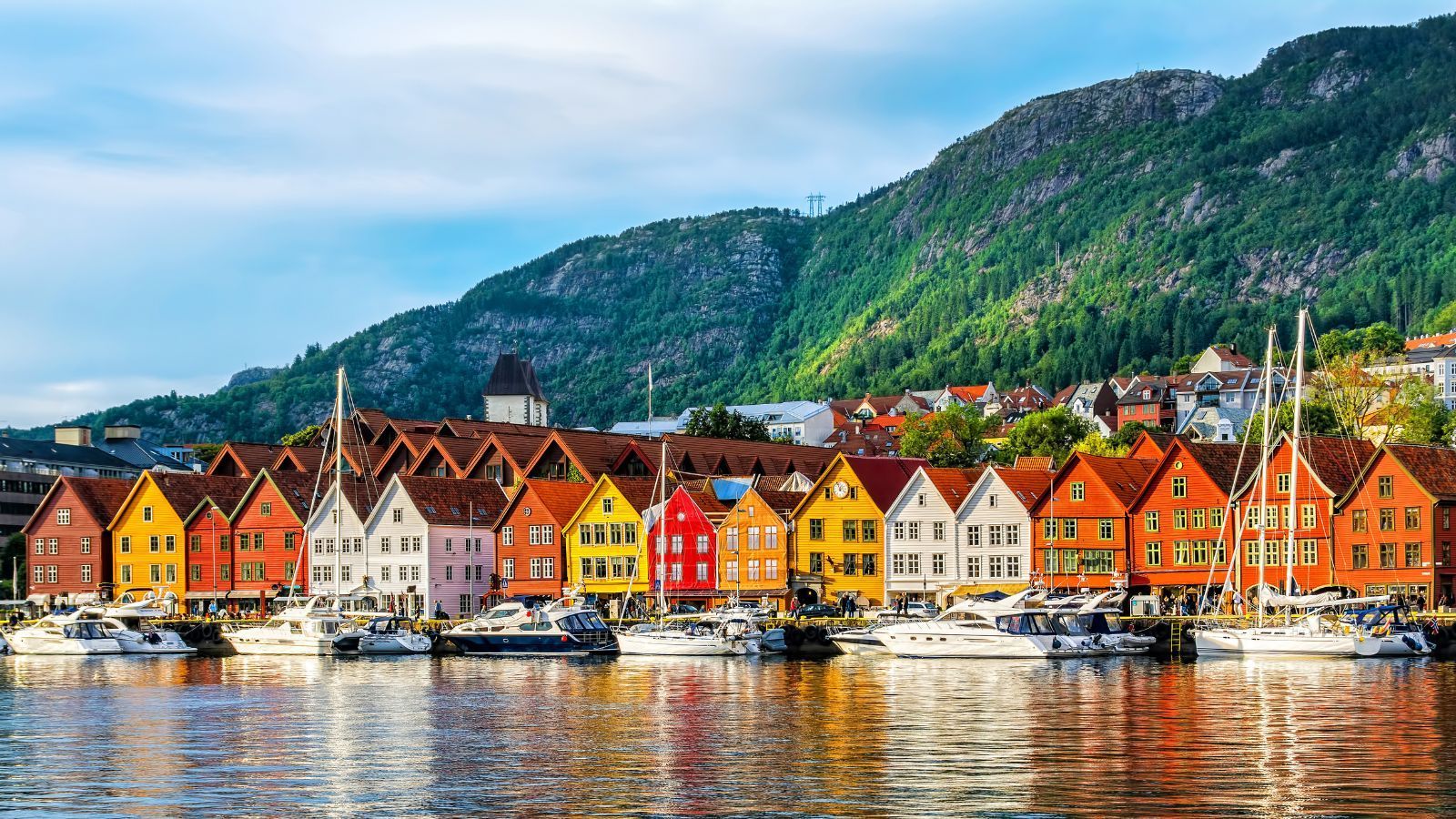
– Det är svårt att sätta ord på, säger Jens Heed, program director för matturism på VisitSweden. Det historiska matkulturarvet kontra att vi är så otroligt öppna och nyfikna och sökande. Det är svårt att beskriva ett helt lands matkultur med bara några få ord, jag håller med. Sverige sträcker sig med 1600 km från norr till söder, det är gott om skog och fjäll i norr, kustlandskap både i öst och väst, insjöar och hav. Kontrasten mellan fyra årstiderna är markant jämfört med länder närmare ekvatorn och spelar en viktig roll i jordbrukets årliga skördar. Man finner vinrankor som växer i söder, och runt 260 000 renar i norr som sällan skulle korsa den 60:e breddgraden. “Det är en styrka vi har i Sverige, och något vi försöker lyfta fram i VisitSweden. Vi kan ha löjrom eller ren från Norrbotten, samtidigt har vi Gotländskt lamm och tryffel, eller ostron från Västkusten. Alla dessa olikheter gör att vi har en potential som matdestination ”. 

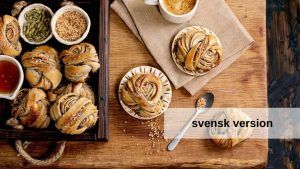
Som svensk vet man att det finns vissa rätter som alltid har sin trogna plats vid vissa högtider och på speciella dagar under året. Den 4:e oktober är bland annat tillägnad den världskända “Kanelbullen”. Vid större högtider serveras mat ofta på “smörgåsbord” – några rätter är mer självklara än andra beroende på årstid och tradition. Ägg och lamm till påsk, kräftor och västerbottenpaj till kräftskivan, Janssons frestelse och julskinka till jul, och sill närvarande oavsett årstid som har serverats sedan 1600-talet. Julbordet är nog en av de mest stadiga traditioner vi har, Jens håller med mig, men vill ändå belysa att även det “trögrörliga” julbordet faktiskt inte alltid sett ut som det gör idag. “ Mina föräldrar serverade alltid grisfötter, men det finns ju inte på mitt julbord ”. När jag tänker efter så finns det inte på mitt heller.

Inlagd, fermenterad, torkad, rökt, saltad, marinerad, syltad. Matlagningstekniker som vittnar om en hårdare tid, där det tuffa klimatet kunde innebära att man förlorade ett nödvändigt mål mat, är än idag viktiga i den kulinariska kulturen i Sverige. Jens kallar det för “förrådskultur”, och förklarar hur vi förr i tiden under några månader växte och grodde den mat som skulle räcka för resten av året och allra helst ännu längre. Dessa tekniker har lagt grunden för vår matkultur och vi kan tacka dessa metoder för gravad lax, filmjölk och hjortronsylt. Sötning har också använts för att bevara mat, och svenskarna har en viss fallelse för det söta i flera aspekter. Balansen mellan det söta och det salta återkommer såväl i varmrätter som i desserter, till exempel lingonsylt som serveras till både köttbullar och kroppkakor. Och varför inte något sött till kaffet?

Jag kan inte komma på ett enda tillfälle när det inte passar med en kopp kaffe, lägg till en kaka och ett trevligt sällskap, och du är en del av fenomenet fika. Vanilj, kanel, kardemumma, saffran, nejlika har importerats stadigt till Sverige sedan 150 år tillbaka, ändå är många av våra käraste fikatillbehör skapade med dessa dyra importvaror. Svenskarna och deras matkultur är starkt influerade av sin omvärld och den invandrade befolkningen som ankommit till Sverige sedan 50-talet och framåt har också satt sitt avtryck på vårt kök och kulinariska kultur. “ Vår husmanskost är många gånger kryddade med kryddor från andra sidan jorden ” förklarar Jens. “ Idag är vi ett resande folk, vi rör oss över hela världen och är nyfikna på andra matkulturer, och sen det här med invandringen också som har satt stor prägel på alltifrån arbetskraftsinvandringen på 60-talet som introducerade pizzan till exempel ”.

Ett kök som konstant förnyar sig och anpassar sig i takt med en växande befolkning från världens alla hörn, sakta men säkert har fler nya rätter funnit sin väg in i det svenska köket. Att vi så lätt inspireras att vilja prova på ny, spännande mat, får mig att fundera på om alla dessa influenser överskuggar vår svenska matkultur, glömmer vi bort vad som egentligen är svenskt? Jens påstår att det förmodligen har att göra med intresset och öppenheten som hellre tar över, att svenskarna helt enkelt tycker att det är roligare med något nytt än något som är gammalt. “ Vi är så nyfikna och öppna, och vi tycker det är roligt med utveckling ”. 

Matkultur är under ständig förändring och oavsett land eller region så knyts det vi äter ihop med resten av vår omvärld, ens livssituation, och familjära händelser blandat med influenser från när och fjärran. Det är inte alltid man kan se förvandlingen med blotta ögat, då det i många fall sker långsamt. 

– Vi vill inte definiera den svenska matkulturen, utan det är alla de aktörer som tillsammans är med och utvecklar både den vardagliga och den fina maten. Allt från Sebastian Gibrand till den lokala pizzabagaren, det är ju de som definierar den svenska matkulturen, så både de som lagar, men också de som konsumerar den, påpekar Jens. 

Att vi alla har en del i vårt lands matkultur är uppenbart, men hur förmedlar vi det bäst till våra besökare? Hur kommuniceras “Smaken av Sverige” till de potentiella matälskande turisterna? Fortsättning följer nästa vecka.. 

Författare: Rosanna Olsson
Promotion for culinary capitals an innovative destination certification and development program for unknown destinations
Taste of place podcast listen to our culinary travel and culture podcast with erik wolf
Food
A membership page with a picture of pancakes on a plate.
Mauricio Kusanovic in Patagonia; podcast promotion.
6 February 2026
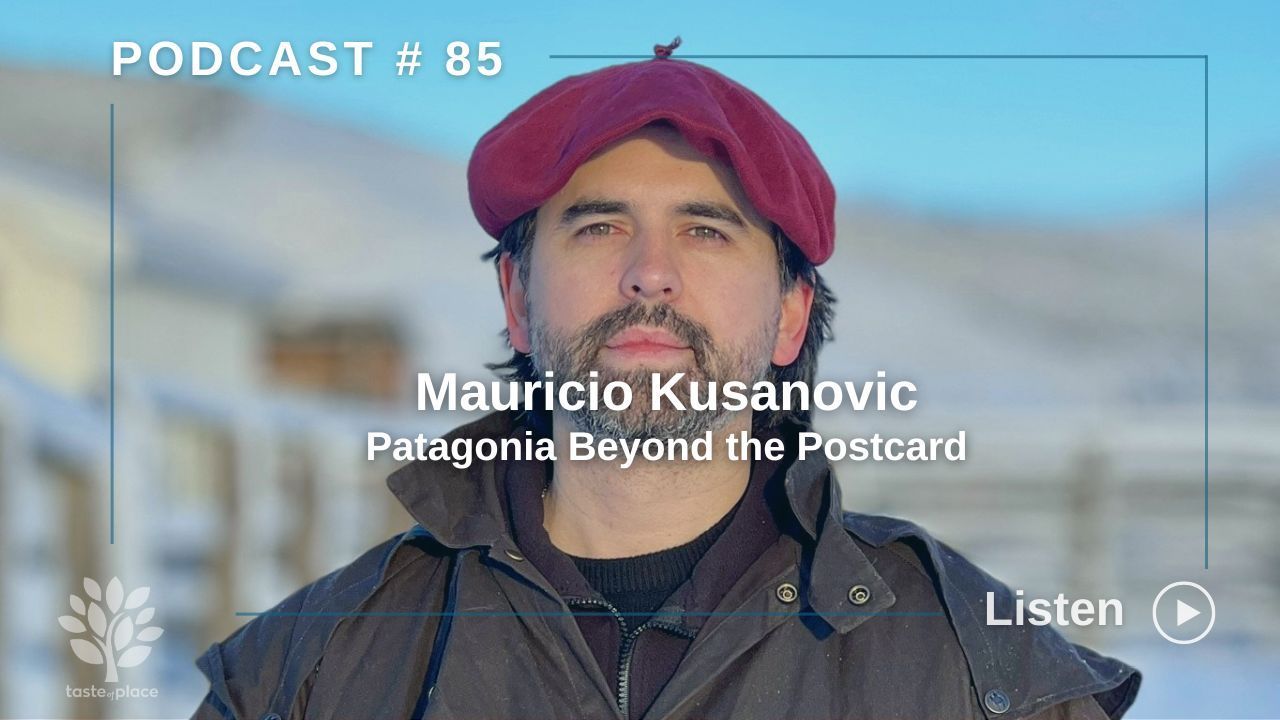
In this episode of the Taste of Place Podcast, we travel to Chilean Patagonia with Mauricio Kusanovic, a tourism and conservation leader based in Puerto Natales, the gateway to Torres del Paine National Park. Mauricio shares how his family’s legacy in cattle ranching and early tourism has evolved into a model that integrates conservation, regenerative farming, and culinary identity. The conversation explores how food culture, from Patagonian lamb to cold-water seafood, plays a meaningful role in destination identity, community pride, and environmental stewardship. This episode offers thoughtful insight into destination management, sustainable growth, and why better tourism, not more tourism, is essential for places that remain truly wild. Listen here or on any podcast player (search for "Taste of Place Podcast").
6 February 2026
The body content of your post goes here. To edit this text, click on it and delete this default text and start typing your own or paste your own from a different source.
5 February 2026
Taste of Place is built on a simple but often overlooked truth: culinary heritage does not protect itself. It survives because individuals choose to care for it, defend it, and pass it forward, often quietly, often without recognition. Around the world, traditional foodways are under pressure from standardization, economic shortcuts, and the gradual erosion of local knowledge. The Guardian initiative exists to acknowledge those who actively stand in that space of responsibility, not as figureheads, but as stewards of place-based culinary culture. Guardians help ensure that Taste of Place remains grounded in real people, real practices, and real commitments, anchoring the movement in lived experience rather than abstraction. It is in this spirit of stewardship and long-term commitment to place that we welcome our second Taste of Place Guardian. Kacie Morgan has spent more than a decade telling the story of Wales through food. What began in 2010 as a Welsh food and travel blog, created to build her writing portfolio after graduating from Cardiff University with a degree in journalism, has grown into The Rare Welsh Bit, a multi-award-winning platform dedicated to food-led travel and place-based storytelling. Based in Cardiff, Kacie’s work consistently places Wales at the centre of the narrative while engaging thoughtfully with global cuisines and destinations. A member of the Guild of Food Writers, she contributes to national and international publications including olive, Sainsbury’s Magazine, Co-op Food Mag, Food52, Visit Wales, and Cardiff Life, with features appearing on the BBC, Metro, and National Geographic Traveller. Her role as a champion of local culture was recently recognised at a Pride in Place reception at 10 Downing Street, and through Cardiff University’s alumni awards. As a Big Ideas Wales Role Model, she also works with Business Wales and the Welsh Government to deliver entrepreneurial talks in schools and universities across Wales, and has served as a judge for the Welsh Street Food Awards for four consecutive years. Beyond Wales, Kacie has spoken at international conferences on food and tourism and has been recognised globally for her work, including being named Blogger of the Year by the Grenada Tourism Authority for her coverage of the Grenada Chocolate Festival. Whether exploring traditional Tunisian cuisine in North Africa or travelling by flavour from her own kitchen, her work reflects a deep respect for culinary heritage, lived experience, and the power of food to express identity and place. You can learn more about her and meet Kacie on LinkedIn here or on Instagram . Learn more about our new Taste of Place Movement and how you can support it and the work done by Kacie and others like her.
11 January 2026
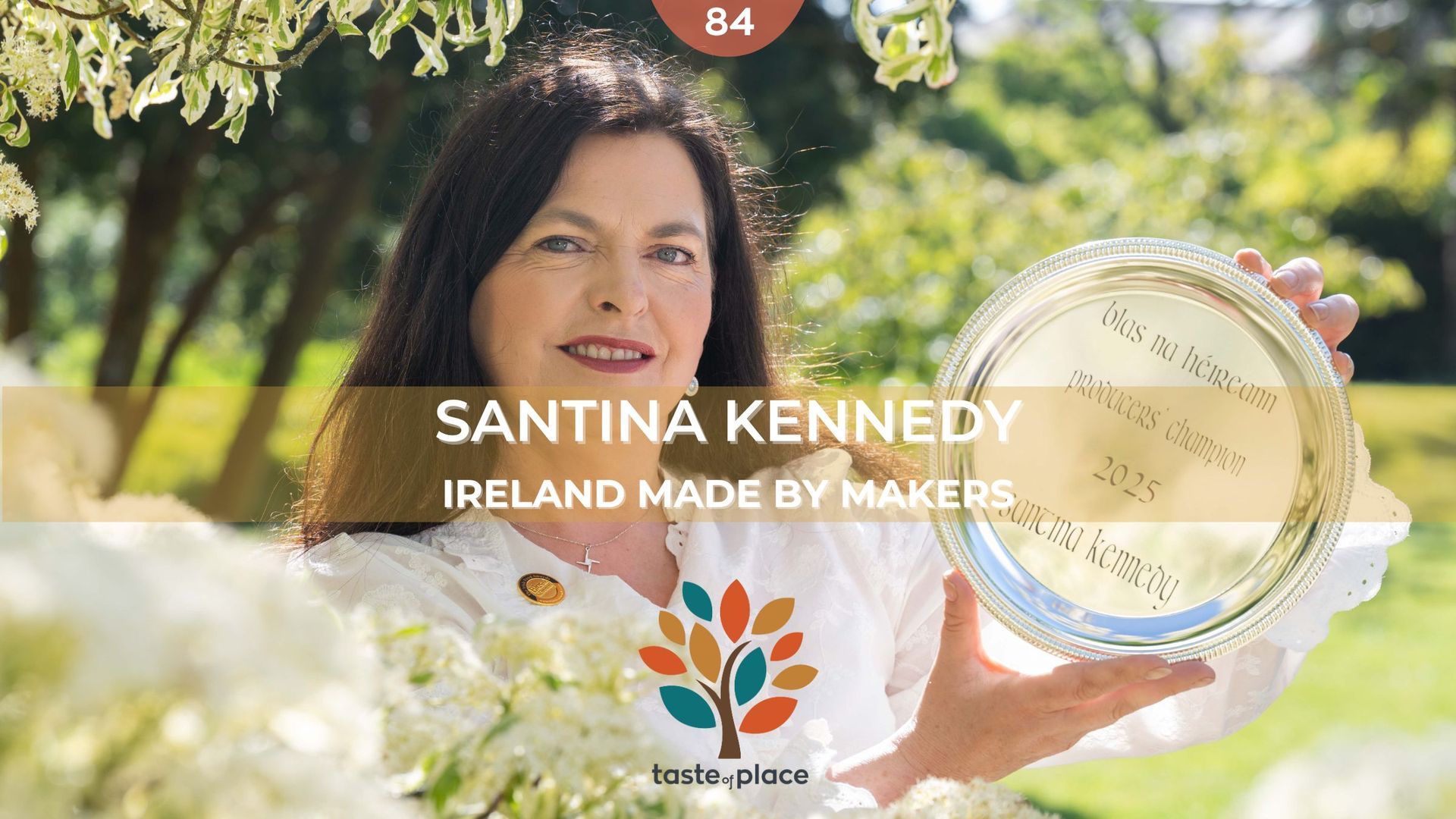
In this episode, Erik Wolf speaks with Santina Kennedy, an award-winning Irish food consultant, producer champion, and storyteller whose work bridges food history, culture, and contemporary experience design. Santina shares her unconventional journey from banking to café ownership, and ultimately to a vocation that did not exist when she was young: interpreting Irish food culture through storytelling, events, and strategic collaborations. She reflects candidly on delayed purpose, entrepreneurship without capital, and why genuine hospitality matters more than polish or scale. The conversation explores Ireland’s overlooked food narratives - from tenant farmers and kitchen workers to everyday staples like potatoes, butter, and bread - and how these stories can be brought to life through immersive experiences in galleries, estates, and public institutions. Santina also dives deeply into Irish whiskey, explaining how history, resilience, terroir, and innovation are expressed in mash bills, grains, and pairing traditions. A standout theme is Santina’s advocacy for St. Brigid as Ireland’s original food and hospitality patron, and her work elevating Brigid’s legacy through food, drink, poetry, and craft. The episode concludes with a thoughtful discussion on regional food networks, particularly County Wicklow, and why Ireland must first teach its own people to value their food culture before expecting visitors to understand it. This is a rich, reflective conversation about identity, resilience, and the power of food to tell the true story of a place. You can learn more about Santina here . The Taste of Place podcast is sponsored by the World Food Travel Association’s Taste of Place movement. Taste of Place is a global initiative that celebrates culinary culture, food heritage, and the makers behind them. Through the movement, travelers and consumers are encouraged to connect more deeply with destinations and products through their unique flavors and traditions. Learn more at JoinTasteofPlace.org . 🎙️ Available now on Spotify, iTunes & your favorite podcast platforms (Search for "Taste of Place") 📺 Prefer video? Watch it now on our YouTube channel . Or listen here now:
5 January 2026
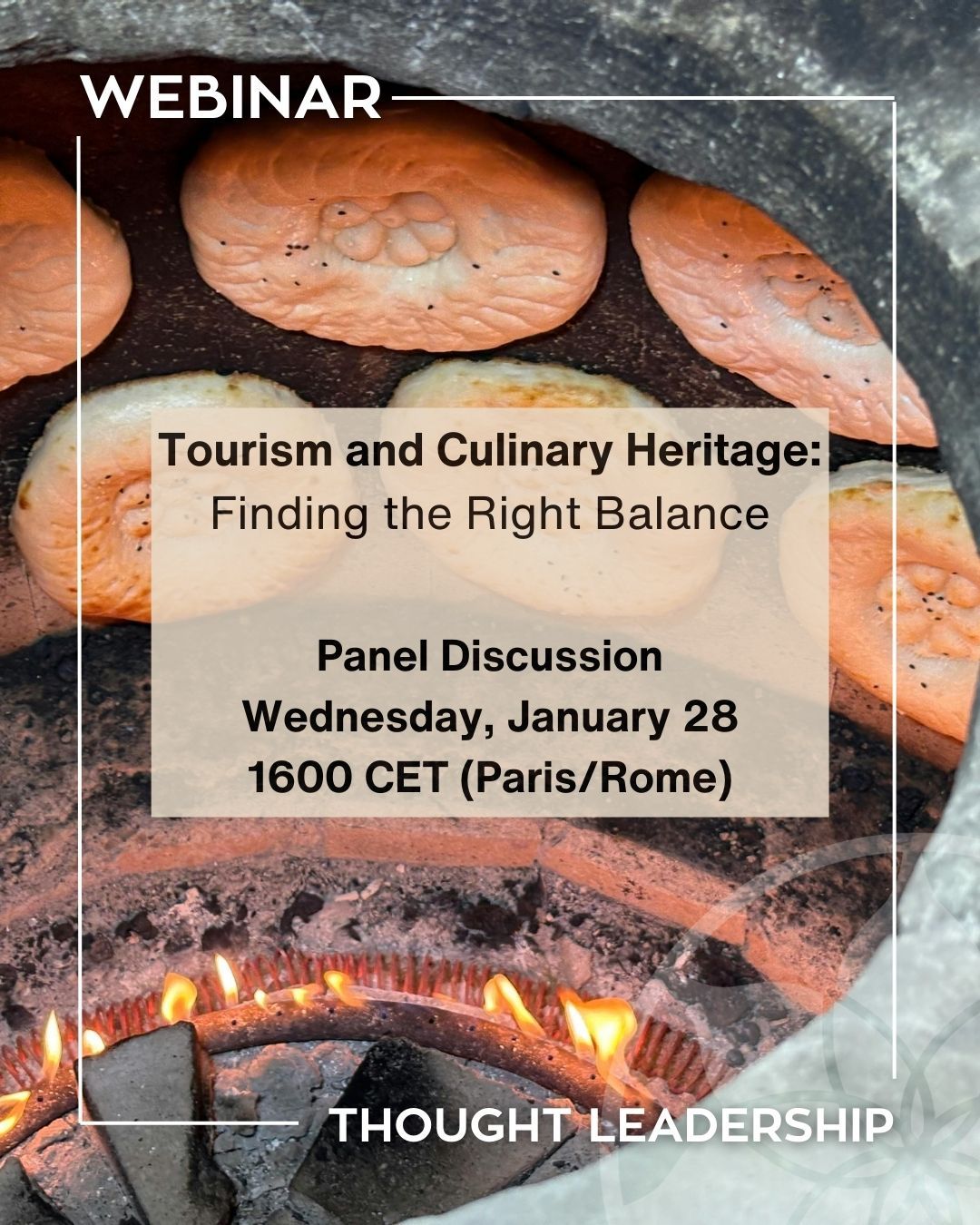
REGISTER NOW As interest in local food cultures continues to grow, destinations face increasingly complex choices. Tourism can support culinary heritage by strengthening local economies and raising awareness of food traditions. At the same time, poorly managed promotion can simplify, commodify, or distort cultural practices. This webinar brings together perspectives from across the system to examine how tourism and culinary heritage can coexist more responsibly. Panelists: - Janice Ruddock, Executive Director, Ontario Craft Brewers Association - Sean O’Rourke, President, Eat & Walkabout Tours - Niclas Fjellström, Executive Director, Culinary Heritage Network - Erik Wolf, Executive Director, World Food Travel Association The discussion will be moderated by Marc Checkley, a Lausanne-based storyteller, journalist, and experienced event host with a background in food, wine, travel, and cultural programming. Topics include: Recognizing culinary heritage as living culture rather than a static product Understanding how tourism and markets influence tradition over time Identifying where destinations most often struggle to find balance Applying practical principles for responsible promotion and stewardship This session is relevant for destination marketers, tourism offices, policymakers, producer associations, educators, and anyone working at the intersection of food, culture, and place. There is no cost to attend. REGISTER NOW
by Erik Wolf 1 January 2026
In 2025, the World Food Travel Association focused on strengthening culinary culture as living heritage, supporting the people and practices that sustain it, and building informed global collaboration rooted in values rather than prestige. Advanced the Taste of Place Movement and Alliance We clarified and communicated the purpose of the Taste of Place Movement — a global effort dedicated to safeguarding culinary heritage and empowering the keepers of food culture in alignment with the Declaration for the Preservation of Culinary Heritage . The Taste of Place Alliance framework was defined to support destinations, organizations, and practitioners who share these values. We also invite those who support this mission to join the Movement through philanthropic contributions. Do you represent a destination? Please contact us to learn how your destination can participate. Delivered Strategic Advisory and Destination Engagement Work We conducted destination-level analysis and advisory engagement in diverse regions, including the Bothnian Bay area of Sweden and Finland and with Saudi Arabia’s Culinary Arts Commission , to help partners explore how food culture, regional identity, and cooperation can contribute to responsible cultural and economic resilience. Updated Professional Training Programs All certification and training programs were updated with current research, terminology, and real-world cases. Regular refresh cycles ensure that practitioners receive instruction that reflects the most accurate and relevant information available. Built Relationships Through Targeted Engagement We engaged directly with destinations, stakeholders, and partners through site visits and industry events, including exploratory meetings in Umbria, Italy and participation in World Travel Market , to listen, assess alignment, and foster partnerships grounded in cultural integrity. Expanded and Recognized Leadership Within Our Global Network In 2025 we welcomed new Ambassadors from diverse regions, including Chef Dela Acolatse ( Ghana ) and Gerald Kock ( Aruba ), and named Mabel Esther Vega Montaño ( Colombia ) as our first Taste of Place Guardian, recognizing her lifelong commitment to ancestral knowledge and rural food culture. These appointments reinforce our values as articulated in the Declaration for the Preservation of Culinary Heritage. Interested in becoming an Ambassador or Guardian in your area? If you share our values and commitment, please get in touch . Honored Outstanding Contributions to the Field We awarded the 2025 Lifetime Achievement Award to Francesc Fusté-Forné (Girona, Spain) in recognition of his distinguished career advancing food tourism research, education, and understanding of culinary culture. We also invited the community to nominate other individuals whose work has made enduring contributions to our field. Provided Global Advocacy Through Editorial and Media Platforms We continued to interpret and elevate global developments in newsletters and digital content, and through the Taste of Place Podcast , which released 11 episodes in 2025 featuring inspiring leaders. Notable episodes included “Peace Through Food” with Paula Mohammed, “The Sweet Taste of Ethics” featuring Veronica Peralta on ethical chocolate, and “From Tunisia With Flavor” with Jamie Furniss on repositioning Tunisian cuisine for travelers. By sharing these conversations, we reinforced food as cultural heritage and connected listeners with makers and culture bearers.
More posts