Conclusions From Spain’s Recent Gastronomy Tourism Conference

3 March 2018

Remarks of the First International Gastronomy Tourism Conference in Navarra, 22-23 February 2018

The Gastronomy Tourism Conference in Navarra has been a clear example of the growing trend of gastronomic tourism, both nationally and internationally. The collaboration of the World Food Travel Association and other international institutions has resulted in a cosmopolitan, diverse and enriching congress that shows and consolidates a bright future of gastronomic tourism for Navarra, and for Spain.

Faced with the model of low-cost tourism that is widespread, food is once again an attraction for millennials and new generations, who in turn ask for increasingly authentic and personalized experiences (food is sexy again!).

We have to enhance the Spanish culture of hospitality as a differential value, recovering patterns of professionalism and quality of employment that are also part of our gastronomic identity.

Taking advantage of the European Year of Cultural Heritage 2018, we must show the value of gastronomy as a cultural resource, including wine and other beverages identified as gastronomic heritage.

We need to pay attention to the environmental concerns of an increasing amount of demand, which includes: the reduction of food waste, animal welfare, the trend towards organic production and products of proximity. This was the point made by “Zero Positive Protocol” for restaurants, presented by the  Università della Cucina Mediterránea ,, or the Erasmus + T4F project ( Training in sustainable food for development , within the framework of the European social economy), presented by  ESHOB  (Barcelona) .

It is important to understand that there is much more we can do beyond creating gastronomic activities. We must create experiences, increasing the emotional factors and the memorable consequences depending on specific tourist profiles.

The biodiversity of the raw material, together with a strong claim to cultural identity and culinary difference, explains the success and positioning of destinations such as Peru and Japan, and it becomes an inspiration for the rest of the gastronomic destinations.

The project  “The landscapes of the Sierra de Madrid sit at the table” , puts on the spotlight the value of the identity of the territory, the quality of the product, the passion of the producer, and the wisdom of the cook. These are the four fundamental pillars to create and position gastronomic tourism in a destination, just as the project has been presented to the market at FITUR 2018, with its circuits already ready to be commercialized, based on the Sierra de Guadarrama and the Sierra Norte from Madrid.

The passion for culinary innovation should not make us forget the tradition since the return to tradition turns out to be paradoxically the greatest of the vanguards.

The technological advances to attract gastronomic tourists are very intense; but it is necessary to invest more in developing personalized, segmented and original content, prepared for digital formats.

We have to remember that what turns a gastronomic destination into an intelligent one is not just the accumulation of technology; but the balanced combination of technological innovation, personal experiences of high impact, and management of sustainability.

The large online booking platforms are also increasingly aware that the key to their future success lies in the high-quality content and storytelling, which are essential in the choice of culinary destination.

It is necessary to find the tools that allow adequate communication and promotion of the kitchen and cooks; which are adapted to the particular knowledge, seasons, schedules and work spaces of these professionals.

The data presented at the demand for culinary tourism presented for Spain at the gastronomy tourism conference shows that as the tourist’s knowledge specializes and diversifies, their degree of satisfaction tends to be higher; demanding products that are increasingly personalized and intense in emotions. This leads us to an enormous and immediate challenge in innovation, specialization and diversification in gastronomic tourism products.

We need more unified market intelligence to be able to advance in gastronomic tourism product design. This in turn will allow us to make informed marketing decisions and adapt the products to each of the segments; from the seniors or “silvers” to the new generations of young, hedonistic and responsible gourmets.

We have to avoid the crowds and commodification of the tourist-gastronomic experience. We must thematise and interpret gastronomic heritage, to avoid the risk of damaging the tourist experience and loss of identity.

We can take advantage of the demand from the large emitting markets that have a deep culinary culture, while on the other hand we create culinary culture and awareness in new markets and new segments that will feed our gastronomic tourism in the future.

We must also thank the tremendous passion that we have seen in this congress from the agri-food producers, who bring us the voice of the land that is where everything is born.

José María de Juan Alonso

Director of  KOAN Consulting , a collaborating entity of the Congress, in conjunction with the World Food Travel Association (WFTA), which he represents in Spain as a member of its Board of Directors. At the gastronomy tourism conference, he provided professional advice, in addition to moderating the round table on “The perspective of the tourist.”


Conclusiones del I Congreso Internacional de Turismo Gastronómico Navarra, 22-23 de febrero 2018

El Congreso ha sido una clara muestra del creciente empuje del turismo gastronómico, tanto en los ámbitos nacional como internacional. La colaboración de la  World Food Travel Association  y de otras instituciones internacionales se ha traducido en un congreso cosmopolita, diverso y enriquecedor, que muestra y consolida un brillante futuro del turismo gastronómico para Navarra y para España.

Frente al modelo de turismo low cost que se generaliza, la comida vuelve a ser un atractivo para los millennials y las nuevas generaciones, que piden a cambio experiencias cada vez más auténticas y personalizadas (food is sexy again!).

Tenemos que potenciar la cultura española de la hostelería como un valor diferencial, recuperando patrones de profesionalidad y de calidad del empleo que forman parte también de nuestra identidad gastronómica.

Aprovechando el Año Europeo del Patrimonio Cultural 2018, tenemos que reivindicar el valor de la gastronomía como recurso cultural, incluyendo el vino y las demás bebidas de forma indisoluble con este patrimonio gastronómico.

Necesitamos prestar atención a las preocupaciones ambientales de una cantidad cada vez mayor de la demanda, lo que incluye entre otros factores: la reducción del desperdicio alimentario, el bienestar animal, la tendencia a la producción ecológica y los productos de proximidad; así nos lo han orientado el “Protocolo Zero Positivo” para restaurantes presentado por la  Università della Cucina Mediterránea , o el proyecto Erasmus+ T4F ( Formación en alimentación sostenible para el desarrollo , en el marco de la economía social europea) presentado por  ESHOB  (Barcelona).

Es importante recorrer el camino desde la mera actividad hacia la experiencia gastronómica, aumentando los factores emocionales y las consecuencias memorables en función de perfiles de turista específicos.

La biodiversidad de la materia prima, unida a una fuerte reivindicación de la identidad cultural y la diferencia culinaria, explica el éxito y posicionamiento de destinos como Perú y Japón, y sirve de inspiración para el resto de los destinos gastronómicos.

El proyecto  “Los paisajes de la Sierra de Madrid se sientan a la mesa” , nos ha reivindicado el valor de la identidad del territorio, la calidad del producto, la pasión del productor y la sabiduría del cocinero. Éstos son los cuatro pilares fundamentales para crear y posicionar el turismo gastronómico en un destino, tal como se ha presentado el proyecto al mercado en FITUR 2018, con sus circuitos ya listos para ser comercializados, basados en la Sierra de Guadarrama y en la Sierra Norte de Madrid.

La pasión por la innovación culinaria no debe hacernos olvidar la tradición, ya que la vuelta a la  tradición resulta ser paradójicamente la mayor de las vanguardias.

Los avances tecnológicos para captar turistas gastronómicos son muy intensos; pero es necesario invertir más en desarrollar contenidos personalizados, segmentados y originales, preparados para los formatos digitales.

Tenemos que recordar que lo que convierte a un destino gastronómico en inteligente no es solamente la acumulación de tecnología; sino la combinación equilibrada de: innovación tecnológica, experiencias personales de alto impacto y gestión de la sostenibilidad.

Las grandes plataformas de reservas on line son también cada vez más conscientes de que la clave de su éxito futuro está en los contenidos y storytelling de alta calidad, que son esenciales en la elección del destino gastronómico.

Es necesario encontrar las herramientas que permitan la comunicación y promoción adecuadas de la cocina y los cocineros; las cuales se adapten a los particulares saberes, temporadas, horarios y espacios de trabajo de estos profesionales.

A la luz de los datos presentados sobre la demanda de turismo gastronómico en España, es claro que este turista se especializa y diversifica, y que su grado de satisfacción tiende a ser elevado; exigiendo al mismo tiempo un producto cada vez más personalizado e intenso en emociones. Ello nos lleva a un enorme e inmediato reto en innovación, especialización y diversificación en producto turístico gastronómico.

Necesitamos más inteligencia de mercado unificada para poder avanzar en producto turístico gastronómico, la cual permita tomar decisiones de marketing muy bien informadas y adaptar los productos a cada uno de los segmentos; desde los seniors o “silvers” a las nuevas generaciones de jóvenes gourmets hedonistas y responsables.

Tenemos que evitar masificaciones y banalizaciones de la experiencia turístico-gastronómica, centrándonos en la demanda y no solo en el producto o el territorio; tematizando e interpretando el patrimonio gastronómico, para evitar el riesgo de dañar la experiencia turística y de perder identidad.

Podemos aprovechar la demanda de los grandes mercados emisores que cuentan con alta cultura gastronómica, mientras por otro lado creamos cultura y conciencia gastronómicas en nuevos mercados y nuevos segmentos que alimentarán nuestro turismo gastronómico en el futuro.

Tenemos que dar también las gracias a la tremenda pasión que hemos visto en este congreso en los productores agroalimentarios presentes, que nos traen en vivo la voz de la tierra que es donde nace todo.

José María de Juan Alonso

Director de  KOAN Consulting , entidad colaboradora del Congreso, en conjunto con la WFTA-World Food Travel Association, a la que representa en España como miembro de su Consejo de Asesores. Ha llevado a cabo la asesoría científica y la relatoría del Congreso, además de moderar la mesa redonda sobre  “La perspectiva del turista”.
Promotion for culinary capitals an innovative destination certification and development program for unknown destinations
Taste of place podcast listen to our culinary travel and culture podcast with erik wolf
Food
A membership page with a picture of pancakes on a plate.
5 February 2026
Taste of Place is built on a simple but often overlooked truth: culinary heritage does not protect itself. It survives because individuals choose to care for it, defend it, and pass it forward, often quietly, often without recognition. Around the world, traditional foodways are under pressure from standardization, economic shortcuts, and the gradual erosion of local knowledge. The Guardian initiative exists to acknowledge those who actively stand in that space of responsibility, not as figureheads, but as stewards of place-based culinary culture. Guardians help ensure that Taste of Place remains grounded in real people, real practices, and real commitments, anchoring the movement in lived experience rather than abstraction. It is in this spirit of stewardship and long-term commitment to place that we welcome our second Taste of Place Guardian. Kacie Morgan has spent more than a decade telling the story of Wales through food. What began in 2010 as a Welsh food and travel blog, created to build her writing portfolio after graduating from Cardiff University with a degree in journalism, has grown into The Rare Welsh Bit, a multi-award-winning platform dedicated to food-led travel and place-based storytelling. Based in Cardiff, Kacie’s work consistently places Wales at the centre of the narrative while engaging thoughtfully with global cuisines and destinations. A member of the Guild of Food Writers, she contributes to national and international publications including olive, Sainsbury’s Magazine, Co-op Food Mag, Food52, Visit Wales, and Cardiff Life, with features appearing on the BBC, Metro, and National Geographic Traveller. Her role as a champion of local culture was recently recognised at a Pride in Place reception at 10 Downing Street, and through Cardiff University’s alumni awards. As a Big Ideas Wales Role Model, she also works with Business Wales and the Welsh Government to deliver entrepreneurial talks in schools and universities across Wales, and has served as a judge for the Welsh Street Food Awards for four consecutive years. Beyond Wales, Kacie has spoken at international conferences on food and tourism and has been recognised globally for her work, including being named Blogger of the Year by the Grenada Tourism Authority for her coverage of the Grenada Chocolate Festival. Whether exploring traditional Tunisian cuisine in North Africa or travelling by flavour from her own kitchen, her work reflects a deep respect for culinary heritage, lived experience, and the power of food to express identity and place. You can learn more about her and meet Kacie on LinkedIn here or on Instagram . Learn more about our new Taste of Place Movement and how you can support it and the work done by Kacie and others like her.
11 January 2026
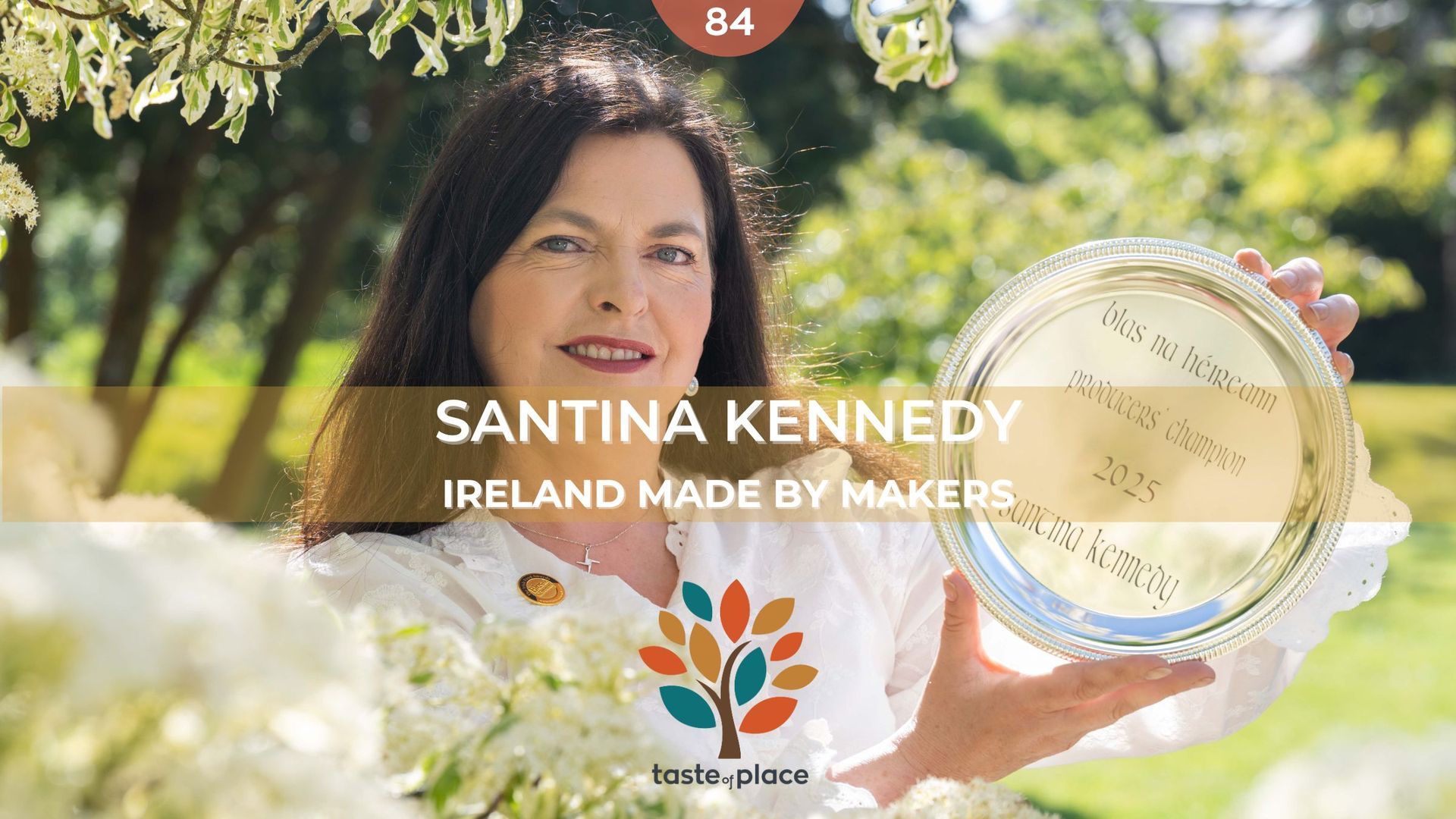
In this episode, Erik Wolf speaks with Santina Kennedy, an award-winning Irish food consultant, producer champion, and storyteller whose work bridges food history, culture, and contemporary experience design. Santina shares her unconventional journey from banking to café ownership, and ultimately to a vocation that did not exist when she was young: interpreting Irish food culture through storytelling, events, and strategic collaborations. She reflects candidly on delayed purpose, entrepreneurship without capital, and why genuine hospitality matters more than polish or scale. The conversation explores Ireland’s overlooked food narratives - from tenant farmers and kitchen workers to everyday staples like potatoes, butter, and bread - and how these stories can be brought to life through immersive experiences in galleries, estates, and public institutions. Santina also dives deeply into Irish whiskey, explaining how history, resilience, terroir, and innovation are expressed in mash bills, grains, and pairing traditions. A standout theme is Santina’s advocacy for St. Brigid as Ireland’s original food and hospitality patron, and her work elevating Brigid’s legacy through food, drink, poetry, and craft. The episode concludes with a thoughtful discussion on regional food networks, particularly County Wicklow, and why Ireland must first teach its own people to value their food culture before expecting visitors to understand it. This is a rich, reflective conversation about identity, resilience, and the power of food to tell the true story of a place. You can learn more about Santina here . The Taste of Place podcast is sponsored by the World Food Travel Association’s Taste of Place movement. Taste of Place is a global initiative that celebrates culinary culture, food heritage, and the makers behind them. Through the movement, travelers and consumers are encouraged to connect more deeply with destinations and products through their unique flavors and traditions. Learn more at JoinTasteofPlace.org . 🎙️ Available now on Spotify, iTunes & your favorite podcast platforms (Search for "Taste of Place") 📺 Prefer video? Watch it now on our YouTube channel . Or listen here now:
5 January 2026
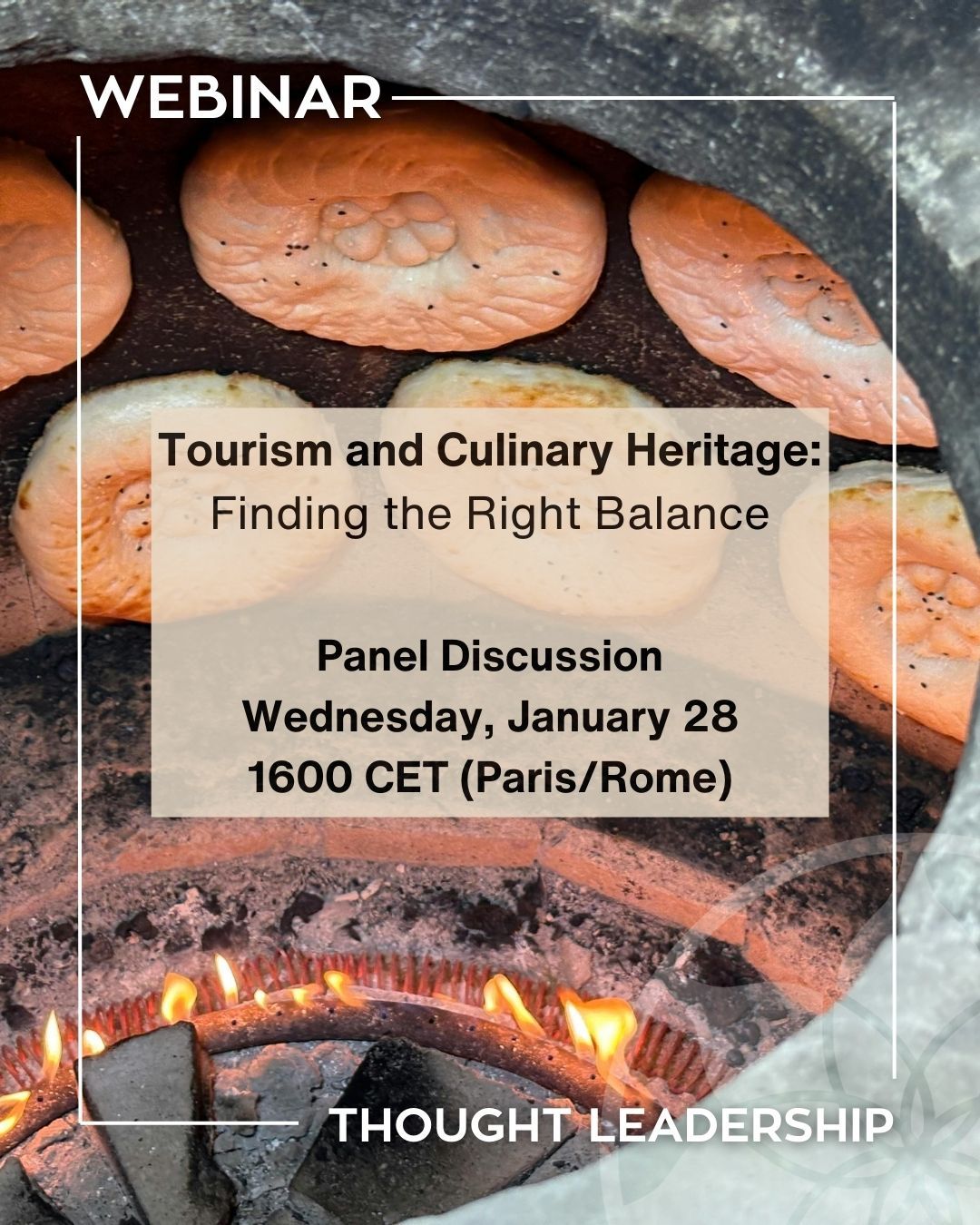
REGISTER NOW As interest in local food cultures continues to grow, destinations face increasingly complex choices. Tourism can support culinary heritage by strengthening local economies and raising awareness of food traditions. At the same time, poorly managed promotion can simplify, commodify, or distort cultural practices. This webinar brings together perspectives from across the system to examine how tourism and culinary heritage can coexist more responsibly. Panelists: - Janice Ruddock, Executive Director, Ontario Craft Brewers Association - Sean O’Rourke, President, Eat & Walkabout Tours - Niclas Fjellström, Executive Director, Culinary Heritage Network - Erik Wolf, Executive Director, World Food Travel Association The discussion will be moderated by Marc Checkley, a Lausanne-based storyteller, journalist, and experienced event host with a background in food, wine, travel, and cultural programming. Topics include: Recognizing culinary heritage as living culture rather than a static product Understanding how tourism and markets influence tradition over time Identifying where destinations most often struggle to find balance Applying practical principles for responsible promotion and stewardship This session is relevant for destination marketers, tourism offices, policymakers, producer associations, educators, and anyone working at the intersection of food, culture, and place. There is no cost to attend. REGISTER NOW
by Erik Wolf 1 January 2026
In 2025, the World Food Travel Association focused on strengthening culinary culture as living heritage, supporting the people and practices that sustain it, and building informed global collaboration rooted in values rather than prestige. Advanced the Taste of Place Movement and Alliance We clarified and communicated the purpose of the Taste of Place Movement — a global effort dedicated to safeguarding culinary heritage and empowering the keepers of food culture in alignment with the Declaration for the Preservation of Culinary Heritage . The Taste of Place Alliance framework was defined to support destinations, organizations, and practitioners who share these values. We also invite those who support this mission to join the Movement through philanthropic contributions. Do you represent a destination? Please contact us to learn how your destination can participate. Delivered Strategic Advisory and Destination Engagement Work We conducted destination-level analysis and advisory engagement in diverse regions, including the Bothnian Bay area of Sweden and Finland and with Saudi Arabia’s Culinary Arts Commission , to help partners explore how food culture, regional identity, and cooperation can contribute to responsible cultural and economic resilience. Updated Professional Training Programs All certification and training programs were updated with current research, terminology, and real-world cases. Regular refresh cycles ensure that practitioners receive instruction that reflects the most accurate and relevant information available. Built Relationships Through Targeted Engagement We engaged directly with destinations, stakeholders, and partners through site visits and industry events, including exploratory meetings in Umbria, Italy and participation in World Travel Market , to listen, assess alignment, and foster partnerships grounded in cultural integrity. Expanded and Recognized Leadership Within Our Global Network In 2025 we welcomed new Ambassadors from diverse regions, including Chef Dela Acolatse ( Ghana ) and Gerald Kock ( Aruba ), and named Mabel Esther Vega Montaño ( Colombia ) as our first Taste of Place Guardian, recognizing her lifelong commitment to ancestral knowledge and rural food culture. These appointments reinforce our values as articulated in the Declaration for the Preservation of Culinary Heritage. Interested in becoming an Ambassador or Guardian in your area? If you share our values and commitment, please get in touch . Honored Outstanding Contributions to the Field We awarded the 2025 Lifetime Achievement Award to Francesc Fusté-Forné (Girona, Spain) in recognition of his distinguished career advancing food tourism research, education, and understanding of culinary culture. We also invited the community to nominate other individuals whose work has made enduring contributions to our field. Provided Global Advocacy Through Editorial and Media Platforms We continued to interpret and elevate global developments in newsletters and digital content, and through the Taste of Place Podcast , which released 11 episodes in 2025 featuring inspiring leaders. Notable episodes included “Peace Through Food” with Paula Mohammed, “The Sweet Taste of Ethics” featuring Veronica Peralta on ethical chocolate, and “From Tunisia With Flavor” with Jamie Furniss on repositioning Tunisian cuisine for travelers. By sharing these conversations, we reinforced food as cultural heritage and connected listeners with makers and culture bearers.
31 December 2025
🎧 New Podcast Episode Alert! Episode 83: “Why Artisanal Still Matters” featuring Heike Winter What happens when you completely reinvent your life at 50—and return to the culinary traditions that shaped you? In Episode 82, host Erik Wolf speaks with Daniela Sfara, the Canadian-Italian chef, cultural ambassador, and founder of ITALUS whose mission is to preserve the disappearing regional foodways of Italy. Daniela shares her extraordinary personal transformation from a 20-year jewellery career to becoming a respected voice in culinary culture, hospitality excellence, and immersive food experiences across Italy, Dubai, Europe, and North America. Daniela’s story is one of resilience, reinvention, and deep cultural stewardship. Whether you work in food, tourism, hospitality, or simply love Italian cuisine, this is an inspiring reminder that food is identity, and preserving culinary heritage is an act of service to future generations. 🎙️ Available now on Spotify, iTunes & your favorite podcast platforms (Search for "Taste of Place") 📺 Prefer video? Watch it now on our YouTube channel. Or listen here now:
Road stretching towards the setting sun. Golden sky, open fields.
31 December 2025
ARUBA (Gerald Kock) Savaneta Seafood Festival: A Model for Community-Led Food Touri sm in Aruba The inaugural Savaneta Seafood Festival, held on September 28, 2025, by Fundación Savaneta Prome Capital, marked a significant moment in Aruba’s culinary and cultural calendar. In the island’s first capital, seaside streets were transformed into a pedestrian-only celebration where food, music, and heritage came together as a powerful expression of local identity. Attracting an estimated 6,000 visitors, the festival demonstrated strong demand for authentic, community-driven experiences among both residents and travelers. Central to the event was an “Ocean-to-Plate” revival. Twenty-four local vendors showcased seafood such as snails, conch, shrimp, and lobster, prepared using traditional family recipes and fresh local herbs. The festival also revived a local fishing tournament for the first time in 40 years. Approximately 30 boats and 100 fishermen landed a collective catch of 880 kg, reinforcing the connection between sea, community, and tradition. Part of the catch was donated and grilled on-site by local chefs, allowing visitors to experience the full journey from ocean to plate - a powerful symbol of sustainability, generosity, and shared pride. Beyond gastronomy, the festival elevated local culture and entrepreneurship through art, crafts, and music, positioning Savaneta as a living example of how cultural heritage and economic opportunity can thrive together. From the perspective of Food Tourism Ambassadors for the World Food Travel Association, the festival offers a replicable framework for Aruba’s future: a model in which each district expresses its distinct identity through food, storytelling, and place-based experiences. The Savaneta Seafood Festival stands as proof that culinary heritage can strengthen community resilience and support sustainable tourism. More than a single event, it presents a compelling vision of how small places can achieve meaningful global impact through food.
More posts