My Experience as a Food Lover in Sweden

14 August 2023

by Parinaz Naji

When you hear Sweden, you immediately think of two things: IKEA and meatballs. You are not wrong, but that’s not all there is.

In my experience as an international student coming from Iran, there are many differences in the Swedish culinary culture. These facts are both interesting and somehow shocking when you first come across them. In this blog post I am going to tell you about some lesser-known Swedish dishes, some Swedish food festivals, how they love sweets and some interesting facts about it, their fika tradition, and how they promote green cuisine.


Four lesser-known delicious Swedish dishes

Despite being less famous than ABBA, IKEA, or Swedish meatballs, these dishes are very Swedish. Here we learn a little bit more about these dishes.

  • Potato pancake (‘Raggmunk’): In Sweden, ‘raggmunk’ is a kind of shallow-fried potato pancake that's well known as one of the culinary masterpieces. In true Swedish style, a ‘raggmunk’ has to be served with fried salted pork and lingonberries. If you like to make this delicious pancake you can follow this recipe.
  • Toast Skagen: A further Swedish staple is ‘Skagenröra’, which is often spread on Toast Skagen. This is a classic salad of fresh prawns, mayonnaise, dill and red onion.
  • Janssons Frestelse: This timeless Swedish casserole contains potatoes, onions, pickled sprats, breadcrumbs and lots of cream. This dish, known as Janssons Frestelse, literally translates as Jansson's Temptation. The dish is served as part of the Swedish Christmas buffet, and sometimes during Easter. 
  • Wallenbergare: In a nutshell, the Wallenbergare is a distinctively Swedish version of the American hamburger. In order to keep the patty light on the inside and barely brown on the outside, it's made of ground veal, cream, egg yolks, salt, pepper, and breadcrumbs. In addition to boiled or mashed potatoes, green peas and gravy, the dish is frequently served with lingonberry jam.

Swedish Food Festivals

Food and drink festivals in Sweden allow you to explore Sweden and its culture through your sense of taste. A variety of culinary themes are presented at the event, from traditional Swedish recipes and freshly harvested local produce to elegant dining options prepared by top chefs. Sustainability and innovation are two of the most prominent themes.

You'll have plenty of choices regardless of when you visit, where you go, or what sort of festival you're looking for. You can find a wide selection of food festivals in Stockholm, including a cheese festival, attend the classic and popular festivals like the Kivik Apple Market, or attend one of the many beer festivals in Gothenburg. If you're feeling adventurous, you can even try something different, like a wild boar festival, a harvest market at a castle, a bike tour through a small food market or even a gin and tonic festival at a historic estate.


Swedes love sweets

If you have a sweet tooth as well, then you should definitely give Sweden a visit. They love sweets so much that they have specific calendar days designated to the celebration of particular sugary specialties.

For instance, Cinnamon Bun Day (‘kanelbullens dag’) is celebrated on the 4th of October. Waffles day (‘våfflor’) is on the 25th of March. Buns filled with cream and almond paste known as Semlor are eaten on Shrove Thuesday or ‘Fat Tuesday’ (‘fettisdagen’), the day before Ash Wednesday (‘askonsdagen’) - the first day of Lent. Semla is my favorite so far 🙂.

There is also a drink called Glögg, which is a special, sugared and simmered red wine. People consume this beverage almost exclusively during the Christmas season.

Having calendar days designated after sweets is something really interesting and creative, and it’s something we don’t have in Iran. In my opinion, it's a creative way to inform everyone about your traditional foods, savories, drinks, and this way your traditions can always be upheld.


Fika Tradition & kafferep

What is most interesting to me is that they are always up to grab a coffee and sweets. This is called Fika in Swedish, meaning a moment to slow down and appreciate the good things in life while having a coffee with a friend, which in my opinion is really nice. It actually helps to be more productive and practical throughout the day. As it’s known, the fika custom is an integral part of the cultural heritage of Sweden. Kafferep is its predecessor that comes with seven kinds of Swedish cookies. During the early 20th century, women mainly remained at home while men went out to work, so the kafferep was a great opportunity for them to socialise and display their culinary skills. Events like these were relatively private affairs, attended mostly by close friends.

The seven cookies are:

  • Brussels cookies (‘Brysselkakor’)
  • Chocolate slices (‘Chokladsnittar’)
  • Dreams (‘Drömmar’)
  • Raspberry caves (‘Hallongrottor’)
  • Oat biscuits (‘Havrekakor’)
  • Nut biscuits (‘Nötkakor’)
  • Chessboards (‘Schackrutor’)


I have to say drinking this much coffee and eating so many sweets are not that common in Iran, so this was something relatively new for me. However, we drink tea all day and night. So, we are also addicted to caffeine, but of a different sort 😀


Green Cuisine

In general, Sweden takes an active role in promoting green cuisine and sustainability. Today, Swedes aim to eat as naturally as possible in an effort to safeguard their health and the environment. Increasing attention is being paid to ethical food production and animal welfare. Consequently, organic produce is becoming more popular and many supermarkets are now selling products from nearby farms. Swedish consumers are also very interested in farm-to-table food. As the climate crisis deepens, many people are striving to adopt eco-friendly, sustainable eating habits with zero waste. The situation is not exceptional in Sweden either. In fact, the Swedish kitchens of the future are believed to be zero waste.


I bet you never imagined Sweden had such a vast variety of cuisines. Well, you aren't the only one. Neither did I. Before arriving in Sweden, I hadn't given it much thought, but once I started exploring, I realized there are so many great foods and histories involved. Unfortunately, not everyone will ever get the chance to visit another country to experience their food culture. Therefore, a blog post such as this can help others become familiar with different cultures, or perhaps help someone plan their next trip. Thus, I encourage you to do the same about the food culture of your hometown, or where you have lived before. By doing so, we will all be able to learn more about all corners of the world, and plan our next trip more efficiently 🙂


Ha en bra resa till Sverige.
Promotion for culinary capitals an innovative destination certification and development program for unknown destinations
Taste of place podcast listen to our culinary travel and culture podcast with erik wolf
Food
A membership page with a picture of pancakes on a plate.
11 January 2026
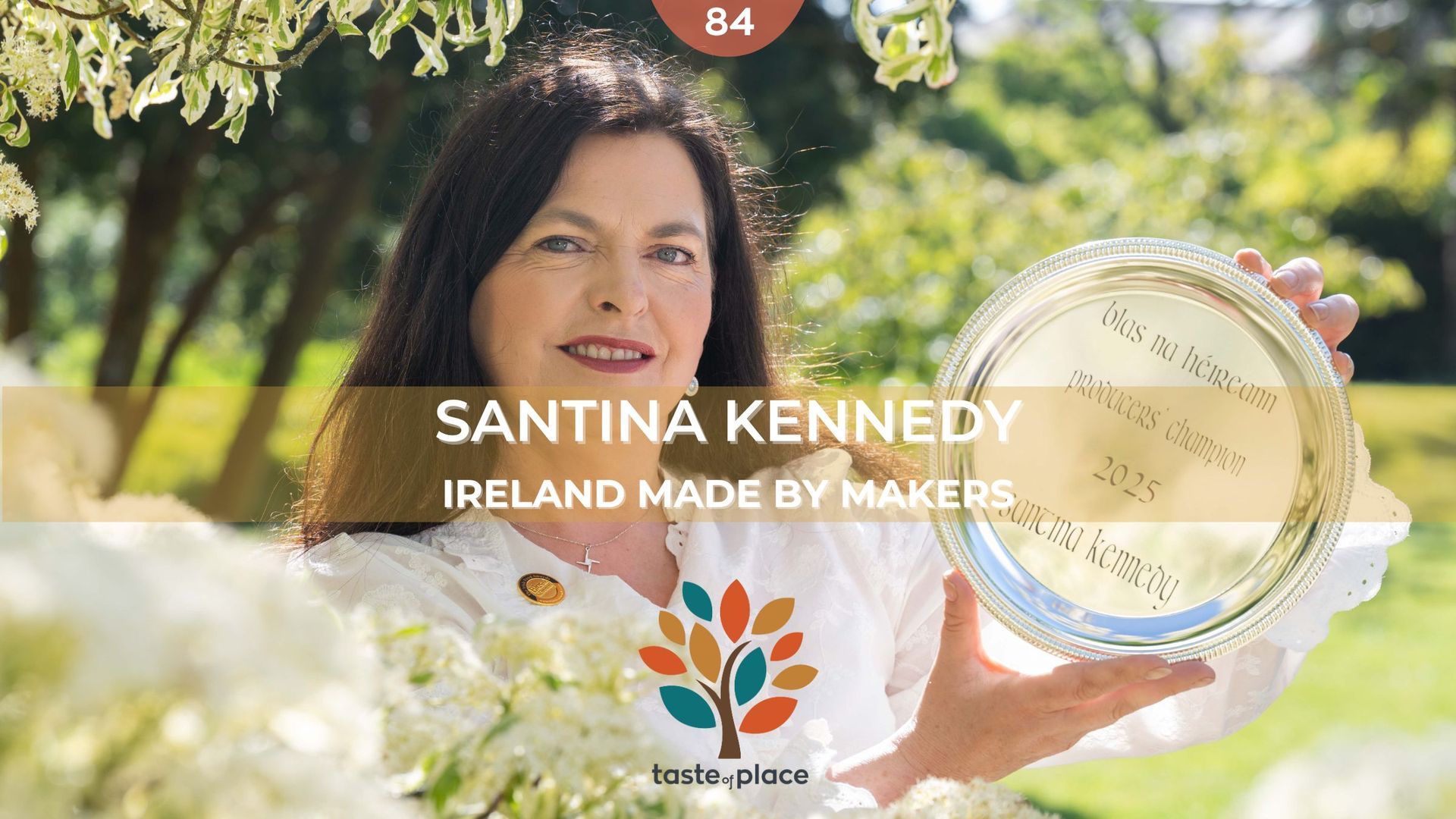
In this episode, Erik Wolf speaks with Santina Kennedy, an award-winning Irish food consultant, producer champion, and storyteller whose work bridges food history, culture, and contemporary experience design. Santina shares her unconventional journey from banking to café ownership, and ultimately to a vocation that did not exist when she was young: interpreting Irish food culture through storytelling, events, and strategic collaborations. She reflects candidly on delayed purpose, entrepreneurship without capital, and why genuine hospitality matters more than polish or scale. The conversation explores Ireland’s overlooked food narratives - from tenant farmers and kitchen workers to everyday staples like potatoes, butter, and bread - and how these stories can be brought to life through immersive experiences in galleries, estates, and public institutions. Santina also dives deeply into Irish whiskey, explaining how history, resilience, terroir, and innovation are expressed in mash bills, grains, and pairing traditions. A standout theme is Santina’s advocacy for St. Brigid as Ireland’s original food and hospitality patron, and her work elevating Brigid’s legacy through food, drink, poetry, and craft. The episode concludes with a thoughtful discussion on regional food networks, particularly County Wicklow, and why Ireland must first teach its own people to value their food culture before expecting visitors to understand it. This is a rich, reflective conversation about identity, resilience, and the power of food to tell the true story of a place. You can learn more about Santina here . The Taste of Place podcast is sponsored by the World Food Travel Association’s Taste of Place movement. Taste of Place is a global initiative that celebrates culinary culture, food heritage, and the makers behind them. Through the movement, travelers and consumers are encouraged to connect more deeply with destinations and products through their unique flavors and traditions. Learn more at JoinTasteofPlace.org . 🎙️ Available now on Spotify, iTunes & your favorite podcast platforms (Search for "Taste of Place") 📺 Prefer video? Watch it now on our YouTube channel . Or listen here now:
5 January 2026
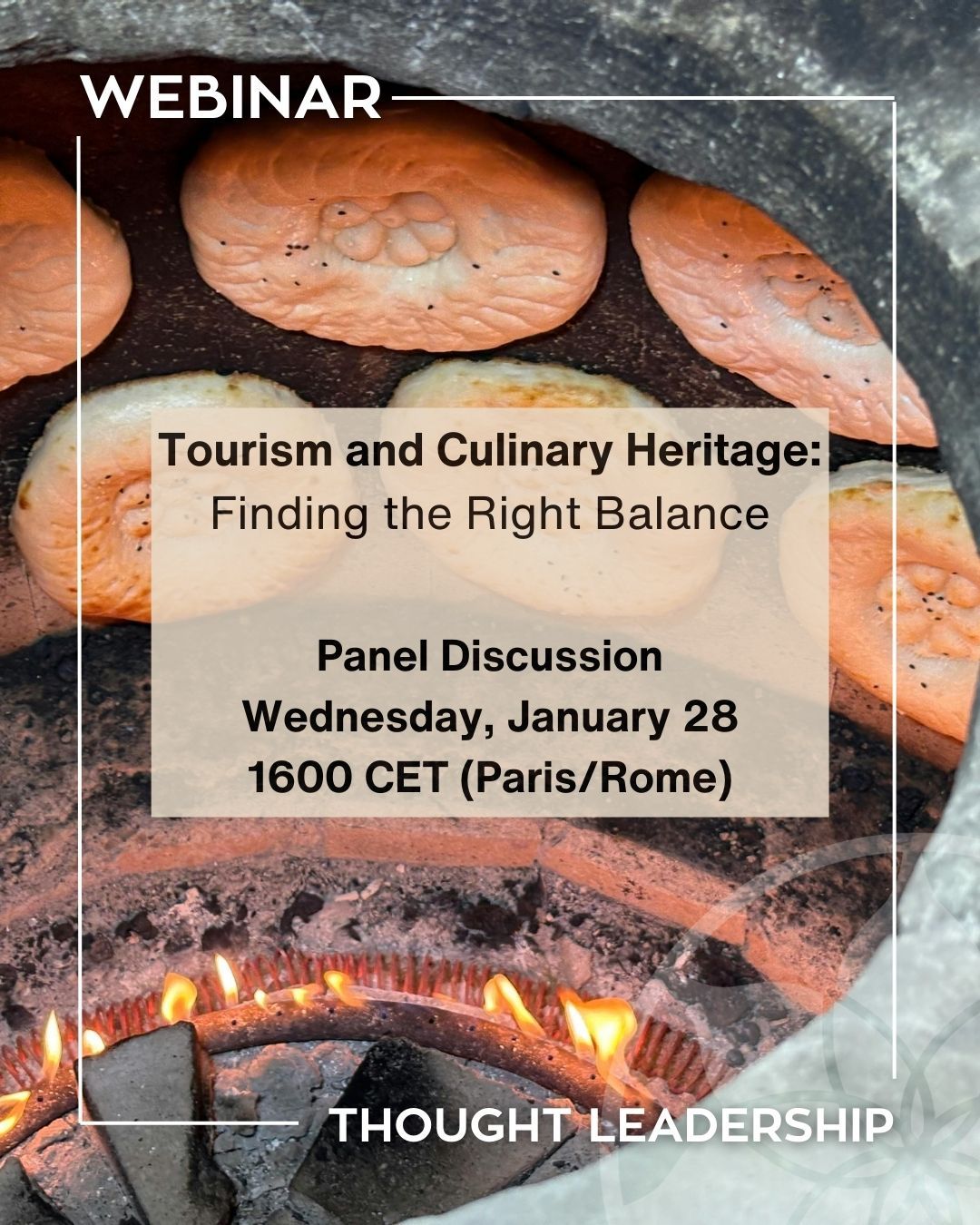
REGISTER NOW As interest in local food cultures continues to grow, destinations face increasingly complex choices. Tourism can support culinary heritage by strengthening local economies and raising awareness of food traditions. At the same time, poorly managed promotion can simplify, commodify, or distort cultural practices. This webinar brings together perspectives from across the system to examine how tourism and culinary heritage can coexist more responsibly. Panelists: - Janice Ruddock, Executive Director, Ontario Craft Brewers Association - Sean O’Rourke, President, Eat & Walkabout Tours - Niclas Fjellström, Executive Director, Culinary Heritage Network - Erik Wolf, Executive Director, World Food Travel Association The discussion will be moderated by Marc Checkley, a Lausanne-based storyteller, journalist, and experienced event host with a background in food, wine, travel, and cultural programming. Topics include: Recognizing culinary heritage as living culture rather than a static product Understanding how tourism and markets influence tradition over time Identifying where destinations most often struggle to find balance Applying practical principles for responsible promotion and stewardship This session is relevant for destination marketers, tourism offices, policymakers, producer associations, educators, and anyone working at the intersection of food, culture, and place. There is no cost to attend. REGISTER NOW
by Erik Wolf 1 January 2026
In 2025, the World Food Travel Association focused on strengthening culinary culture as living heritage, supporting the people and practices that sustain it, and building informed global collaboration rooted in values rather than prestige. Advanced the Taste of Place Movement and Alliance We clarified and communicated the purpose of the Taste of Place Movement — a global effort dedicated to safeguarding culinary heritage and empowering the keepers of food culture in alignment with the Declaration for the Preservation of Culinary Heritage . The Taste of Place Alliance framework was defined to support destinations, organizations, and practitioners who share these values. We also invite those who support this mission to join the Movement through philanthropic contributions. Do you represent a destination? Please contact us to learn how your destination can participate. Delivered Strategic Advisory and Destination Engagement Work We conducted destination-level analysis and advisory engagement in diverse regions, including the Bothnian Bay area of Sweden and Finland and with Saudi Arabia’s Culinary Arts Commission , to help partners explore how food culture, regional identity, and cooperation can contribute to responsible cultural and economic resilience. Updated Professional Training Programs All certification and training programs were updated with current research, terminology, and real-world cases. Regular refresh cycles ensure that practitioners receive instruction that reflects the most accurate and relevant information available. Built Relationships Through Targeted Engagement We engaged directly with destinations, stakeholders, and partners through site visits and industry events, including exploratory meetings in Umbria, Italy and participation in World Travel Market , to listen, assess alignment, and foster partnerships grounded in cultural integrity. Expanded and Recognized Leadership Within Our Global Network In 2025 we welcomed new Ambassadors from diverse regions, including Chef Dela Acolatse ( Ghana ) and Gerald Kock ( Aruba ), and named Mabel Esther Vega Montaño ( Colombia ) as our first Taste of Place Guardian, recognizing her lifelong commitment to ancestral knowledge and rural food culture. These appointments reinforce our values as articulated in the Declaration for the Preservation of Culinary Heritage. Interested in becoming an Ambassador or Guardian in your area? If you share our values and commitment, please get in touch . Honored Outstanding Contributions to the Field We awarded the 2025 Lifetime Achievement Award to Francesc Fusté-Forné (Girona, Spain) in recognition of his distinguished career advancing food tourism research, education, and understanding of culinary culture. We also invited the community to nominate other individuals whose work has made enduring contributions to our field. Provided Global Advocacy Through Editorial and Media Platforms We continued to interpret and elevate global developments in newsletters and digital content, and through the Taste of Place Podcast , which released 11 episodes in 2025 featuring inspiring leaders. Notable episodes included “Peace Through Food” with Paula Mohammed, “The Sweet Taste of Ethics” featuring Veronica Peralta on ethical chocolate, and “From Tunisia With Flavor” with Jamie Furniss on repositioning Tunisian cuisine for travelers. By sharing these conversations, we reinforced food as cultural heritage and connected listeners with makers and culture bearers.
31 December 2025
🎧 New Podcast Episode Alert! Episode 83: “Why Artisanal Still Matters” featuring Heike Winter What happens when you completely reinvent your life at 50—and return to the culinary traditions that shaped you? In Episode 82, host Erik Wolf speaks with Daniela Sfara, the Canadian-Italian chef, cultural ambassador, and founder of ITALUS whose mission is to preserve the disappearing regional foodways of Italy. Daniela shares her extraordinary personal transformation from a 20-year jewellery career to becoming a respected voice in culinary culture, hospitality excellence, and immersive food experiences across Italy, Dubai, Europe, and North America. Daniela’s story is one of resilience, reinvention, and deep cultural stewardship. Whether you work in food, tourism, hospitality, or simply love Italian cuisine, this is an inspiring reminder that food is identity, and preserving culinary heritage is an act of service to future generations. 🎙️ Available now on Spotify, iTunes & your favorite podcast platforms (Search for "Taste of Place") 📺 Prefer video? Watch it now on our YouTube channel. Or listen here now:
Road stretching towards the setting sun. Golden sky, open fields.
31 December 2025
ARUBA (Gerald Kock) Savaneta Seafood Festival: A Model for Community-Led Food Touri sm in Aruba The inaugural Savaneta Seafood Festival, held on September 28, 2025, by Fundación Savaneta Prome Capital, marked a significant moment in Aruba’s culinary and cultural calendar. In the island’s first capital, seaside streets were transformed into a pedestrian-only celebration where food, music, and heritage came together as a powerful expression of local identity. Attracting an estimated 6,000 visitors, the festival demonstrated strong demand for authentic, community-driven experiences among both residents and travelers. Central to the event was an “Ocean-to-Plate” revival. Twenty-four local vendors showcased seafood such as snails, conch, shrimp, and lobster, prepared using traditional family recipes and fresh local herbs. The festival also revived a local fishing tournament for the first time in 40 years. Approximately 30 boats and 100 fishermen landed a collective catch of 880 kg, reinforcing the connection between sea, community, and tradition. Part of the catch was donated and grilled on-site by local chefs, allowing visitors to experience the full journey from ocean to plate - a powerful symbol of sustainability, generosity, and shared pride. Beyond gastronomy, the festival elevated local culture and entrepreneurship through art, crafts, and music, positioning Savaneta as a living example of how cultural heritage and economic opportunity can thrive together. From the perspective of Food Tourism Ambassadors for the World Food Travel Association, the festival offers a replicable framework for Aruba’s future: a model in which each district expresses its distinct identity through food, storytelling, and place-based experiences. The Savaneta Seafood Festival stands as proof that culinary heritage can strengthen community resilience and support sustainable tourism. More than a single event, it presents a compelling vision of how small places can achieve meaningful global impact through food.
14 December 2025
🎧 New Podcast Episode Alert! Episode 82: “Cooking by Heart, Not by Recipe” featuring Daniela Sfara What happens when you completely reinvent your life at 50—and return to the culinary traditions that shaped you? In Episode 82, host Erik Wolf speaks with Daniela Sfara, the Canadian-Italian chef, cultural ambassador, and founder of ITALUS whose mission is to preserve the disappearing regional foodways of Italy. Daniela shares her extraordinary personal transformation from a 20-year jewellery career to becoming a respected voice in culinary culture, hospitality excellence, and immersive food experiences across Italy, Dubai, Europe, and North America. Daniela’s story is one of resilience, reinvention, and deep cultural stewardship. Whether you work in food, tourism, hospitality, or simply love Italian cuisine, this is an inspiring reminder that food is identity, and preserving culinary heritage is an act of service to future generations. 🎙️ Available now on Spotify, iTunes & your favorite podcast platforms (Search for "Taste of Place") 📺 Prefer video? Watch it now on our YouTube channel. Or listen here now:
More posts