El Sabor Que No Está en la Foto

26 November 2020
news - culinary culture

¡Arma tu viaje y vívelo! Es real, con un computador y una tarjeta de crédito todos lo podemos hacer. El internet y todas las nuevas herramientas que han aparecido desde que llegó a revolucionar nuestra forma de vivir, hace que hoy muchas cosas estén a un click de distancia. En el caso de los viajes esto es aún más evidente. Cada vez hay más aplicaciones para poder planificar directamente todo lo que necesitas para viajar. Sin embargo, muchas veces el desconocimiento del potencial a descubrir, sumado al deseo de mantener un presupuesto bajo hace que la experiencia en el destino sea mínima en relación a lo que podría ser. 

Muchas veces hay gran sabiduría en los dichos populares, y no sé quién haya dicho esto de “el que mucho abarca poco aprieta”. Y en el caso de los viajes, lo que encierra este dicho aplica totalmente. En los últimos años hemos evidenciado cómo más personas de toda condición social y económica prioriza el trasladarse a puntos turísticos que se consideran icónicos. Yo creo que esto tiene una fuerte relación al hecho de que las redes sociales han tenido una muy amplia aceptación a nivel mundial. Si te preguntan ¿tienes Instagram o Facebook? y tú dices que no, pues básicamente la reacción que recibirás es de extrañeza, como que, al no existir en el contexto virtual, dejaras también de tener presencia en el mundo real. Y es que, en verdad, las redes sociales se han convertido en verdaderos escaparates para nuestro ego, la herramienta perfecta para publicar imágenes que proyecten lo que queremos reflejar. Y dentro de ello, el publicar fotografías en diferentes lugares y atractivos turísticos se ha convertido también en una forma de sumar puntos al ranking personal, pues se relaciona mucho el hecho de viajar con el hecho de tener éxito en la vida.

Pero ojo, no es cuestión de satanizar el hecho de postear sobre las visitas que hacemos a los diferentes lugares, ¿a quién no le gusta mostrar que está disfrutando de un viaje? Eso es normal y va a seguir sucediendo, e inspirando a muchas más persona a viajar.  Lo que sí es un poco triste es que, por ejemplo, por desconocimiento o por estirar el presupuesto o el tiempo para ir a la siguiente ciudad, dejemos de visitar una granja, un museo, hablar con los locales o comer una comida más elaborada o tradicional del lugar. ¿Qué sentido tiene el ir con un check list de puntos a visitar sin preocuparnos por lo que dejamos de vivir en cada destino?, puede compararse a que uno tenga al frente una mesa con muchos manjares y opte por tragar sin masticar un bocado de cada uno de los platillos servidos en un afán por “probarlos” todos. Al final si te piden describir el sabor de uno de ellos ¿qué podrías decir?, ¿de qué experiencia podríamos hablar?.  Aunque las fotos se vean muy lindas será muy poco lo que quede en nuestra memoria sobre el lugar visitado y mucho menos lo que pueda aportarnos como aprendizajes reales para la vida.  

La gran mayoría de destinos tienen mucho más que ofrecer que ser, si bien pueden presentarse como escenarios para lindas fotos, también son lugares que quizá albergaron cambios sociales, políticos, temas históricos o permitieron el desarrollo de otros grupos humanos con expresiones culturales diversas o simplemente guardan ecosistemas de gran riqueza.  Y en realidad dejar de vivir esa parte es privarse también de uno de los principales beneficios que tiene el viajar, el cual es exponerse a un contexto diferente, no solo para tolerar la diversidad, sino para apreciarla, protegerla y celebrarla. 

En esta línea hay que reconocer que uno de los aspectos en los que más se ajusta el presupuesto de viajeros que van en una onda poco consciente o muy a la ligera, es el de la comida. Quizá es por esto es que hay muchos puntos de visita que se han llenado de restaurantes de comida rápida o kioskos, para satisfacer con algo rápido, el hambre de los viajeros y que puedan seguir en su paso. Esto no sucede únicamente entre viajeros independientes. Muchos operadores han optado por bajar la calidad de las experiencias en destino para ser más competitivos en el precio, incluyendo opciones gastronómicas “internacionales” o muy pobres, que no reflejan nada de la cultura culinaria del lugar. Pero ojos que no ven, corazón que no siente… y si no sabes lo que dejas de disfrutar, pues no te quejas. 

Creo que a nadie le queda duda del potencial tan grande que tienen las experiencias gastronómicas para transmitir y apreciar la riqueza cultural y natural latente en cada destino y de cuánto le puede sumar a la satisfacción global del viaje el incluir actividades de degustación o conocimiento de la gastronomía local. No es lo mismo ir Roma y comer una hamburguesa o un sánduche pre-hecho, que ver cómo preparan la pasta y degustarla en un Puntarelle por ejemplo. Igualmente, desde el punto de vista de los destinos, no hay discusión en todo el efecto positivo que tiene para el destino el incluir en el turismo las experiencias gastronómicas. Poner en valor la cultura local, proteger la diversidad, dinamizar las economías, promover la inclusión de poblaciones vulnerables… son entre otros varios de los principales beneficios. Pero ¿de quién es la labor de concientizar sobre este potencial tanto a la demanda, como a todos los actores de la oferta?

La World Food Travel Association trabaja a diario por proteger y promover la cultura culinaria del mundo, y está comprometida con llevar este mensaje y motivar a los actores de la industria para que se sumen a esta misión, pero lógicamente, no puede ser una tarea en solitario, sino un esfuerzo en conjunto que se refleje en viajeros y destinos más satisfechos y un turismo más orientado a la sostenibilidad. 

Muchos dicen que este tiempo de encierro causado por la pandemia ha sido un espacio también de reflexión. Todos los que amamos viajar estamos ansiosos de volver a hacerlo y, quizá muchas más personas se animen a intentar armar planes de turismo, por la sensación de que la vida es efímera o porque ya se sienten más empoderados por las habilidades tecnológicos adquiridas luego de estos meses de encierro. Ojalá al salir, logremos modificar un poco el enfoque para detenernos en cada lugar a saborear el destino, concentrarnos en el valor de los detalles de los que nos rodea y construir experiencias inolvidables que además benefician los lugares que visitamos. Si tenemos la dicha de viajar detengámonos a disfrutar los sabores, colores, texturas y aromas que no salen en la foto. 

Autor: Lilí Torres C.
Promotion for culinary capitals an innovative destination certification and development program for unknown destinations
Taste of place podcast listen to our culinary travel and culture podcast with erik wolf
Food
A membership page with a picture of pancakes on a plate.
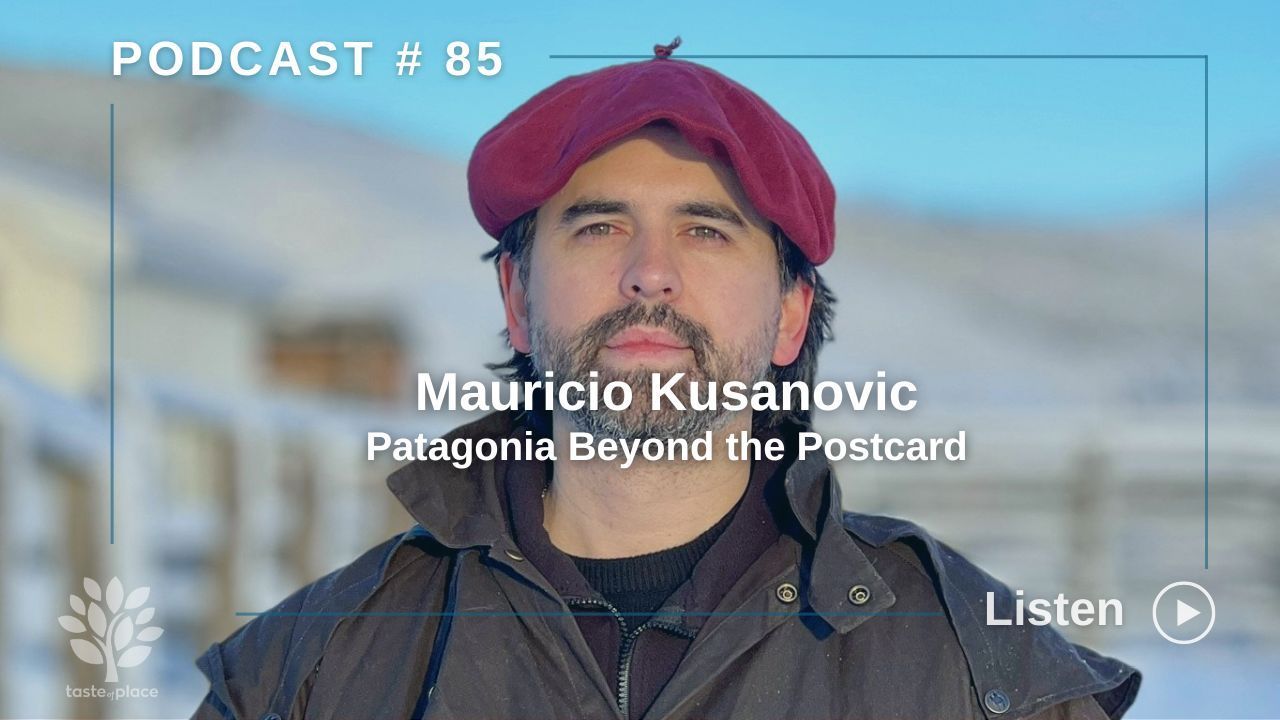
Mauricio Kusanovic in Patagonia; podcast promotion.
6 February 2026
In this episode of the Taste of Place Podcast, we travel to Chilean Patagonia with Mauricio Kusanovic, a tourism and conservation leader based in Puerto Natales, the gateway to Torres del Paine National Park. Mauricio shares how his family’s legacy in cattle ranching and early tourism has evolved into a model that integrates conservation, regenerative farming, and culinary identity. The conversation explores how food culture, from Patagonian lamb to cold-water seafood, plays a meaningful role in destination identity, community pride, and environmental stewardship. This episode offers thoughtful insight into destination management, sustainable growth, and why better tourism, not more tourism, is essential for places that remain truly wild. Listen here or on any podcast player (search for "Taste of Place Podcast").
6 February 2026
The body content of your post goes here. To edit this text, click on it and delete this default text and start typing your own or paste your own from a different source.
5 February 2026
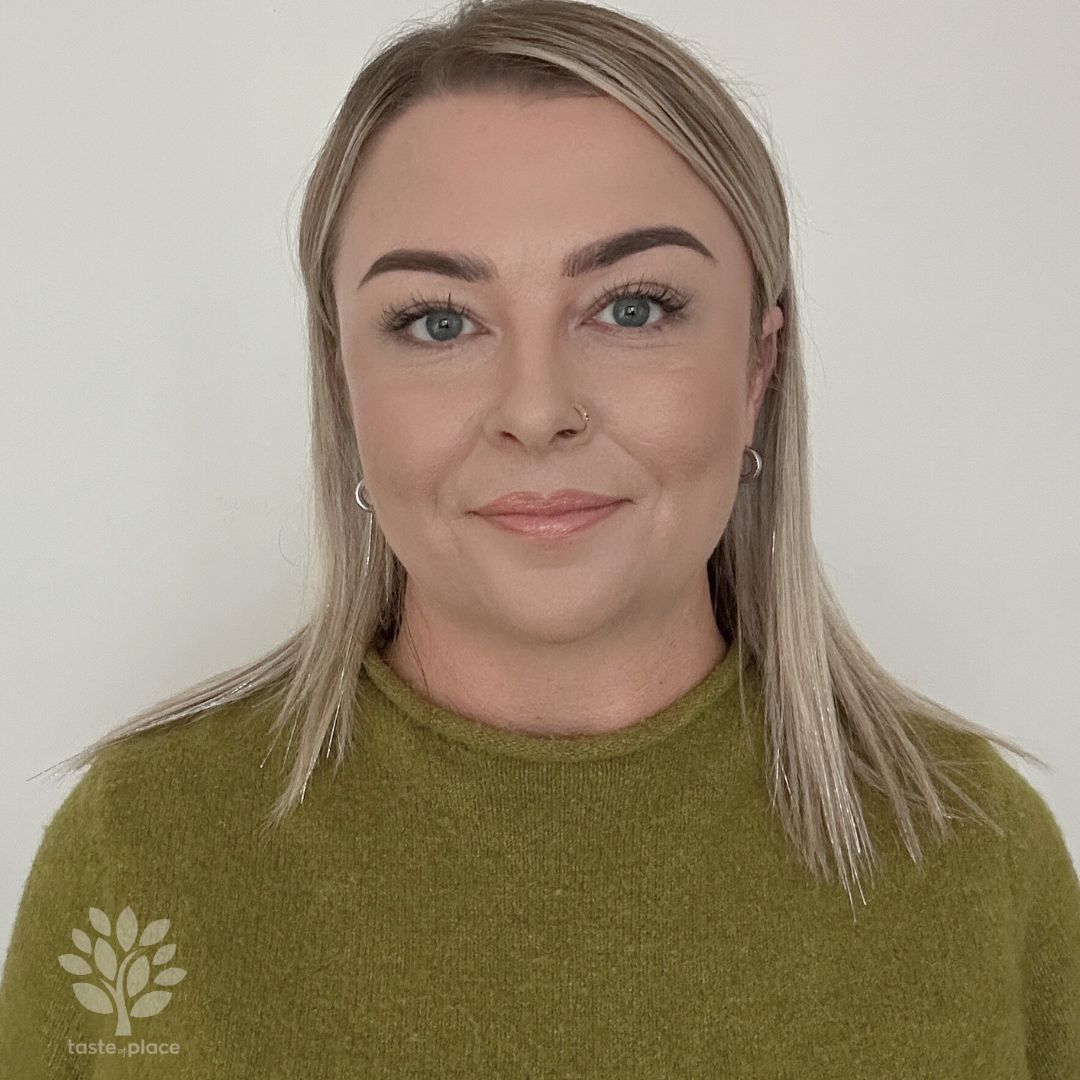
Taste of Place is built on a simple but often overlooked truth: culinary heritage does not protect itself. It survives because individuals choose to care for it, defend it, and pass it forward, often quietly, often without recognition. Around the world, traditional foodways are under pressure from standardization, economic shortcuts, and the gradual erosion of local knowledge. The Guardian initiative exists to acknowledge those who actively stand in that space of responsibility, not as figureheads, but as stewards of place-based culinary culture. Guardians help ensure that Taste of Place remains grounded in real people, real practices, and real commitments, anchoring the movement in lived experience rather than abstraction. It is in this spirit of stewardship and long-term commitment to place that we welcome our second Taste of Place Guardian. Kacie Morgan has spent more than a decade telling the story of Wales through food. What began in 2010 as a Welsh food and travel blog, created to build her writing portfolio after graduating from Cardiff University with a degree in journalism, has grown into The Rare Welsh Bit, a multi-award-winning platform dedicated to food-led travel and place-based storytelling. Based in Cardiff, Kacie’s work consistently places Wales at the centre of the narrative while engaging thoughtfully with global cuisines and destinations. A member of the Guild of Food Writers, she contributes to national and international publications including olive, Sainsbury’s Magazine, Co-op Food Mag, Food52, Visit Wales, and Cardiff Life, with features appearing on the BBC, Metro, and National Geographic Traveller. Her role as a champion of local culture was recently recognised at a Pride in Place reception at 10 Downing Street, and through Cardiff University’s alumni awards. As a Big Ideas Wales Role Model, she also works with Business Wales and the Welsh Government to deliver entrepreneurial talks in schools and universities across Wales, and has served as a judge for the Welsh Street Food Awards for four consecutive years. Beyond Wales, Kacie has spoken at international conferences on food and tourism and has been recognised globally for her work, including being named Blogger of the Year by the Grenada Tourism Authority for her coverage of the Grenada Chocolate Festival. Whether exploring traditional Tunisian cuisine in North Africa or travelling by flavour from her own kitchen, her work reflects a deep respect for culinary heritage, lived experience, and the power of food to express identity and place. You can learn more about her and meet Kacie on LinkedIn here or on Instagram . Learn more about our new Taste of Place Movement and how you can support it and the work done by Kacie and others like her.
11 January 2026
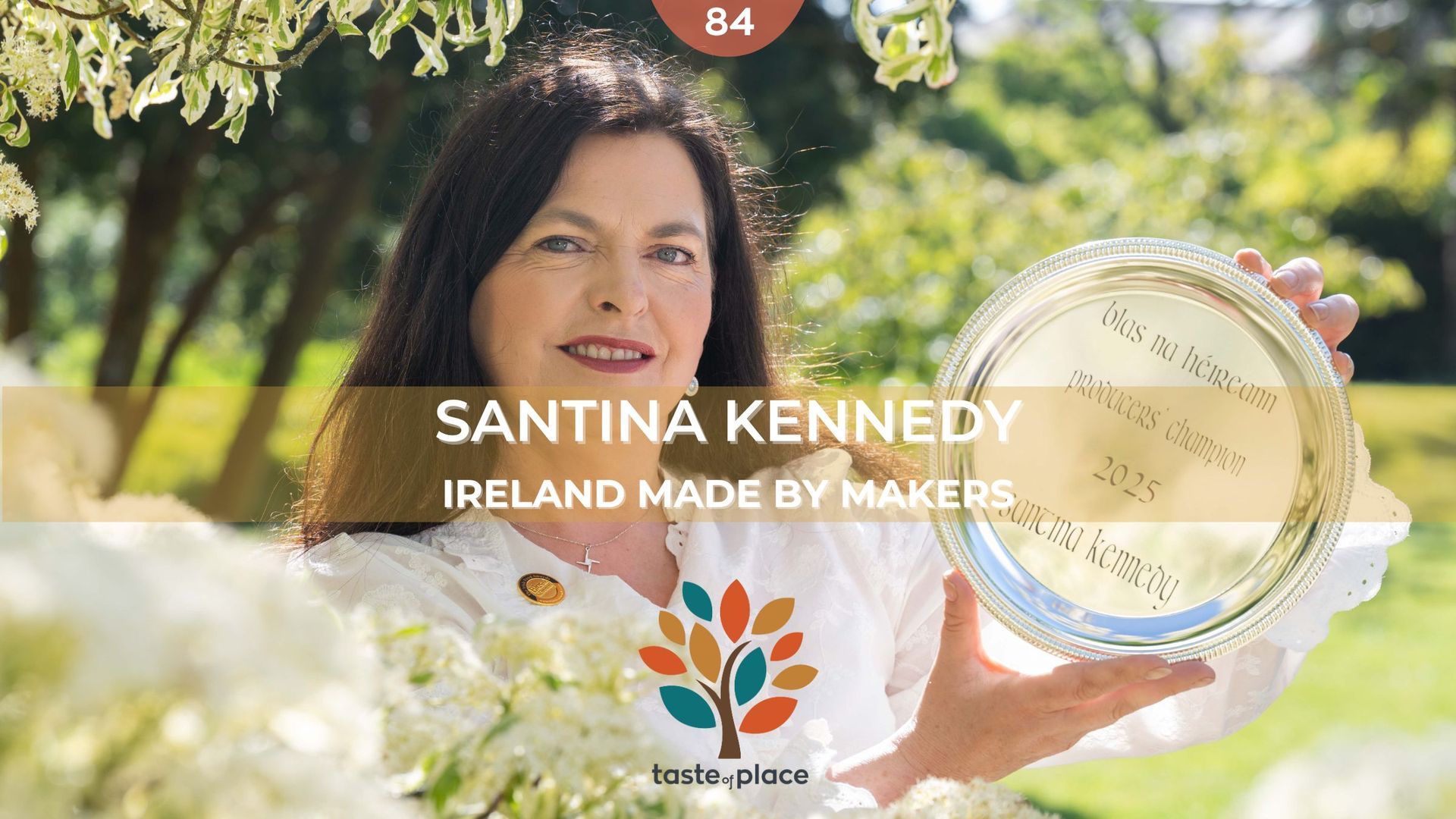
In this episode, Erik Wolf speaks with Santina Kennedy, an award-winning Irish food consultant, producer champion, and storyteller whose work bridges food history, culture, and contemporary experience design. Santina shares her unconventional journey from banking to café ownership, and ultimately to a vocation that did not exist when she was young: interpreting Irish food culture through storytelling, events, and strategic collaborations. She reflects candidly on delayed purpose, entrepreneurship without capital, and why genuine hospitality matters more than polish or scale. The conversation explores Ireland’s overlooked food narratives - from tenant farmers and kitchen workers to everyday staples like potatoes, butter, and bread - and how these stories can be brought to life through immersive experiences in galleries, estates, and public institutions. Santina also dives deeply into Irish whiskey, explaining how history, resilience, terroir, and innovation are expressed in mash bills, grains, and pairing traditions. A standout theme is Santina’s advocacy for St. Brigid as Ireland’s original food and hospitality patron, and her work elevating Brigid’s legacy through food, drink, poetry, and craft. The episode concludes with a thoughtful discussion on regional food networks, particularly County Wicklow, and why Ireland must first teach its own people to value their food culture before expecting visitors to understand it. This is a rich, reflective conversation about identity, resilience, and the power of food to tell the true story of a place. You can learn more about Santina here . The Taste of Place podcast is sponsored by the World Food Travel Association’s Taste of Place movement. Taste of Place is a global initiative that celebrates culinary culture, food heritage, and the makers behind them. Through the movement, travelers and consumers are encouraged to connect more deeply with destinations and products through their unique flavors and traditions. Learn more at JoinTasteofPlace.org . 🎙️ Available now on Spotify, iTunes & your favorite podcast platforms (Search for "Taste of Place") 📺 Prefer video? Watch it now on our YouTube channel . Or listen here now:
5 January 2026
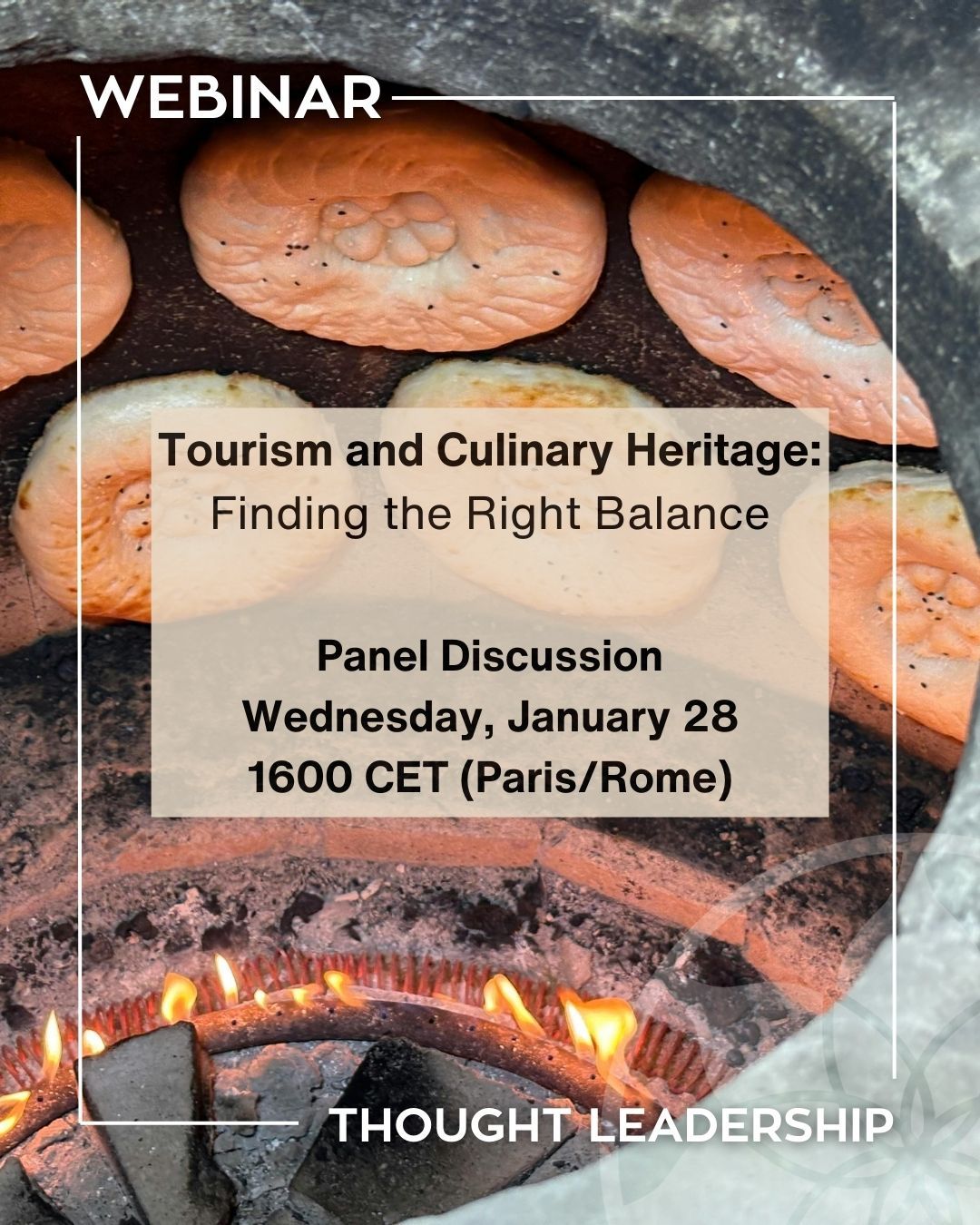
REGISTER NOW As interest in local food cultures continues to grow, destinations face increasingly complex choices. Tourism can support culinary heritage by strengthening local economies and raising awareness of food traditions. At the same time, poorly managed promotion can simplify, commodify, or distort cultural practices. This webinar brings together perspectives from across the system to examine how tourism and culinary heritage can coexist more responsibly. Panelists: - Janice Ruddock, Executive Director, Ontario Craft Brewers Association - Sean O’Rourke, President, Eat & Walkabout Tours - Niclas Fjellström, Executive Director, Culinary Heritage Network - Erik Wolf, Executive Director, World Food Travel Association The discussion will be moderated by Marc Checkley, a Lausanne-based storyteller, journalist, and experienced event host with a background in food, wine, travel, and cultural programming. Topics include: Recognizing culinary heritage as living culture rather than a static product Understanding how tourism and markets influence tradition over time Identifying where destinations most often struggle to find balance Applying practical principles for responsible promotion and stewardship This session is relevant for destination marketers, tourism offices, policymakers, producer associations, educators, and anyone working at the intersection of food, culture, and place. There is no cost to attend. REGISTER NOW
by Erik Wolf 1 January 2026
In 2025, the World Food Travel Association focused on strengthening culinary culture as living heritage, supporting the people and practices that sustain it, and building informed global collaboration rooted in values rather than prestige. Advanced the Taste of Place Movement and Alliance We clarified and communicated the purpose of the Taste of Place Movement — a global effort dedicated to safeguarding culinary heritage and empowering the keepers of food culture in alignment with the Declaration for the Preservation of Culinary Heritage . The Taste of Place Alliance framework was defined to support destinations, organizations, and practitioners who share these values. We also invite those who support this mission to join the Movement through philanthropic contributions. Do you represent a destination? Please contact us to learn how your destination can participate. Delivered Strategic Advisory and Destination Engagement Work We conducted destination-level analysis and advisory engagement in diverse regions, including the Bothnian Bay area of Sweden and Finland and with Saudi Arabia’s Culinary Arts Commission , to help partners explore how food culture, regional identity, and cooperation can contribute to responsible cultural and economic resilience. Updated Professional Training Programs All certification and training programs were updated with current research, terminology, and real-world cases. Regular refresh cycles ensure that practitioners receive instruction that reflects the most accurate and relevant information available. Built Relationships Through Targeted Engagement We engaged directly with destinations, stakeholders, and partners through site visits and industry events, including exploratory meetings in Umbria, Italy and participation in World Travel Market , to listen, assess alignment, and foster partnerships grounded in cultural integrity. Expanded and Recognized Leadership Within Our Global Network In 2025 we welcomed new Ambassadors from diverse regions, including Chef Dela Acolatse ( Ghana ) and Gerald Kock ( Aruba ), and named Mabel Esther Vega Montaño ( Colombia ) as our first Taste of Place Guardian, recognizing her lifelong commitment to ancestral knowledge and rural food culture. These appointments reinforce our values as articulated in the Declaration for the Preservation of Culinary Heritage. Interested in becoming an Ambassador or Guardian in your area? If you share our values and commitment, please get in touch . Honored Outstanding Contributions to the Field We awarded the 2025 Lifetime Achievement Award to Francesc Fusté-Forné (Girona, Spain) in recognition of his distinguished career advancing food tourism research, education, and understanding of culinary culture. We also invited the community to nominate other individuals whose work has made enduring contributions to our field. Provided Global Advocacy Through Editorial and Media Platforms We continued to interpret and elevate global developments in newsletters and digital content, and through the Taste of Place Podcast , which released 11 episodes in 2025 featuring inspiring leaders. Notable episodes included “Peace Through Food” with Paula Mohammed, “The Sweet Taste of Ethics” featuring Veronica Peralta on ethical chocolate, and “From Tunisia With Flavor” with Jamie Furniss on repositioning Tunisian cuisine for travelers. By sharing these conversations, we reinforced food as cultural heritage and connected listeners with makers and culture bearers.
More posts