Colombia como futura potencia turistico-gastronómica [Parte 1]
8 September 2022
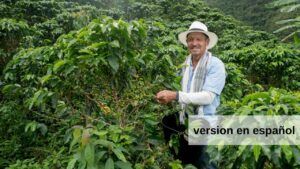
A man in a hat is standing in a field of trees.

Hace poco empecé a leer un libro de la escritora gastronómica y antropóloga Juliana Duque Mahecha quien narraba las siguientes palabras, “Los ojos glotones del mundo comienzan a apuntar a este territorio llamado Colombia”. Esta declaración podría estar respaldada por el nuevo nombramiento de la mejor chef del mundo, la colombiana Leonor Espinosa, por el ranking The Word’s 50 Best. Y la lista continua, la ciudad de Medellín fue elegida como la tercera mejor ciudad del mundo para visitar según la revista Time Out, antecedida por Edimburgo y Chicago. Las palabras de Juliana son una realidad, Colombia empieza a dar pasos de gigante en el mundo turístico gastronómico.

Estamos hablando del segundo país más biodiverso del mundo, expresado en palabras de la revista National Geographic de 2017: “si la biodiversidad del planeta fuera un país, se llamaría Colombia”. Y esto, para fortuna del mundo, se traduce en términos gastronómicos, riqueza culinaria y una despensa inimaginable aun por descubrir y explotar. Colombia es un territorio enmarcado por las costas profundas y húmedas del pacifico, mezcladas con la inmensidad de los llanos orientales, transformándose en la riqueza desconocida de la amazonia, que a su vez contrasta con el frío intenso de las cordilleras y el sabor musical del caribe. ¿Tiene  Colombia la viabilidad de convertirse en la próxima potencia de turismo gastronómico?

En cifras de turismo, según el Departamento Administrativo Nacional de Estadística de Colombia en el primer trimestre de 2022 el sector de hotelería y restaurantes creció un 31 % frente al mismo periodo del año pasado y un 32.6 % en comparación con el primer trimestre de 2019. Los números positivos siguen creciendo, por su parte, la Asociación Colombiana de Agencias de Viajes y Turismo (ANATO) informó que el volumen de turistas extranjeros aumentó cuatro veces las cifras del 2021.

Es claro que el potencial turístico de un destino depende de la capacidad de unir fuerzas entre el sector público y el privado. En el caso de Colombia, el gobierno se ha puesto en la tarea de investigar y promover diferentes proyectos y formas de impulsar el sector a través de programas como Colombia a la mesa del Ministerio de Industria y Turismo y FONTUR (fondo nacional de turismo). Esta iniciativa ha puesto en marcha proyectos relevantes para el crecimiento económico, social, turístico y gastronómico del país como la Red de Eventos Gastronómicos de Colombia que hoy cuenta con 76 acontecimientos en diferentes ciudades del país a lo largo del año. De esta red hacen parte distinguidas propuestas como El Festival del Frito Cartagenero, el Congreso Gastronómico de Popayán, Alimentarte Foro Gastronómico, Gastrodiversa en Pasto o la Feria Sabor Barranquilla. Todo esto contribuye a la conformación de un escenario turístico gastronómico cada vez de mayor relevancia.

Otro buen indicio es que el patrimonio gastronómico ancestral comienza a estar protegido por las leyes colombianas. Así lo confirma la Ley 2158 de noviembre de 2021, más conocida como Ley del Viche la cual tiene como objeto reconocer, impulsar, promover y proteger el Viche/Biche y sus derivados. Se trata de una bebida ancestral destilada de la caña de azúcar, propia de las comunidades afro del pacífico colombiano. Esta ley legitima la bebida y permite que crezca la industria generando valor social y económico, además de aportar al patrimonio turístico y gastronómico del país.

Teniendo la gastronomía sobre la mesa de discusión nacional, es necesario entonces definir unas preparaciones específicas para promover y posicionar el turismo gastronómico en el país. Estas deben tener en cuenta factores visuales, de popularidad, identidad, factibilidad de adaptarse a otras regiones y capacidad de acomodarse a empaques aptos para viajar.  En este caso podría nombrar los productos que según la oferta gastronómica actual colombiana y su popularidad, tienen mayor potencial: café, cacao, arepas y frutas.

Es claro que Colombia avanza rápidamente sobre el camino del turismo culinario, pero, ¿Cual es el rol y el potencial de sus elementos culinarios mas populares? La próxima semana averiguaremos mas.
Promotion for culinary capitals an innovative destination certification and development program for unknown destinations
Taste of place podcast listen to our culinary travel and culture podcast with erik wolf
Food
A membership page with a picture of pancakes on a plate.
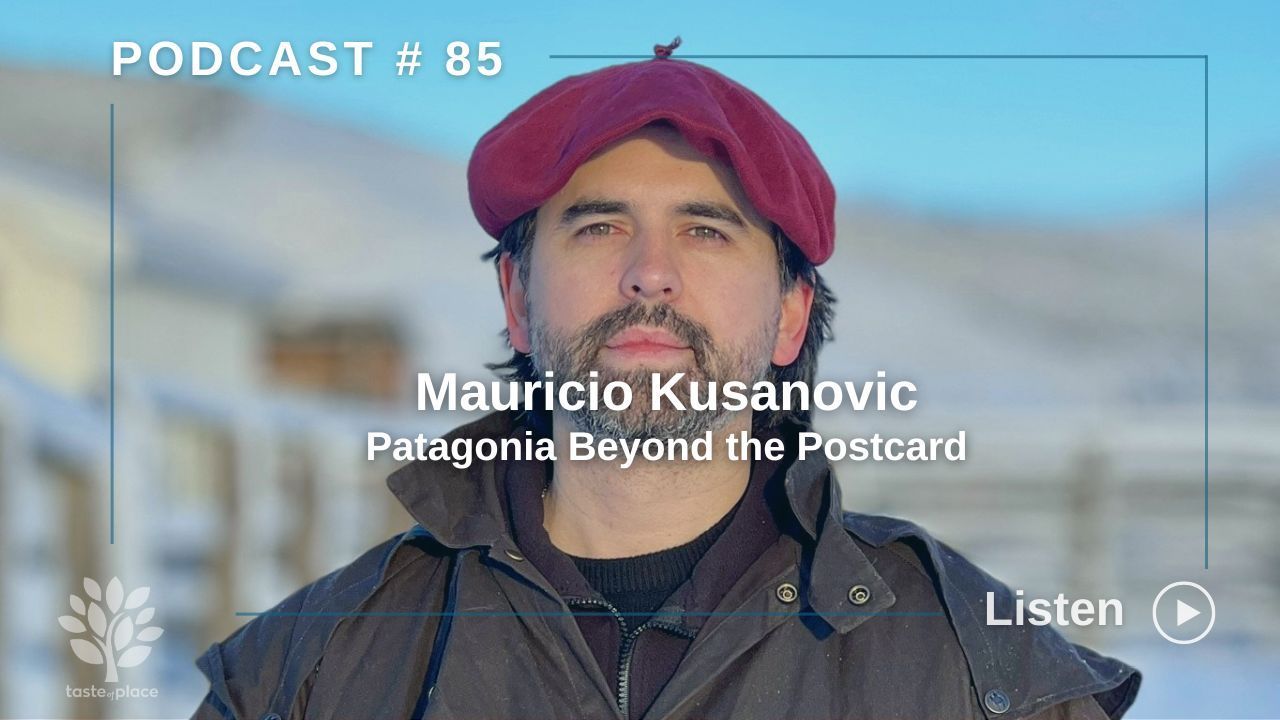
Mauricio Kusanovic in Patagonia; podcast promotion.
6 February 2026
In this episode of the Taste of Place Podcast, we travel to Chilean Patagonia with Mauricio Kusanovic, a tourism and conservation leader based in Puerto Natales, the gateway to Torres del Paine National Park. Mauricio shares how his family’s legacy in cattle ranching and early tourism has evolved into a model that integrates conservation, regenerative farming, and culinary identity. The conversation explores how food culture, from Patagonian lamb to cold-water seafood, plays a meaningful role in destination identity, community pride, and environmental stewardship. This episode offers thoughtful insight into destination management, sustainable growth, and why better tourism, not more tourism, is essential for places that remain truly wild. Listen here or on any podcast player (search for "Taste of Place Podcast").
6 February 2026
The body content of your post goes here. To edit this text, click on it and delete this default text and start typing your own or paste your own from a different source.
5 February 2026
Taste of Place is built on a simple but often overlooked truth: culinary heritage does not protect itself. It survives because individuals choose to care for it, defend it, and pass it forward, often quietly, often without recognition. Around the world, traditional foodways are under pressure from standardization, economic shortcuts, and the gradual erosion of local knowledge. The Guardian initiative exists to acknowledge those who actively stand in that space of responsibility, not as figureheads, but as stewards of place-based culinary culture. Guardians help ensure that Taste of Place remains grounded in real people, real practices, and real commitments, anchoring the movement in lived experience rather than abstraction. It is in this spirit of stewardship and long-term commitment to place that we welcome our second Taste of Place Guardian. Kacie Morgan has spent more than a decade telling the story of Wales through food. What began in 2010 as a Welsh food and travel blog, created to build her writing portfolio after graduating from Cardiff University with a degree in journalism, has grown into The Rare Welsh Bit, a multi-award-winning platform dedicated to food-led travel and place-based storytelling. Based in Cardiff, Kacie’s work consistently places Wales at the centre of the narrative while engaging thoughtfully with global cuisines and destinations. A member of the Guild of Food Writers, she contributes to national and international publications including olive, Sainsbury’s Magazine, Co-op Food Mag, Food52, Visit Wales, and Cardiff Life, with features appearing on the BBC, Metro, and National Geographic Traveller. Her role as a champion of local culture was recently recognised at a Pride in Place reception at 10 Downing Street, and through Cardiff University’s alumni awards. As a Big Ideas Wales Role Model, she also works with Business Wales and the Welsh Government to deliver entrepreneurial talks in schools and universities across Wales, and has served as a judge for the Welsh Street Food Awards for four consecutive years. Beyond Wales, Kacie has spoken at international conferences on food and tourism and has been recognised globally for her work, including being named Blogger of the Year by the Grenada Tourism Authority for her coverage of the Grenada Chocolate Festival. Whether exploring traditional Tunisian cuisine in North Africa or travelling by flavour from her own kitchen, her work reflects a deep respect for culinary heritage, lived experience, and the power of food to express identity and place. You can learn more about her and meet Kacie on LinkedIn here or on Instagram . Learn more about our new Taste of Place Movement and how you can support it and the work done by Kacie and others like her.
11 January 2026
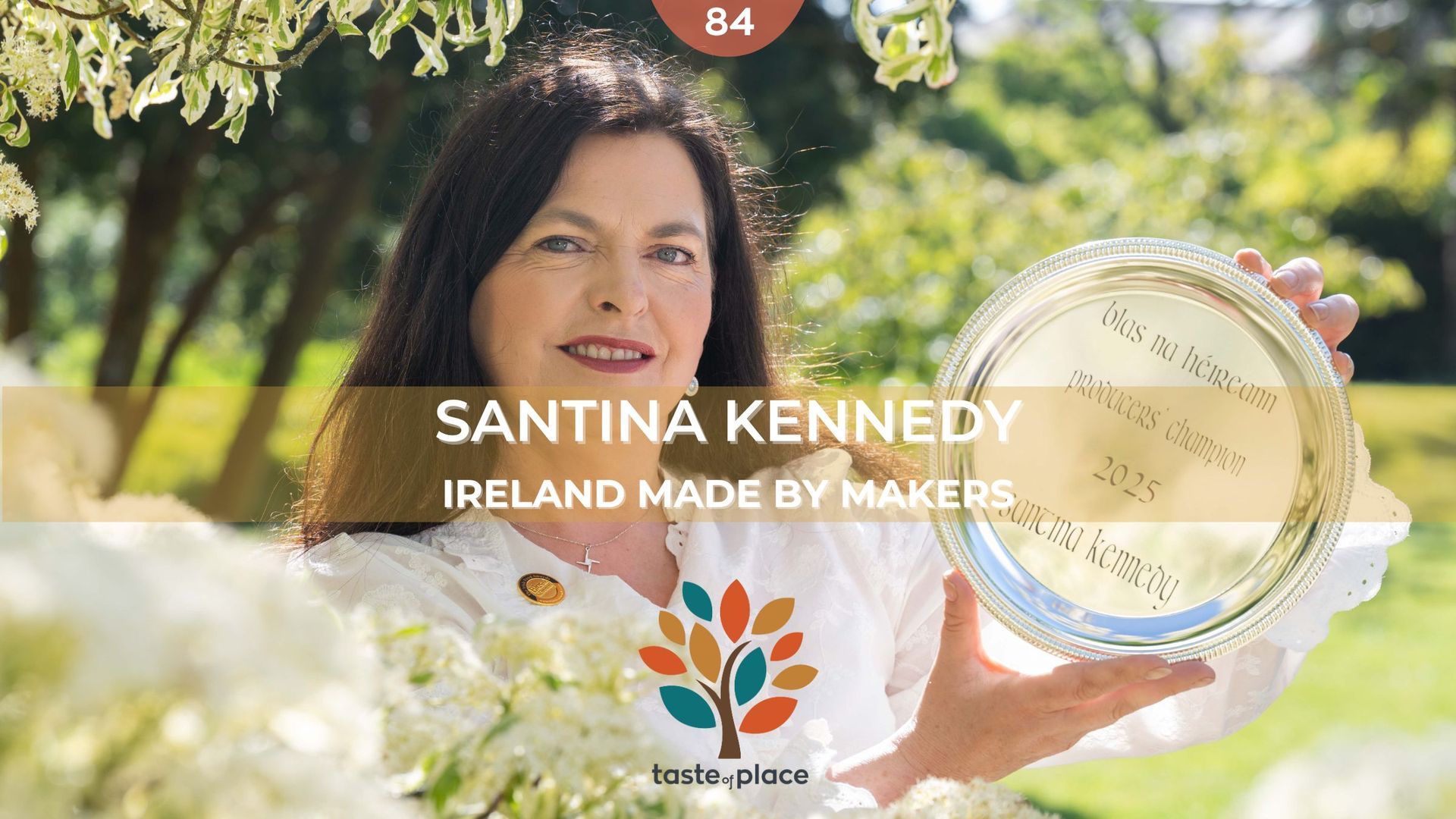
In this episode, Erik Wolf speaks with Santina Kennedy, an award-winning Irish food consultant, producer champion, and storyteller whose work bridges food history, culture, and contemporary experience design. Santina shares her unconventional journey from banking to café ownership, and ultimately to a vocation that did not exist when she was young: interpreting Irish food culture through storytelling, events, and strategic collaborations. She reflects candidly on delayed purpose, entrepreneurship without capital, and why genuine hospitality matters more than polish or scale. The conversation explores Ireland’s overlooked food narratives - from tenant farmers and kitchen workers to everyday staples like potatoes, butter, and bread - and how these stories can be brought to life through immersive experiences in galleries, estates, and public institutions. Santina also dives deeply into Irish whiskey, explaining how history, resilience, terroir, and innovation are expressed in mash bills, grains, and pairing traditions. A standout theme is Santina’s advocacy for St. Brigid as Ireland’s original food and hospitality patron, and her work elevating Brigid’s legacy through food, drink, poetry, and craft. The episode concludes with a thoughtful discussion on regional food networks, particularly County Wicklow, and why Ireland must first teach its own people to value their food culture before expecting visitors to understand it. This is a rich, reflective conversation about identity, resilience, and the power of food to tell the true story of a place. You can learn more about Santina here . The Taste of Place podcast is sponsored by the World Food Travel Association’s Taste of Place movement. Taste of Place is a global initiative that celebrates culinary culture, food heritage, and the makers behind them. Through the movement, travelers and consumers are encouraged to connect more deeply with destinations and products through their unique flavors and traditions. Learn more at JoinTasteofPlace.org . 🎙️ Available now on Spotify, iTunes & your favorite podcast platforms (Search for "Taste of Place") 📺 Prefer video? Watch it now on our YouTube channel . Or listen here now:
5 January 2026
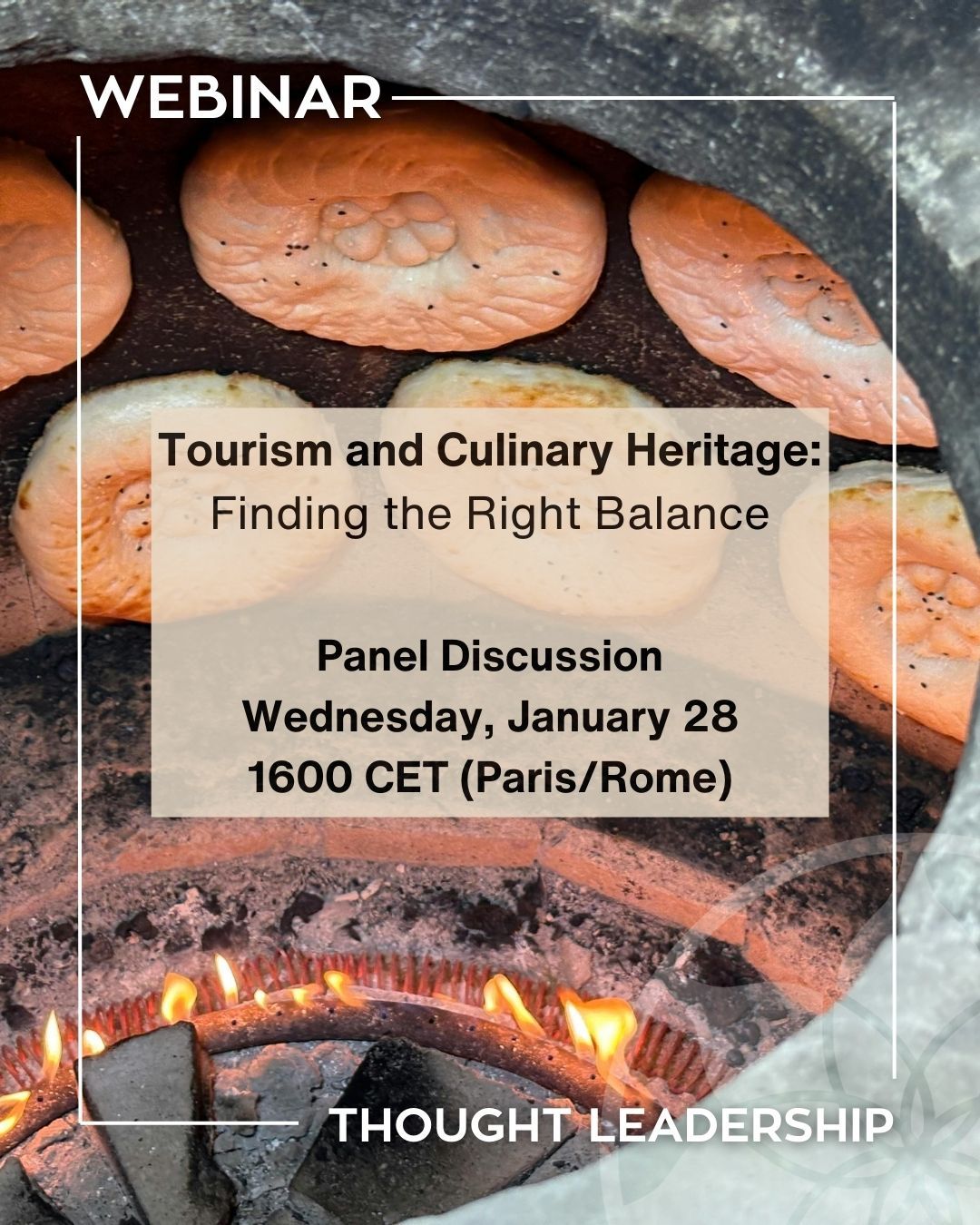
REGISTER NOW As interest in local food cultures continues to grow, destinations face increasingly complex choices. Tourism can support culinary heritage by strengthening local economies and raising awareness of food traditions. At the same time, poorly managed promotion can simplify, commodify, or distort cultural practices. This webinar brings together perspectives from across the system to examine how tourism and culinary heritage can coexist more responsibly. Panelists: - Janice Ruddock, Executive Director, Ontario Craft Brewers Association - Sean O’Rourke, President, Eat & Walkabout Tours - Niclas Fjellström, Executive Director, Culinary Heritage Network - Erik Wolf, Executive Director, World Food Travel Association The discussion will be moderated by Marc Checkley, a Lausanne-based storyteller, journalist, and experienced event host with a background in food, wine, travel, and cultural programming. Topics include: Recognizing culinary heritage as living culture rather than a static product Understanding how tourism and markets influence tradition over time Identifying where destinations most often struggle to find balance Applying practical principles for responsible promotion and stewardship This session is relevant for destination marketers, tourism offices, policymakers, producer associations, educators, and anyone working at the intersection of food, culture, and place. There is no cost to attend. REGISTER NOW
by Erik Wolf 1 January 2026
In 2025, the World Food Travel Association focused on strengthening culinary culture as living heritage, supporting the people and practices that sustain it, and building informed global collaboration rooted in values rather than prestige. Advanced the Taste of Place Movement and Alliance We clarified and communicated the purpose of the Taste of Place Movement — a global effort dedicated to safeguarding culinary heritage and empowering the keepers of food culture in alignment with the Declaration for the Preservation of Culinary Heritage . The Taste of Place Alliance framework was defined to support destinations, organizations, and practitioners who share these values. We also invite those who support this mission to join the Movement through philanthropic contributions. Do you represent a destination? Please contact us to learn how your destination can participate. Delivered Strategic Advisory and Destination Engagement Work We conducted destination-level analysis and advisory engagement in diverse regions, including the Bothnian Bay area of Sweden and Finland and with Saudi Arabia’s Culinary Arts Commission , to help partners explore how food culture, regional identity, and cooperation can contribute to responsible cultural and economic resilience. Updated Professional Training Programs All certification and training programs were updated with current research, terminology, and real-world cases. Regular refresh cycles ensure that practitioners receive instruction that reflects the most accurate and relevant information available. Built Relationships Through Targeted Engagement We engaged directly with destinations, stakeholders, and partners through site visits and industry events, including exploratory meetings in Umbria, Italy and participation in World Travel Market , to listen, assess alignment, and foster partnerships grounded in cultural integrity. Expanded and Recognized Leadership Within Our Global Network In 2025 we welcomed new Ambassadors from diverse regions, including Chef Dela Acolatse ( Ghana ) and Gerald Kock ( Aruba ), and named Mabel Esther Vega Montaño ( Colombia ) as our first Taste of Place Guardian, recognizing her lifelong commitment to ancestral knowledge and rural food culture. These appointments reinforce our values as articulated in the Declaration for the Preservation of Culinary Heritage. Interested in becoming an Ambassador or Guardian in your area? If you share our values and commitment, please get in touch . Honored Outstanding Contributions to the Field We awarded the 2025 Lifetime Achievement Award to Francesc Fusté-Forné (Girona, Spain) in recognition of his distinguished career advancing food tourism research, education, and understanding of culinary culture. We also invited the community to nominate other individuals whose work has made enduring contributions to our field. Provided Global Advocacy Through Editorial and Media Platforms We continued to interpret and elevate global developments in newsletters and digital content, and through the Taste of Place Podcast , which released 11 episodes in 2025 featuring inspiring leaders. Notable episodes included “Peace Through Food” with Paula Mohammed, “The Sweet Taste of Ethics” featuring Veronica Peralta on ethical chocolate, and “From Tunisia With Flavor” with Jamie Furniss on repositioning Tunisian cuisine for travelers. By sharing these conversations, we reinforced food as cultural heritage and connected listeners with makers and culture bearers.
More posts